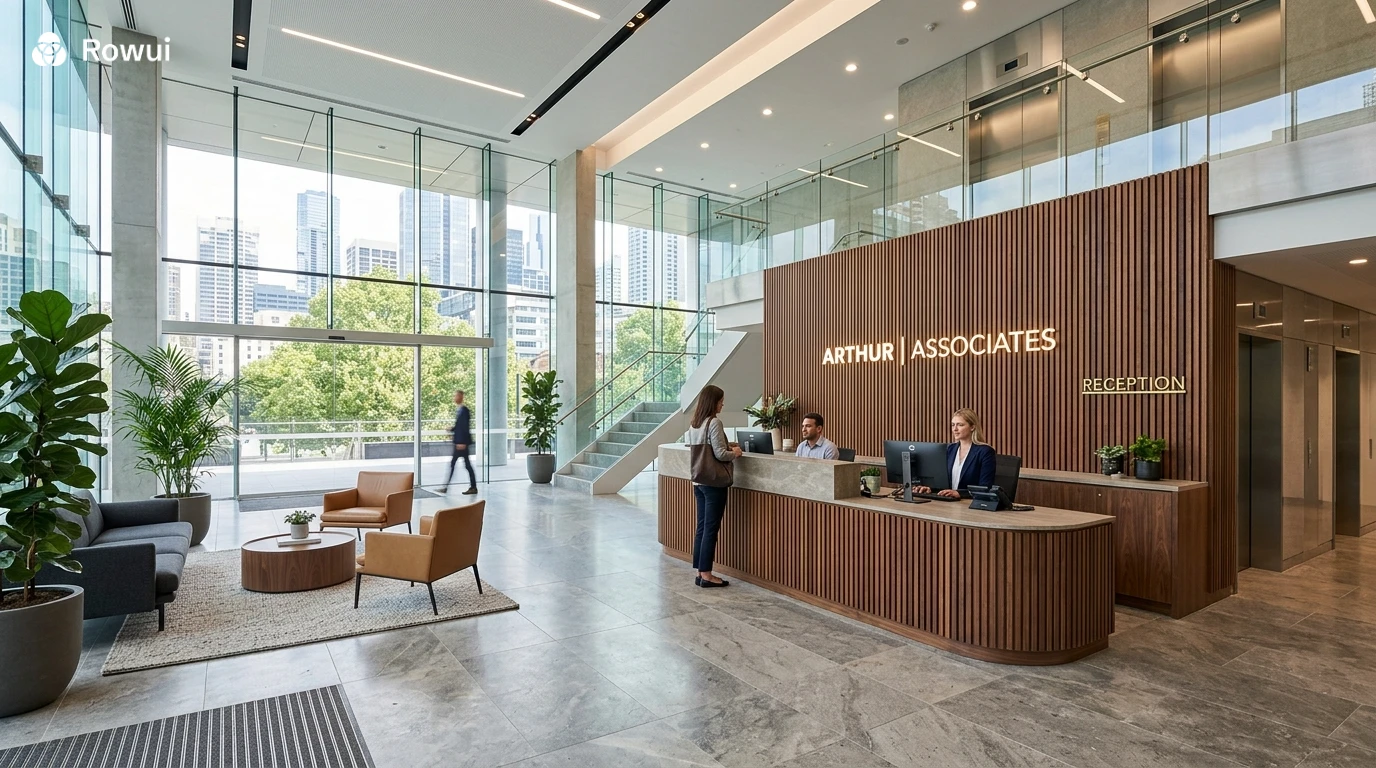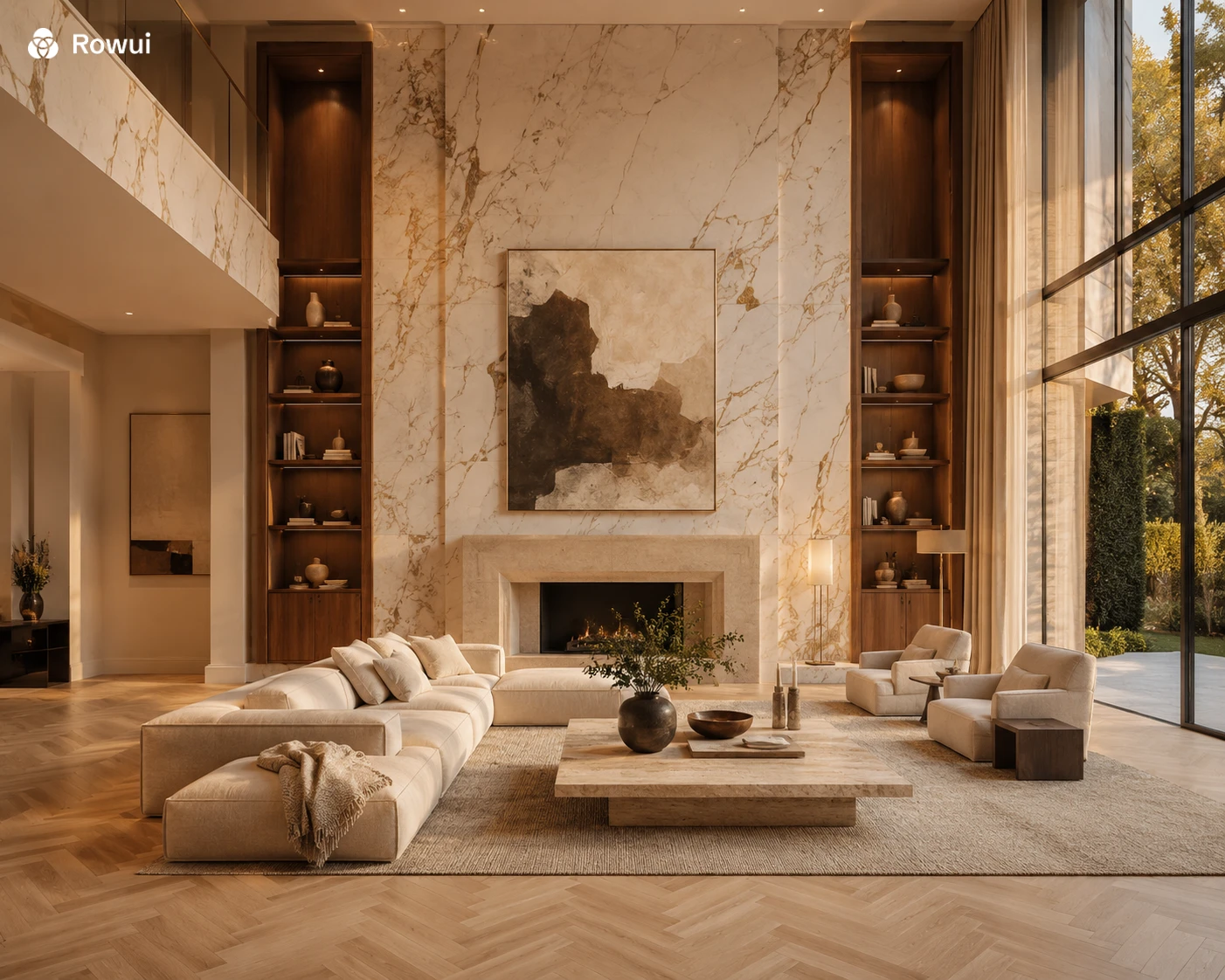
There is a moment when you walk into a room and something shifts. You cannot immediately name what it is. The space feels different, calmer, more considered. The air seems to settle around you. Nothing is competing for your attention, yet everything rewards it. That is luxury interior design doing exactly what it is supposed to do, not shouting its expense, but making you feel something without explaining why. For most people, the word luxury triggers images of marble, chandeliers, and price tags that belong in a different universe. But the truth is more interesting, and considerably more accessible, than that. True luxury in interior design is not about cost alone. It is about quality of thought, precision of detail, and a deep understanding of how human beings experience space. This article explores exactly what separates a genuinely luxurious interior from one that merely looks expensive, and what every homeowner can learn from the principles that define high end interior design at its finest.
The Foundation of Luxury: Spatial Planning Done Right
Before a single material is chosen or a piece of furniture is placed, the most important decision in any luxury interior is spatial. How a room is planned, how it flows, how the proportions of every element relate to the dimensions of the space, this is where truly refined interiors begin. Poor spatial planning cannot be fixed with expensive finishes. A room that feels cramped, awkward, or disconnected will never feel luxurious no matter how much is spent on it.
Luxury interiors are typically generous, but generosity does not always mean large. A small room that is beautifully proportioned, where every element is sized correctly and every surface has breathing room, can feel far more luxurious than a vast room cluttered with oversized furniture and competing focal points. Professional architects and interior designers understand the concept of scale, the relationship between the size of objects and the size of the space they occupy. A sofa that is too small for a living room reads as timid. A dining table that is too large for its room feels aggressive. When scale is right, a room simply feels correct in a way that is difficult to articulate but immediately apparent.
Proportions, Ceiling Heights and Visual Weight
One of the most overlooked contributors to luxury in interior design is ceiling height. High ceilings fundamentally change how a room feels, adding a sense of calm, expansion, and importance. Where ceiling heights cannot be altered, clever design can compensate. Vertically proportioned windows, full-height joinery that reaches the ceiling, and tall doorframes all draw the eye upward and borrow the visual sensation of height. In contrast, low furniture profiles, such as a platform bed or a low-slung sofa, make the ceiling feel higher by increasing the empty space above the occupied zone of the room.
The concept of visual weight matters enormously too. A room with too many heavy elements, dark colours, large-scale patterns, and dense materials, feels oppressive. A room with nothing but light and pale surfaces feels insubstantial. Luxury interiors balance visual weight deliberately, grounding a space with a substantial rug or a solid stone hearth, then lifting it with sheer curtains, white plaster, or a single pool of light on a pale wall.
Material Quality: The Non-Negotiable Core of Luxury
If spatial planning is the skeleton of a luxury interior, materials are its skin. Nothing communicates quality more immediately or more honestly than the materials used in a space. The eye and the hand know the difference between genuine and synthetic, between heavy and hollow, between aged and faked. This is why material selection is perhaps the most consequential design decision in high end interior design.
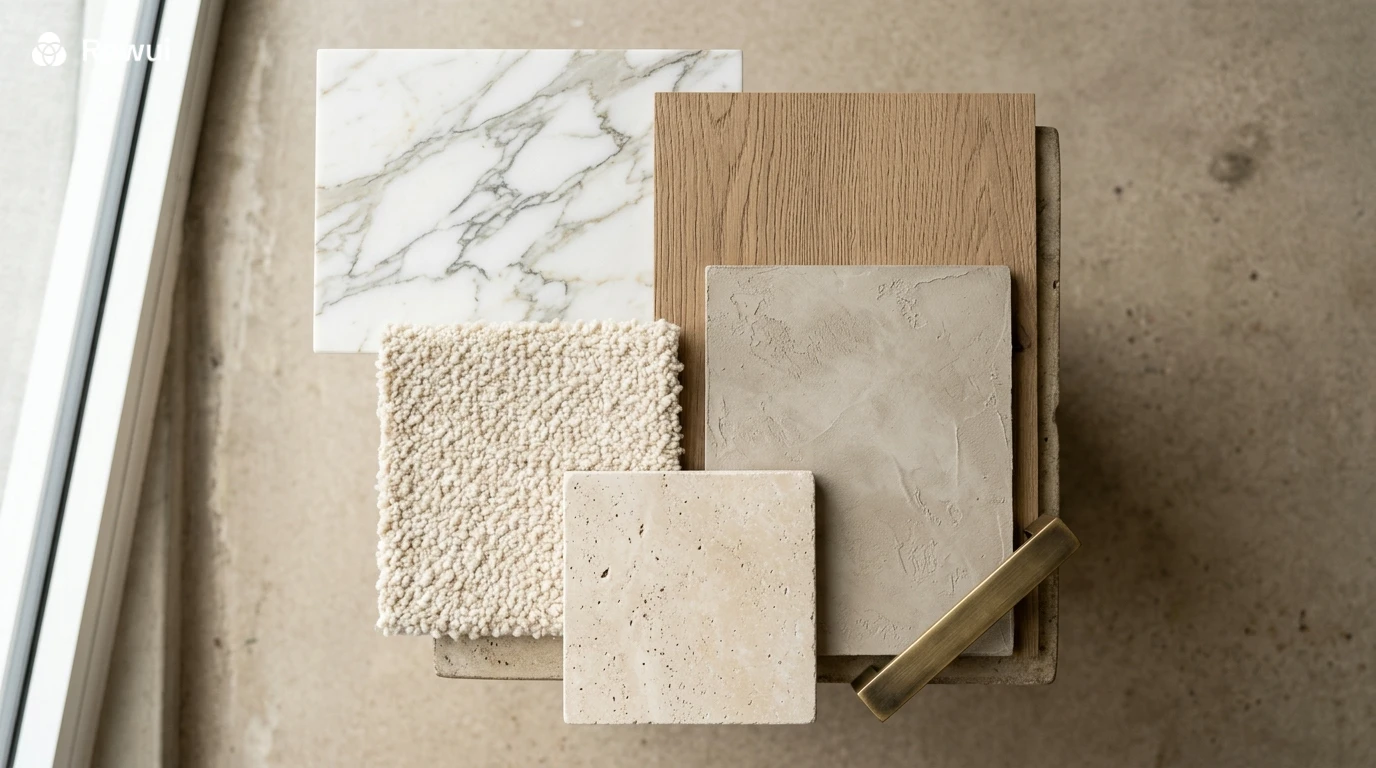
The guiding principle is to choose fewer materials and choose them well. A room that uses three exceptional materials thoughtfully will always outperform a room that uses twelve mediocre ones ambitiously. Restraint in material selection is not a compromise. It is a mark of confidence and sophistication.
Natural Stone: The Anchor Material of Luxury Interiors
Natural stone has been synonymous with luxury for thousands of years, and for good reason. Every slab is unique. The veining in Calacatta marble, the fossilised shells visible in a polished slab of French limestone, the warm honey tones of aged travertine, these are qualities that cannot be replicated or manufactured. They carry geological time and natural beauty in a way that resonates deeply with human perception.
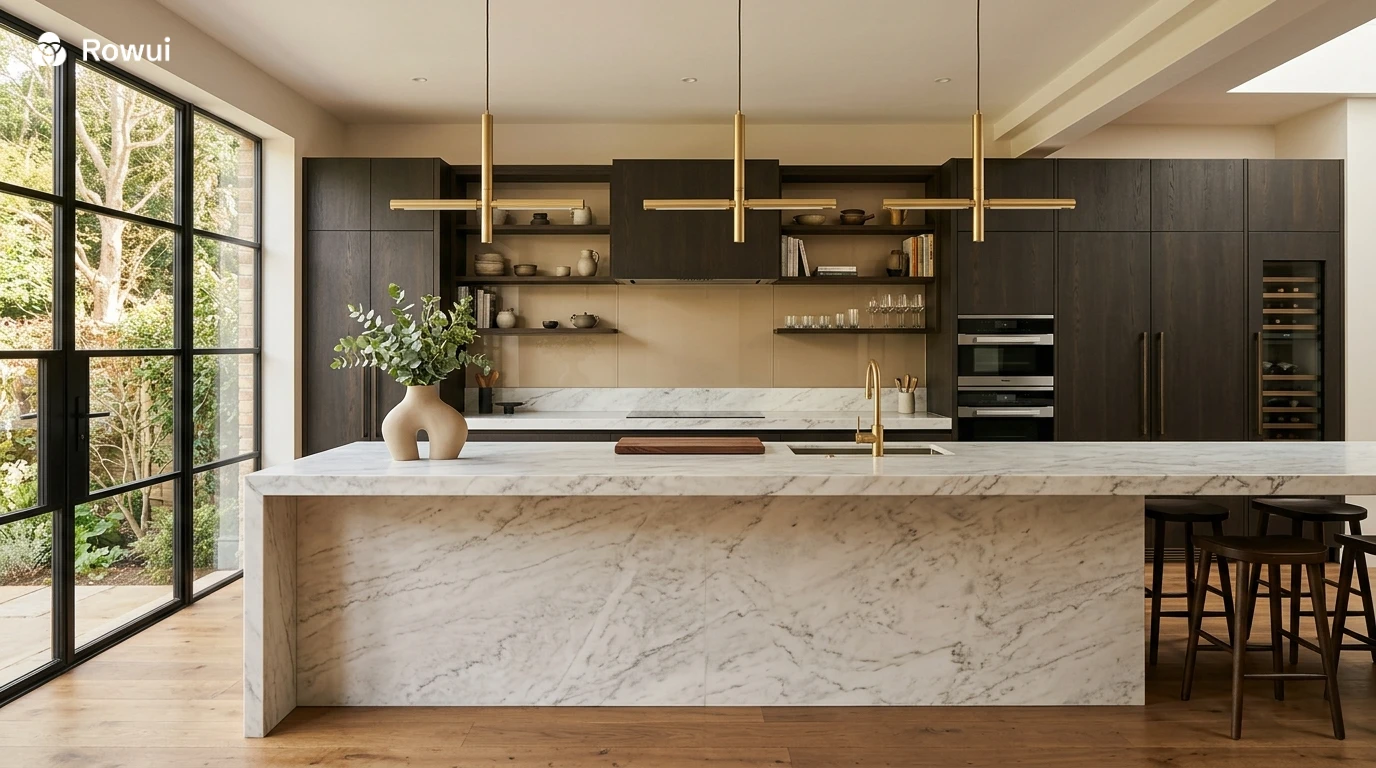
In contemporary luxury interior design, natural stone is used with intention rather than excess. A single wall of book-matched Calacatta marble behind a fireplace creates a focal point of extraordinary power. Honed travertine on a bathroom floor, with its unfilled pores and matte surface, has a warmth and tactility that polished alternatives cannot match. A kitchen island in Nero Marquina black marble, where the white veining cuts dramatically across the dark surface, becomes a piece of architecture rather than a piece of furniture. The key is application. Stone placed where it will be seen up close, touched, and experienced daily delivers its value most fully.
Timber: Warmth, Craft and Character
Alongside stone, timber is the other great material of luxury interior design. Where stone brings weight, permanence, and visual drama, timber brings warmth, craft, and a sense of living quality. The grain of a wire-brushed white oak floor, the figuring in a walnut joinery panel, the worn patina of a reclaimed elm dining table, these qualities make a room feel inhabited and human in a way that harder materials alone cannot.
In modern traditional interior design and organic modern interior design, timber is frequently used in its most natural, least processed form. Wide plank flooring with visible knots, hand-scraped surfaces that catch the light differently at every angle, and live-edge tables that retain the original contour of the tree, these choices celebrate the material rather than apologising for its imperfection. In more contemporary schemes, timber might appear as flat-faced cabinetry in a consistently grained veneer, perfectly seamless and precise, with the grain doing all the decorative work. Both approaches communicate luxury because both require knowledge, skill, and genuinely good material to execute well.
Sustainable Materials in Luxury Design
Interior design with sustainable materials has moved from a niche concern to a central value in luxury design. The most forward-thinking luxury interiors today are built around materials that are beautiful, durable, and responsibly sourced. Reclaimed timber brings history and character that new wood cannot replicate. Recycled stone creates surfaces with depth and variation. Natural clay plaster, hemp insulation, and organic textiles contribute to interiors that are healthier to live in and lighter on the planet. Sustainable interior design does not mean sacrificing beauty. In many cases, the most sustainable choices, materials that are local, natural, and long-lasting, are also the most beautiful ones.
Custom Joinery and Bespoke Furniture: The Signature of a Designed Interior
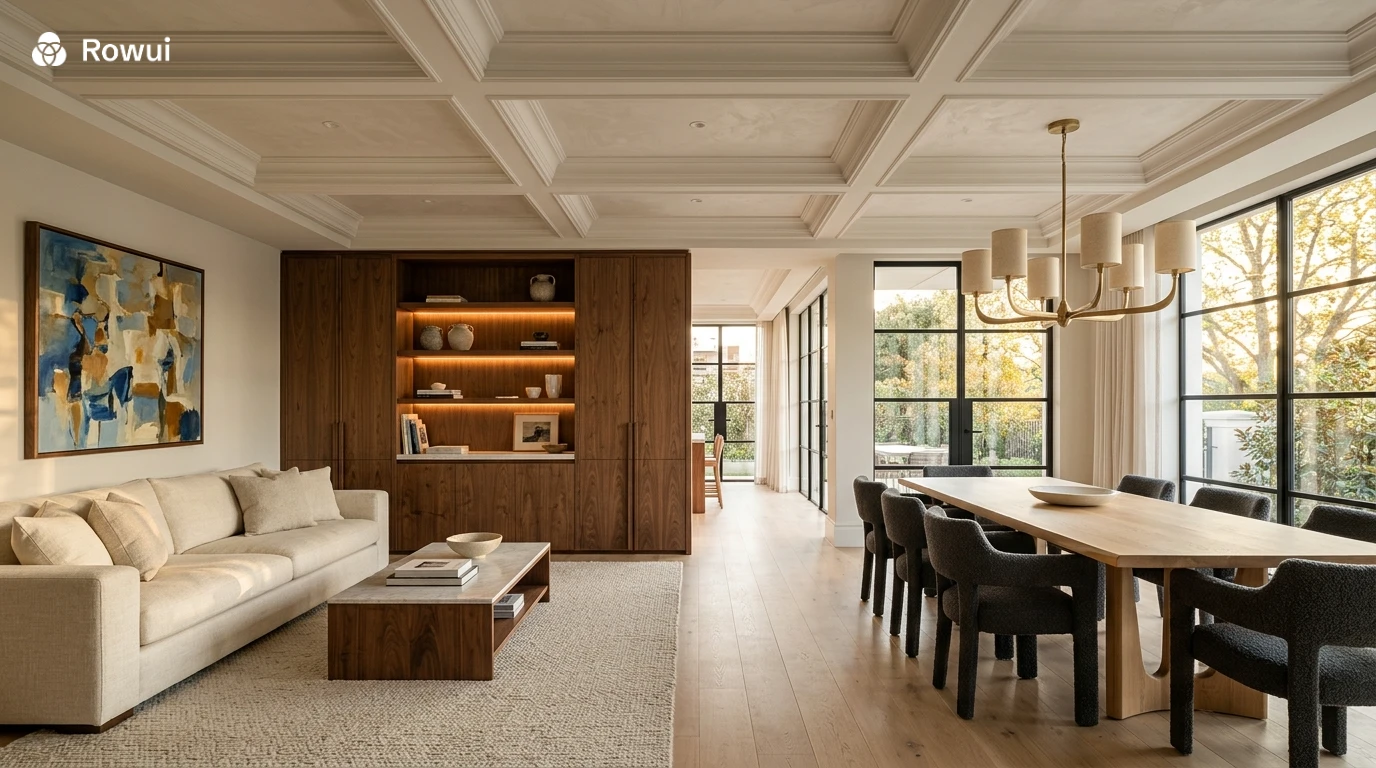
Nothing separates a professionally designed luxury interior from a well-decorated one quite as clearly as bespoke joinery and custom furniture. Off-the-shelf furniture, however high the price point, rarely fits a room the way custom pieces do. The proportions are generic. The dimensions are compromises. The details are repeated across thousands of identical units in thousands of different homes.
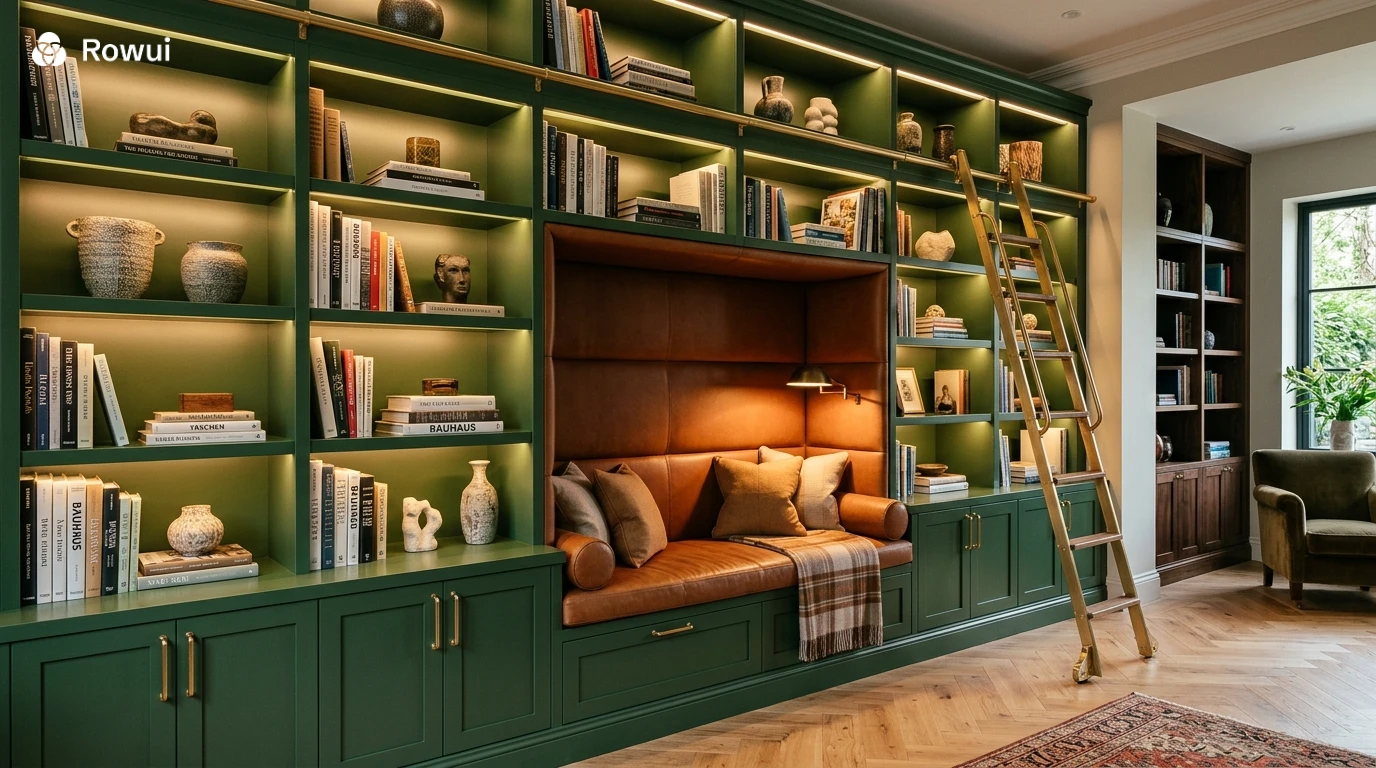
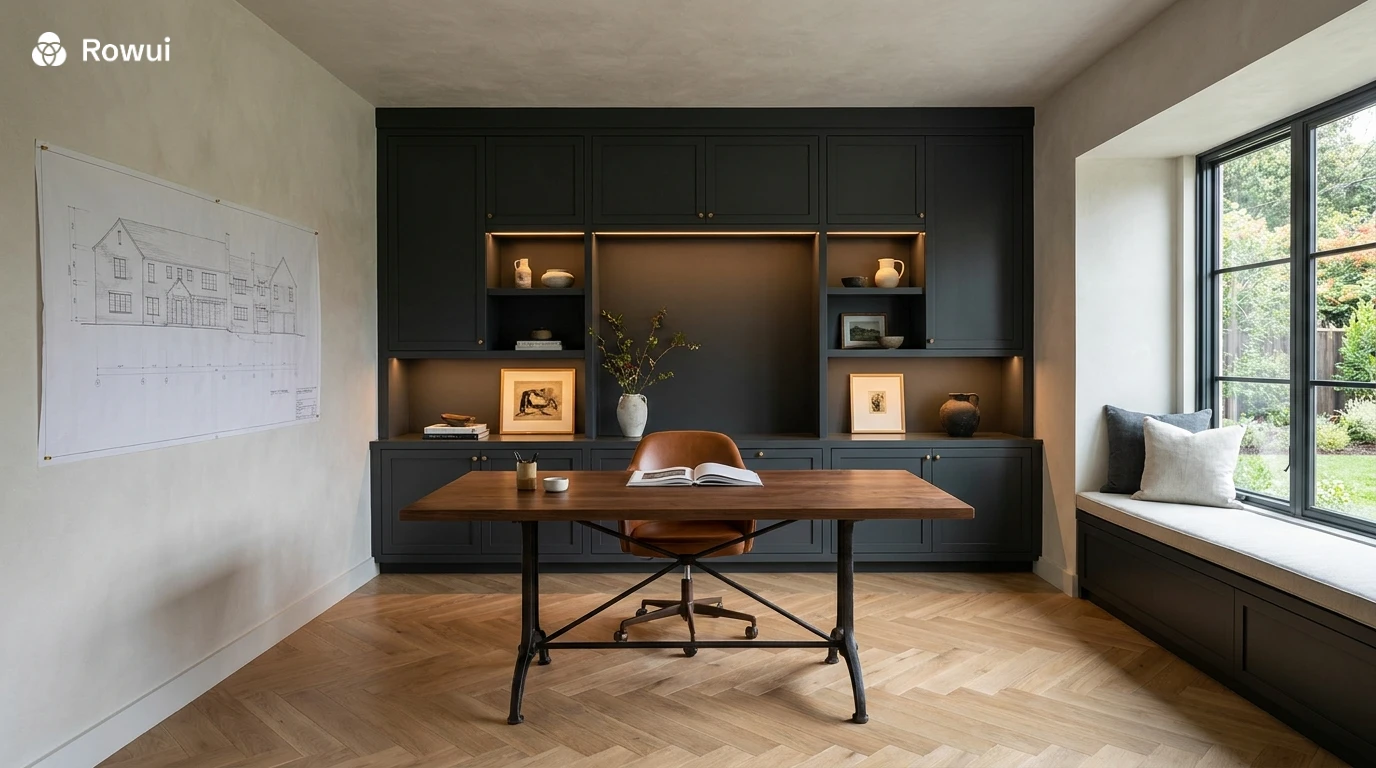
Custom joinery, by contrast, is designed specifically for the room it inhabits. A floor-to-ceiling bookcase built to exactly the right height, with shelves at precisely the right intervals for the books they will hold, with integrated lighting that illuminates rather than glares, and with doors that align perfectly with the proportions of the adjacent windows, this kind of precision is what makes an interior feel resolved. It is not just functional. It is architectural.
Designing Joinery as Architecture
In the finest luxury interiors, joinery is designed as a continuation of the architecture rather than as furniture placed in front of walls. A kitchen where the cabinetry reaches the ceiling and the handles are recessed or replaced by push-to-open mechanisms reads as a built-in architectural element rather than a purchase from a showroom. A bedroom where the wardrobe wall and the bedhead panel are part of the same design language, using the same material, the same proportions, and the same shadow gap reveals, creates an interior that feels authored rather than assembled.
Custom joinery also allows for the kind of details that elevate a room quietly. A deep drawer lined in suede for jewellery. A concealed door that disappears into a joinery run. Integrated book lighting above a desk. A sliding pocket door that tucks entirely away. These are the details that homeowners discover over time and that make a house feel truly considered rather than merely finished.
Selecting Bespoke Furniture
Beyond joinery, the furniture in a luxury interior should be selected, not collected. Each piece should earn its place. The starting point is always the room, its proportions, its orientation, its relationship to light, and the movement of people through it. A sofa that works perfectly in a showroom may overwhelm a real room. A dining table that photographs beautifully may be too large to walk comfortably around when chairs are occupied.
Bespoke furniture commissions from skilled craftspeople offer something beyond fit. They offer the possibility of designing exactly the right object, in exactly the right material, at exactly the right scale, for a specific space and a specific way of living. A dining table made from a single slab of book-matched walnut, selected from a sawmill and designed around the actual dining habits of the family who will use it, is a genuinely different object from a table selected from a catalogue. It is also, typically, a better investment. Well-made bespoke furniture from quality timber and upholstery tends to improve with age in a way that mass-produced furniture cannot.
Architectural Detailing: The Difference Between Good and Exceptional
Ask any experienced architect what separates a truly luxurious interior from one that merely uses expensive materials, and the answer will almost always involve detail. Architectural detailing refers to the way elements meet, transition, and terminate. The junction between the wall and the ceiling. The threshold between one floor material and another. The way a door sits in its frame. The profile of a skirting board. These details are not glamorous individually, but collectively they determine whether an interior feels composed or cobbled together.
Shadow gap reveals, where a thin recessed gap separates the wall from the ceiling or the joinery from the floor, are one of the most effective details in contemporary luxury interior design. They eliminate the visual noise of conventional skirting boards and cornices, creating clean horizontal lines that make a room feel calm, precise, and architecturally resolved. In a room with shadow gap reveals and no visible skirting boards, the walls appear to float very slightly above the floor, an effect that is subtle but unmistakable.
Door and Window Detailing
Doors and windows are among the most frequently touched and seen elements in any home, and their quality communicates loudly. In luxury interiors, doors are typically full height, reaching from floor to ceiling, which both adds grandeur and connects the wall plane with the floor plane in a satisfying way. Door hardware receives considerable attention: a heavy, precisely engineered lever handle in brushed brass, satin nickel, or patinated bronze tells the hand that it is holding something of quality before the eye has processed it. The swing weight of a well-hung full-height door, the quiet precision of its latch, and the absence of any rattle or flex, these things matter.
Windows in luxury homes tend toward larger openings, slimmer frames, and better glass. Steel-framed windows and doors have gained enormous popularity in contemporary luxury interior design because they allow very large glazed areas with extremely slender sight lines, maximising the connection with the exterior while maintaining a crisp, architectural quality. The goal is always more light, cleaner framing, and a stronger visual relationship between the inside and the outside.
Lighting Design: The Layer That Changes Everything
Of all the elements in interior design, lighting is the most transformative and the most consistently underestimated by homeowners. The difference between a room with adequate lighting and a room with thoughtfully layered lighting is the difference between a room that is simply visible and one that is genuinely beautiful. Luxury interior design treats lighting not as a utility but as an architectural tool, used to sculpt space, direct attention, create atmosphere, and support the way the room will be used at different times of day and night.
The Three Layers of Luxury Lighting
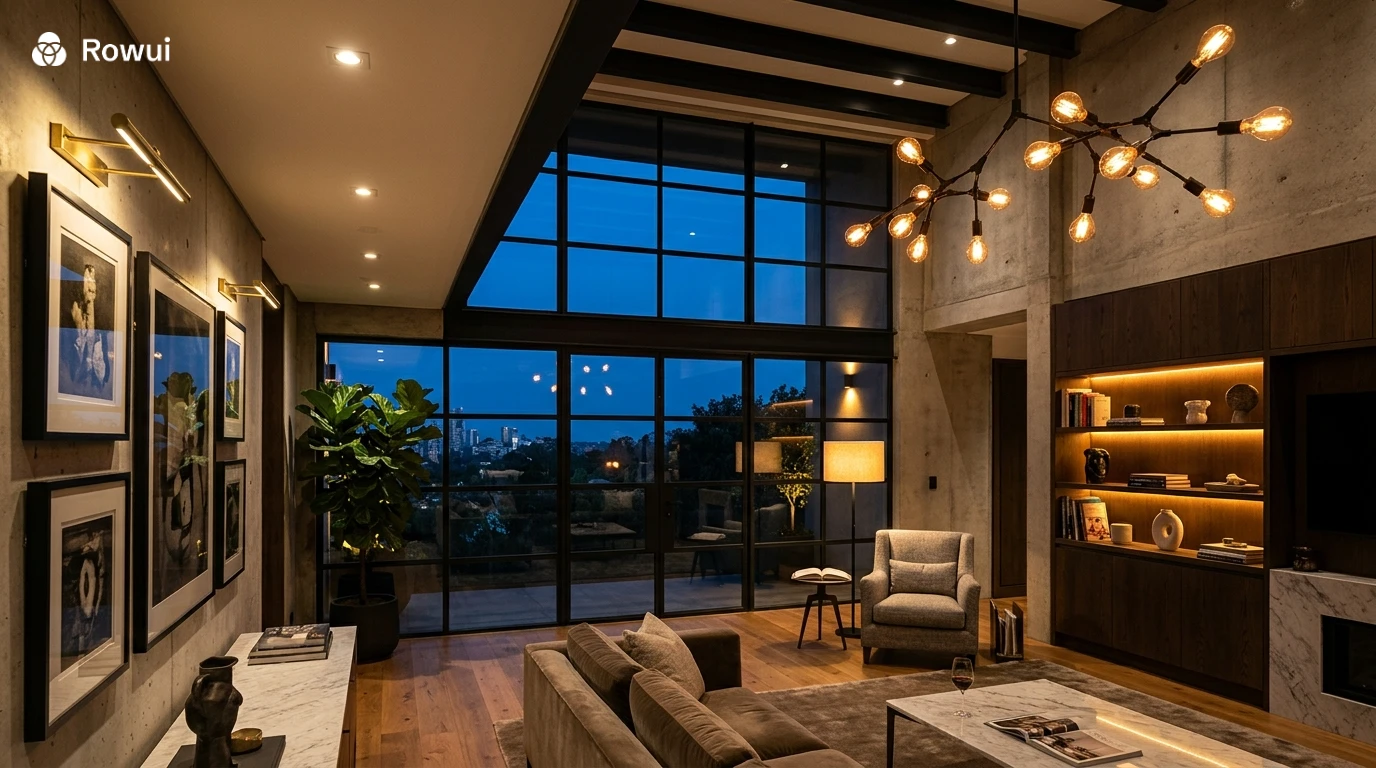
Every well-designed luxury interior uses three distinct layers of light. The first is ambient light, a general level of illumination that fills the room without any single strong source. This is typically achieved through recessed ceiling downlights, coving lights, or large windows, and its goal is to make the room feel comfortable and evenly lit as a background condition. The second layer is task light, directed illumination for specific activities: reading, cooking, working, applying makeup. The third and most important layer in luxury design is accent lighting, light used to highlight a material, a texture, a piece of art, or an architectural feature.
It is the accent layer that creates mood and drama. A wash of warm light across a rough stone wall reveals its texture in a way that overhead lighting obscures. A picture light above a significant artwork creates a focal point that commands attention without shouting. Integrated LED strip lighting inside a joinery niche glows amber in the evening, suggesting warmth and depth. The key to all three layers is control. Every circuit in a luxury interior should be independently dimmable, allowing the room to shift from bright and functional during the day to warm, layered, and intimate in the evening.
Colour Temperature and Natural Light
In luxury interior design, the colour temperature of artificial light is never an afterthought. Warm white light at around 2700K is the standard for living spaces because it flatters skin tones, makes natural materials look their most beautiful, and creates the sense of warmth associated with candlelight and fire. Cool or neutral white light, despite its associations with modernity, tends to drain the warmth from a room and makes natural stone and timber look flat and lifeless.
Natural light management is equally important. The orientation of a room, the size and placement of its windows, the use of sheer curtains versus solid blinds, and even the colour of the external landscape visible through the windows all affect how natural light behaves inside. Luxury interiors are typically planned in response to natural light, with the most used rooms positioned to receive the best light at the right time of day.
The Luxury Bedroom: Calm, Considered, Completely Resolved
The bedroom in a luxury home is perhaps the clearest expression of what high end interior design actually means in everyday life. It is a room defined entirely by experience rather than display. Nobody photographs a bedroom for social media in the moment of using it. Its quality is measured entirely in how it feels to sleep in, to wake up in, to move through in the half-light of early morning.
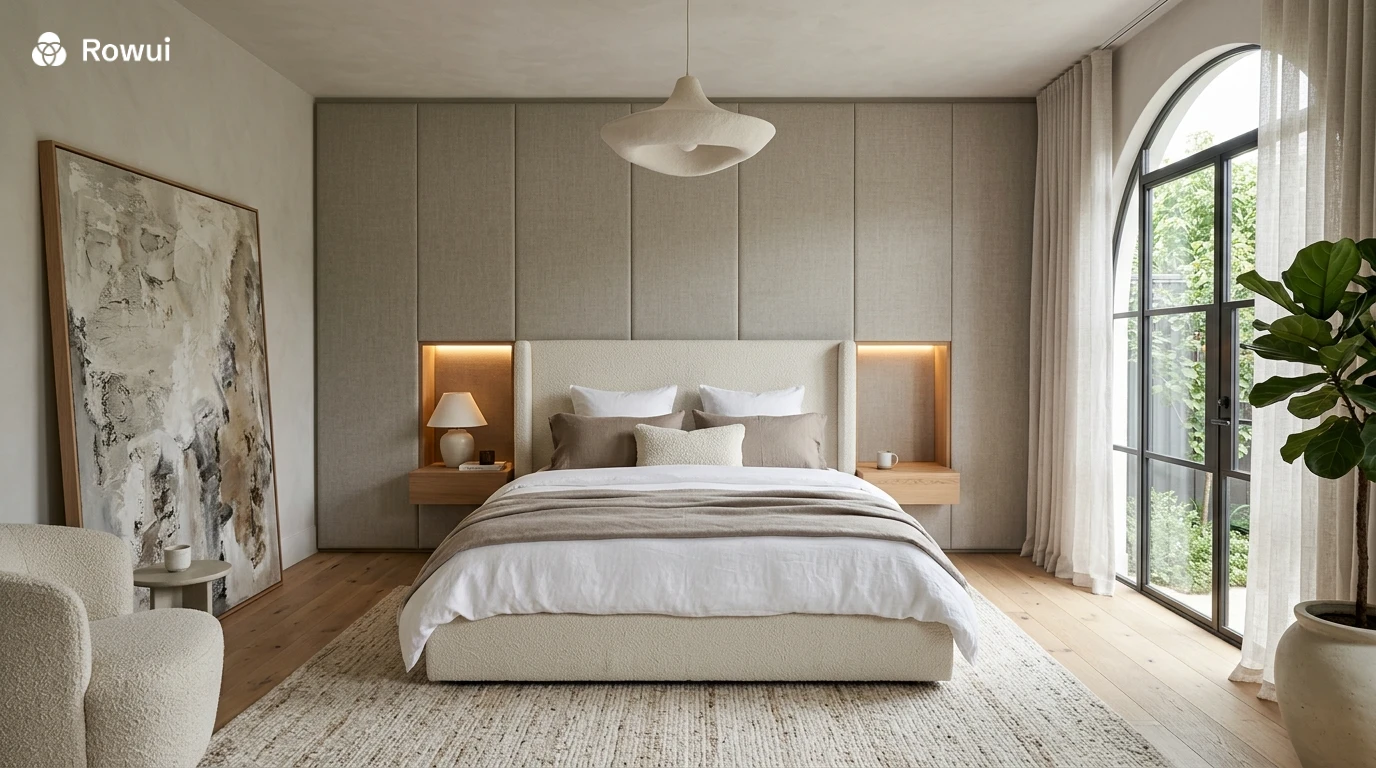
The luxury bedroom is always calm. The palette is restrained, typically anchored in white, warm greige, or soft sage, with texture doing the work that colour might do in a more active space. The bed is the architectural centrepiece, typically oversized, with a headboard that relates to the ceiling height rather than sitting arbitrarily at shoulder level. Upholstered wall panels behind and around the bed create a sense of enclosure and absorption that is both visually elegant and acoustically comforting.
Storage in a luxury bedroom is entirely concealed. Wardrobes read as architectural walls rather than furniture. Bedside tables are either integrated into the joinery or selected with care for their scale and material. Every surface that could harbour clutter is given its own discreet solution, because one of the most powerful tools in luxury interior design is the absence of visual noise.
The Luxury Bathroom: Sensory Architecture
The bathroom in a luxury home is a sensory environment as much as a functional one. It is a room where the quality of materials is experienced directly and physically, where the weight of a tap, the temperature of a stone floor underfoot, and the acoustic quality of a cladded wall are as important as their visual appearance. This is why natural stone dominates luxury bathroom design with such consistency. There is simply no synthetic alternative that delivers the same experience of stepping barefoot onto honed travertine or running your hand across a marble wall.
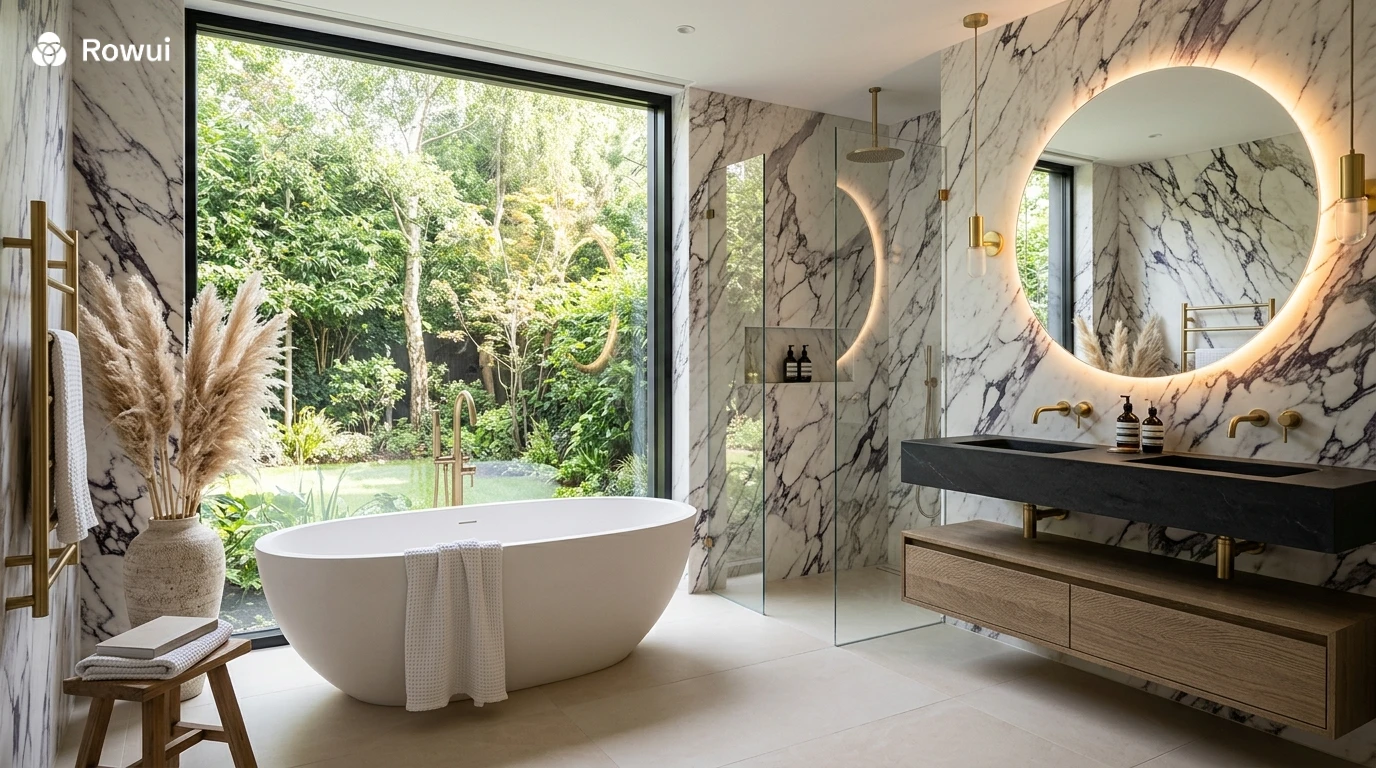
A freestanding bath positioned to face a garden or a view is perhaps the most iconic image in luxury bathroom design, and it earns its place. The decision to place a bath in a particular location in response to what can be seen from it is an act of genuine spatial thinking, connecting the interior experience to the exterior world. A walk-in shower with a recessed niche, a frameless glass enclosure, and a rain head positioned directly overhead is an engineering exercise as much as a design one, requiring precise planning of drainage, structure, and waterproofing behind the scenes to deliver its effortless appearance.
Fixtures in a luxury bathroom should be chosen for weight, precision, and longevity. A solid brass tap with a ceramic cartridge will outlast a zinc alloy fitting many times over. The finish, whether brushed gold, polished nickel, or matte black, should be consistent across every fitting in the room to create the visual coherence that defines a resolved interior.
The Kitchen: Where Luxury Design Meets Daily Life
The kitchen is the room that most homeowners think about longest and spend most on, yet it is also one of the most frequently misunderstood in terms of what makes it feel luxurious. The instinct is to spend on appliances and finishes. But the most important investment in a luxury kitchen is in its spatial planning and its joinery design. A kitchen where every appliance is in exactly the right place, where the workflow from preparation to cooking to serving is entirely intuitive, and where every item has a designated home that keeps the surfaces clear, this is the luxury kitchen.
In terms of materials, the luxury kitchen tends toward restraint and quality over variety. A single statement material, typically a natural stone for the island and possibly the backsplash, anchors the space. Cabinetry in a flat-panel format, in a matte lacquer or a fine-grain timber veneer, keeps the eye calm. Hardware is either concealed entirely through push-to-open mechanisms or expressed as a single simple element repeated consistently across every door and drawer.
Layered Texture: The Secret Language of Luxury Rooms
One of the most sophisticated tools in luxury interior design is the use of layered texture. Texture is what makes a room interesting to look at over time, what makes a space feel rich rather than empty, and what gives natural materials their full expressive power. A room with beautiful materials but no textural variation tends to feel flat. A room where smooth plaster meets rough stone, where woven linen lies against polished marble, where a matte bouclé sofa sits on a hand-knotted wool rug, this kind of room rewards attention in a way that never becomes monotonous.
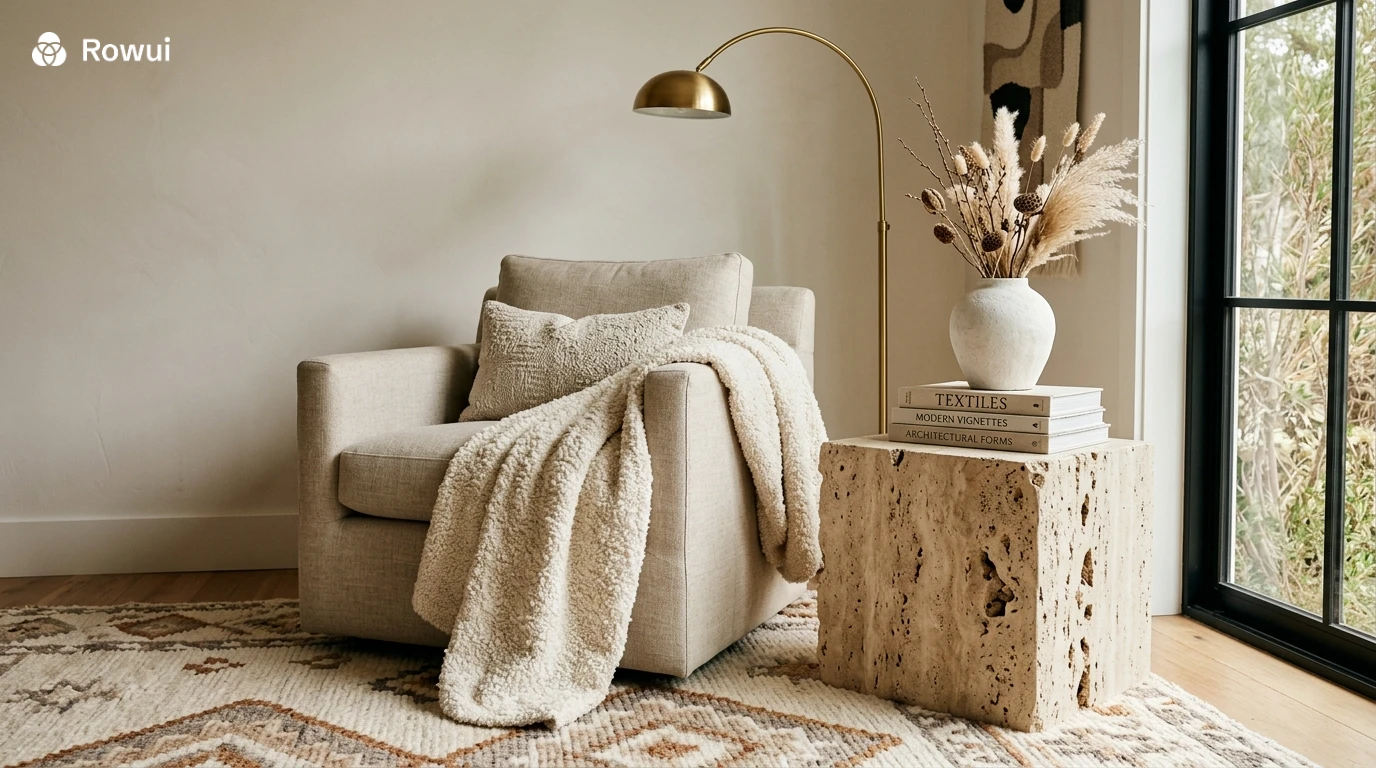
The key to using texture successfully is to vary it without contrasting it harshly. The palette should remain narrow even as the textures multiply. Ivory bouclé, undyed linen, rough travertine, smooth plaster, and raw oak can coexist beautifully because they share a warmth of tone even as their surface qualities differ dramatically. This is the principle of tonal layering: keeping colour restrained while allowing texture to carry all the visual interest.
Textiles and Soft Furnishings
Textiles are the most accessible and most impactful way to add texture to any interior. In luxury interior design, fabrics are selected for their weight, their handle, and their natural origin. Heavy linen for curtains that pool slightly on the floor. Heavyweight bouclé for upholstery that holds its form and invites touch. Hand-knotted wool rugs with a pile depth that differs from one angle to another, creating a gentle shimmer as light conditions change. Cashmere or alpaca throws that communicate their quality the moment they are picked up. These choices cost more than their synthetic alternatives, but they also age more beautifully, last considerably longer, and deliver a sensory quality that cannot be approximated.
Restrained Colour and the Power of the Neutral Palette
The most enduring luxury interiors almost always share a commitment to a restrained colour palette. This is not because luxury design avoids colour, but because it uses colour with the same precision it applies to everything else. A single, specific tone of warm white on a plaster wall is not the absence of a colour decision. It is a very deliberate one, chosen for how it changes from morning to afternoon light, for how it reads against the particular timber or stone used in the room, and for the quality of calm it creates as a background condition.
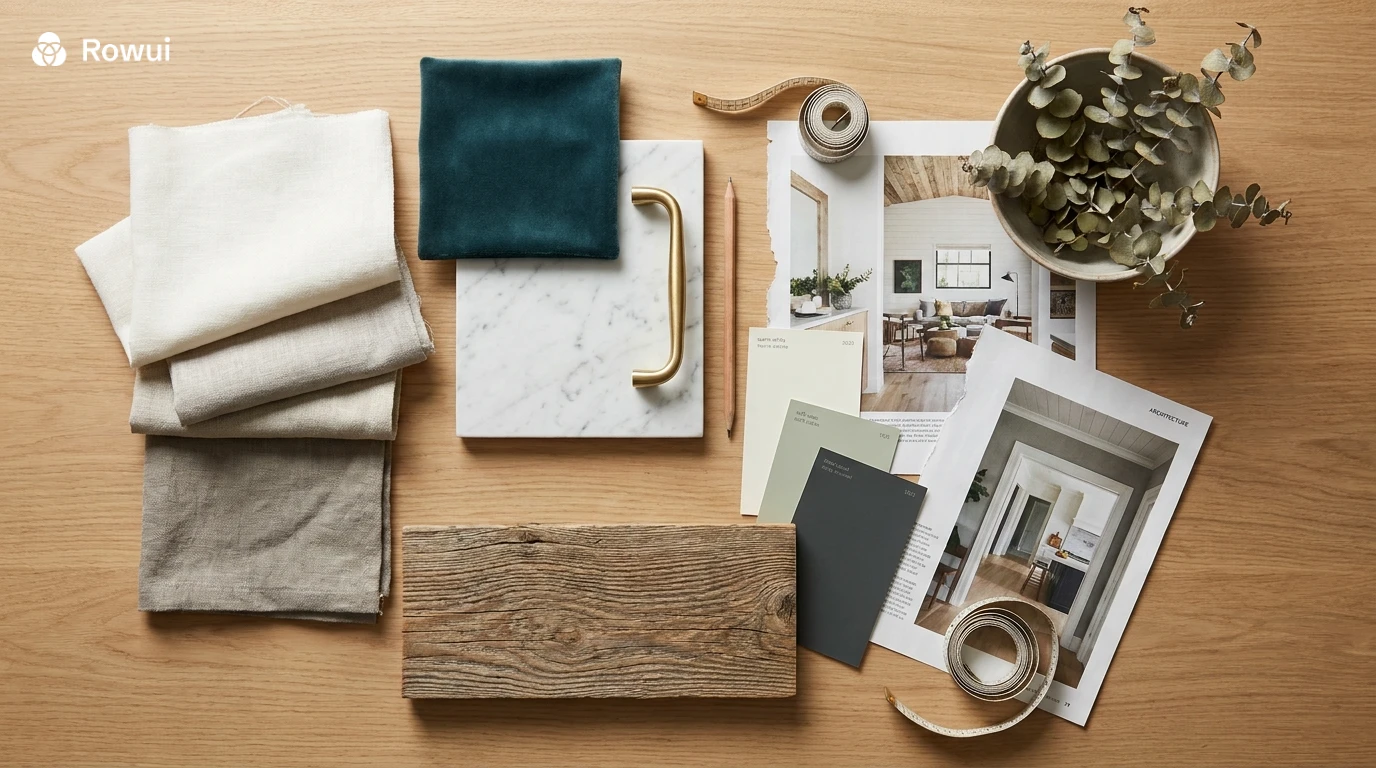
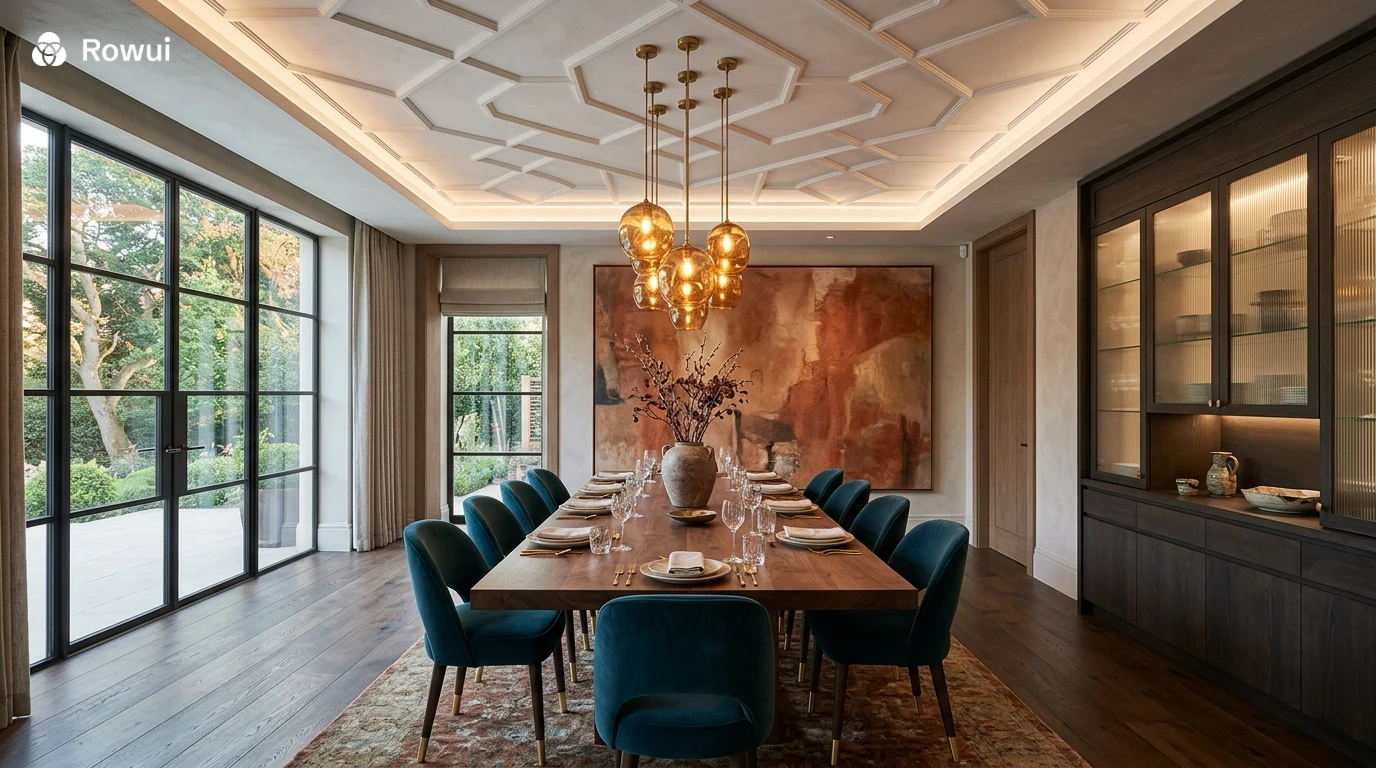
Warm neutrals, off-whites, greiges, warm taupes, soft sages, and rich earthy terracottas, dominate luxury interior design for this reason. They are backgrounds that allow materials, light, and objects to perform. They do not compete. When a stronger colour appears in a luxury interior, it typically does so as an accent, through a velvet dining chair in deep teal, a kitchen cabinet in forest green, or a statement artwork in warm ochre and sienna. The restraint of the background makes the accent feel deliberate and powerful rather than arbitrary.
Colour in Modern Traditional and Organic Modern Design
In modern traditional interior design, the palette tends toward deeper, more saturated tones used on walls and joinery, navy, forest green, deep terracotta, with natural stone and timber providing warmth and contrast. In organic modern interior design, the palette is earthier and softer, drawing directly from natural materials: the white of travertine, the warm brown of unfinished timber, the grey-green of sage, the caramel of aged leather. In modern rustic interior design, the palette embraces the tones of the landscape, raw linen, raw wool, iron oxide red, charred timber black, and pale render.
Artwork and Objects: Curation Over Decoration
In a luxury interior, the difference between art and decoration is everything. Decoration fills space. Art creates meaning, provides a focal point, and communicates something specific about the people who live in the home. Luxury interior design approaches artwork and objects with the same rigour applied to every other design decision: each piece is selected because it belongs in that specific location, at that specific scale, in that specific context.
A single large-format canvas, perhaps two metres wide, hung on a wall that was designed to receive it, with the right lighting, at the right height, in the right room, is an act of genuine design confidence. A collection of smaller pieces arranged in a studied grouping, with consistent framing and considered spacing, shows knowledge and intention. Both approaches communicate luxury because both require judgement, not just spending.
Sculptural objects deserve the same treatment. A hand-thrown ceramic vessel on a travertine side table. A bronze figurine on a shelf between books. A piece of rough stone that doubles as a bookend. These are not accessories. They are finishing notes in a composed interior, chosen for their material quality, their scale, and the way they relate to the materials and colours around them.
The Staircase: Sculpture at the Heart of the Home
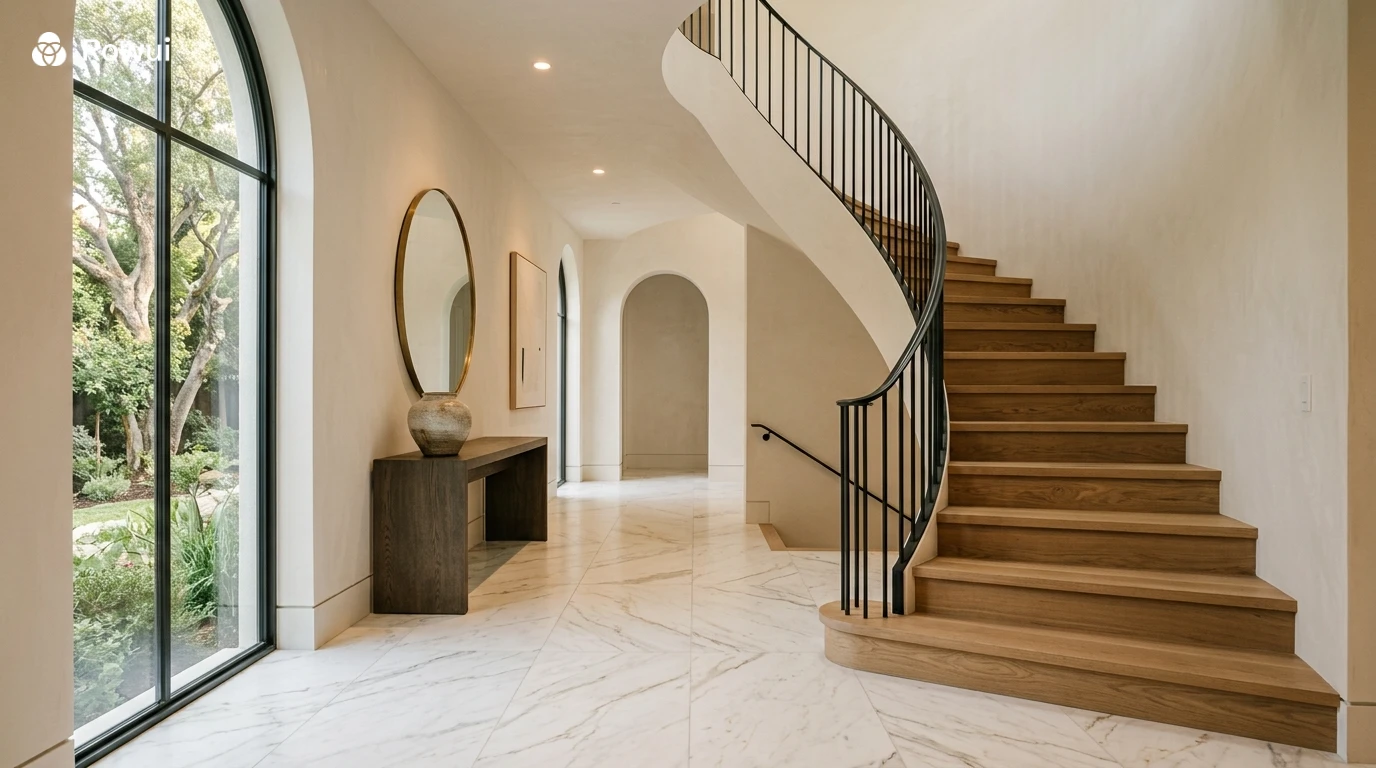
In a multi-level home, the staircase is the most architecturally dramatic element in the interior and one of the most significant opportunities for genuine design ambition. A cantilevered stone staircase with a continuous steel handrail, lit from above by a long skylight, is not merely a way of moving between floors. It is a piece of architecture that defines the quality and character of the entire house.
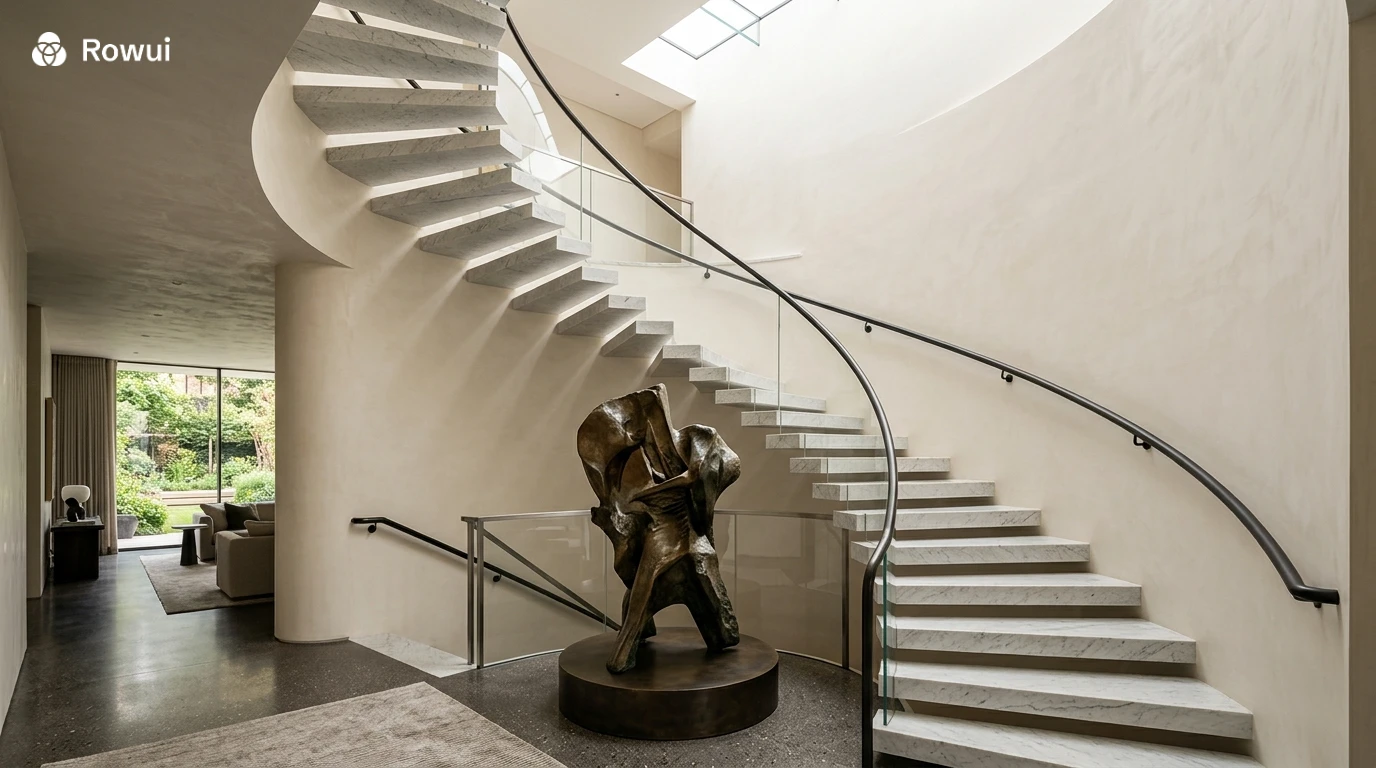
The staircase also offers one of the best opportunities in interior design to use a single material in a large and uninterrupted way. A staircase in solid oak, with each tread a full 50mm thick and the timber selected for grain consistency, communicates material quality every time it is ascended. A balustrade in hand-forged blackened steel, with each upright precisely spaced and the handrail continuous around every turn, shows craft and attention to detail in a way that a standard pine-and-chrome solution never could.
Sustainable Interior Design: Luxury for the Long Term
The concept of sustainable interior design has evolved dramatically. It is no longer associated with compromise or aesthetics that feel worthy but unappealing. The most forward-thinking luxury interiors today are built around materials and systems that are genuinely sustainable, not because it is required, but because sustainable choices are consistently better choices. Natural materials are more beautiful than synthetic ones. Durable objects are more economical over a lifetime than disposable ones. Spaces designed with good orientation and natural ventilation are healthier and more comfortable than ones that depend entirely on mechanical systems.
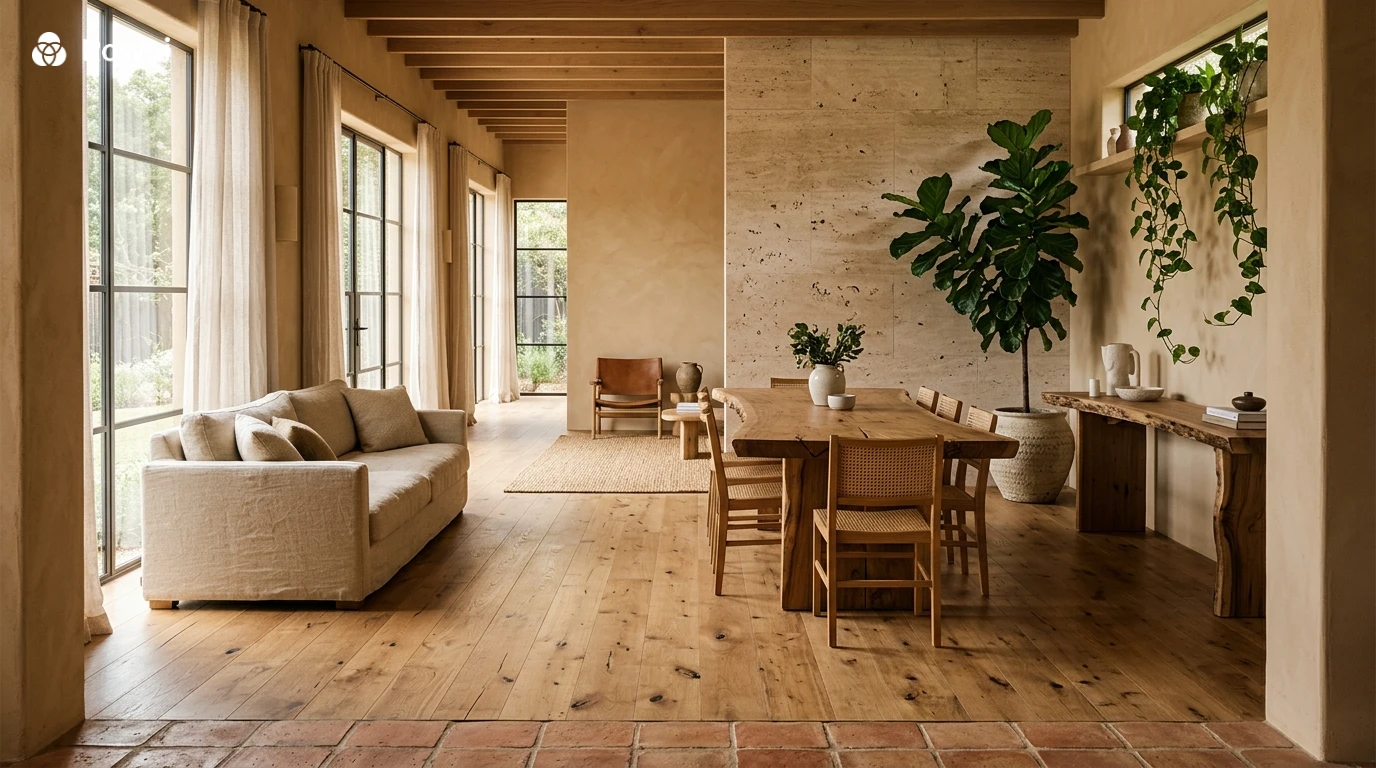
Interior design with sustainable materials increasingly favours reclaimed timber over new, natural stone over ceramic replica, clay plaster over vinyl wallcovering, and organic textiles over synthetic ones. These choices are not just ethical. They produce interiors of greater depth, character, and sensory quality. A reclaimed elm dining table tells a story that a new one cannot. A clay plaster wall breathes, regulates humidity, and improves indoor air quality in a way that vinyl paint does not. The luxury interior of the future is sustainable not by sacrifice, but by design.
Fine Details That Define a Truly Luxurious Interior
Having covered the major elements, it is worth pausing on the smallest details, those things that no single visitor would consciously notice, but whose collective presence creates the felt sense of quality that defines genuine luxury. These are the details that separate an interior built by professionals who care from one that has been put together competently but without full conviction.
A flush-mounted light switch in brushed brass, custom-made to match the door furniture. A shadow gap between the floor and the base of the joinery that makes the cabinetry appear to hover. A single concealed drawer in the bathroom vanity lined in smooth dark felt. A door that self-closes silently on a hydraulic hinge rather than swinging shut with a click. The pull of a cabinet door that is solid and precise in the hand rather than springy and approximate. Skirting boards that are so subtly proportioned they read as a refinement of the floor plane rather than a clunky afterthought.
These details cost relatively little in the context of a complete interior project. What they cost is attention. And attention is what luxury, in its truest form, always requires.
The Facade and Approach: Luxury Begins Before You Enter
A luxury interior that begins at the front door is missing the first chapter of the story. The approach to a home, its facade, its entrance sequence, and its landscaping, sets every expectation about what will be found inside. A front door that is heavy, precise, and imposing signals to every visitor that this is a home that has been considered in full. A pathway that is designed rather than merely functional, whether in aged stone setts, gravel with steel edging, or large-format porcelain laid in a confident grid, communicates that the same intelligence applied to the interior extends to the exterior.
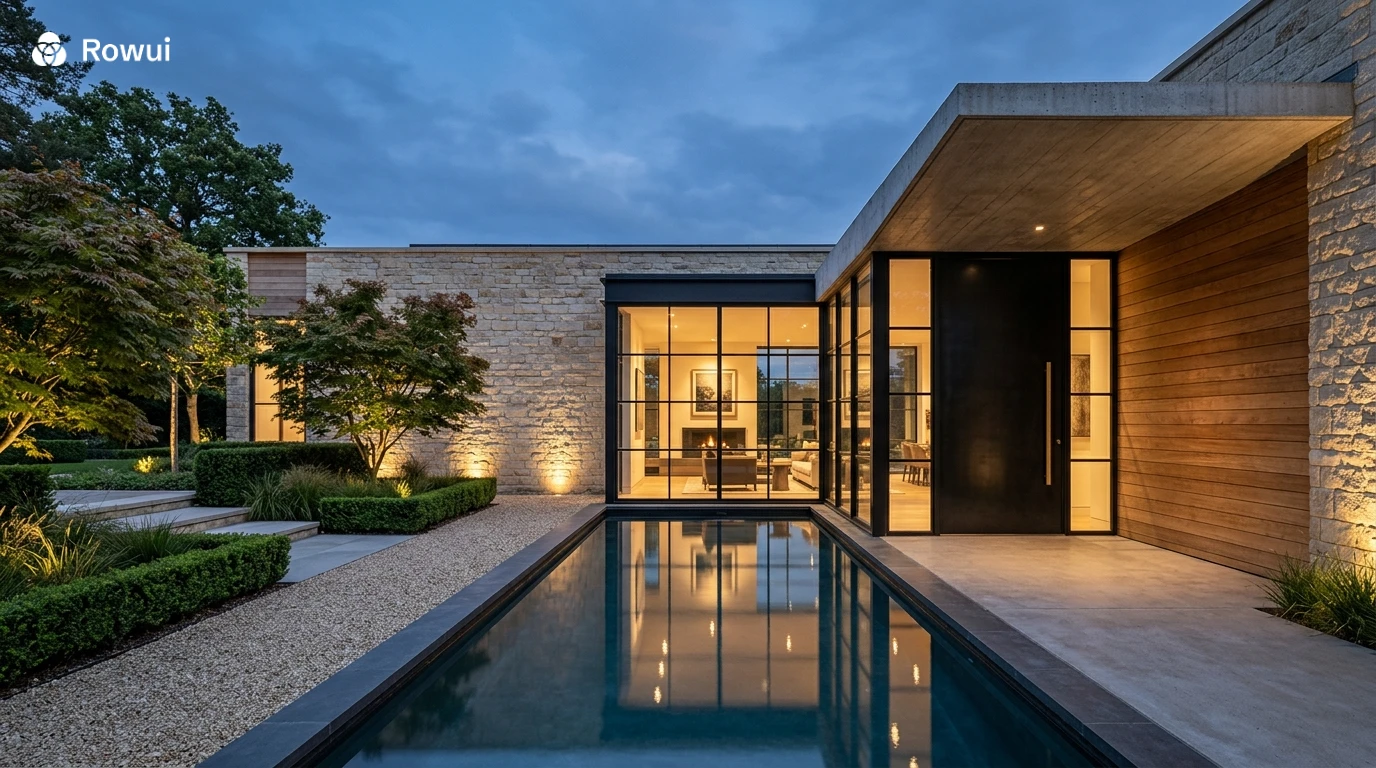
The facade material is equally important. Natural limestone, hand-laid brick in a thoughtful bond, board-formed concrete with a consistent formwork pattern, and timber cladding in a species selected for weathering quality, these are materials that improve with age rather than deteriorating. They demonstrate the same commitment to quality that defines the interior. Facade lighting, concealed ground-mounted uplights that illuminate the texture of a stone wall or the canopy of a specimen tree, extends the considered quality of the home into the dark hours and signals that nothing has been overlooked.
The Living Room as Social Architecture
The living room in a luxury home is ultimately a piece of social architecture. It is designed around how its occupants gather, converse, relax, and receive guests. The furniture layout is not arbitrary. It is a response to the dimensions of the room, the location of the fireplace or the view, the position of natural light, and the desired balance between intimacy and openness. A single large sofa and two chairs grouped around a coffee table creates a focused conversation zone that works for two people or for eight. A secondary seating group beside a window creates a reading corner that does not interrupt the main gathering space.
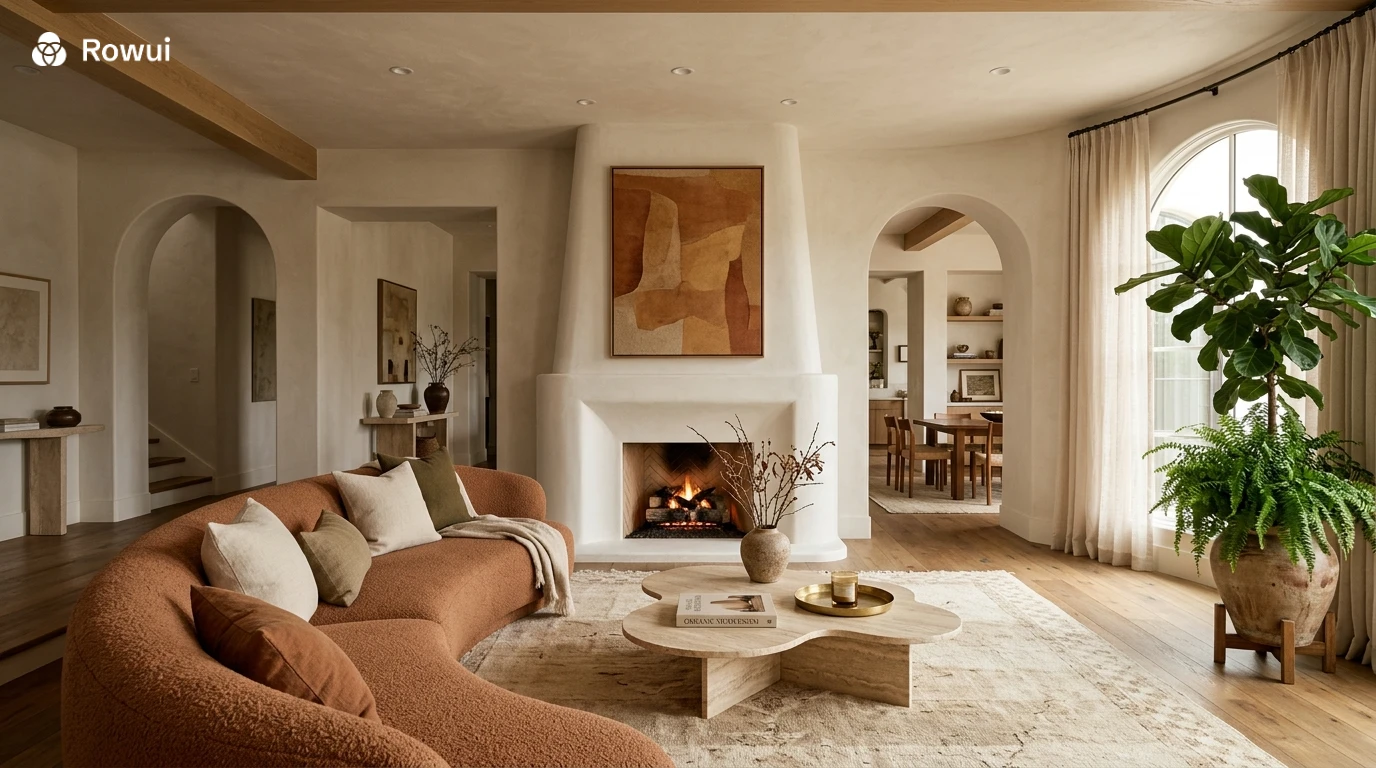
The fireplace, where present, is almost always the primary architectural feature of the living room. In contemporary luxury interior design, it tends toward simplicity and weight, a monolithic limestone surround, a flush steel frame, or a hand-plastered organic form, rather than the decorative mantlepiece of a previous era. Its function is partly thermal but mainly spatial: it is an anchor, a focal point, and a reason for the room to be arranged the way it is.
Inside-Outside Connection: Extending the Luxury Into the Landscape
The most complete luxury interiors do not stop at the exterior wall. They extend the design language, the material palette, and the level of resolution into the outdoor spaces that connect with the interior. A terrace paved in the same travertine used on the interior floor, with a seamless threshold transition through fully retractable glazed doors, makes the garden feel like another room. An outdoor kitchen built into a rendered masonry wall, with the same precision and the same material sensibility as the interior kitchen, signals that the design thinking was genuinely comprehensive.
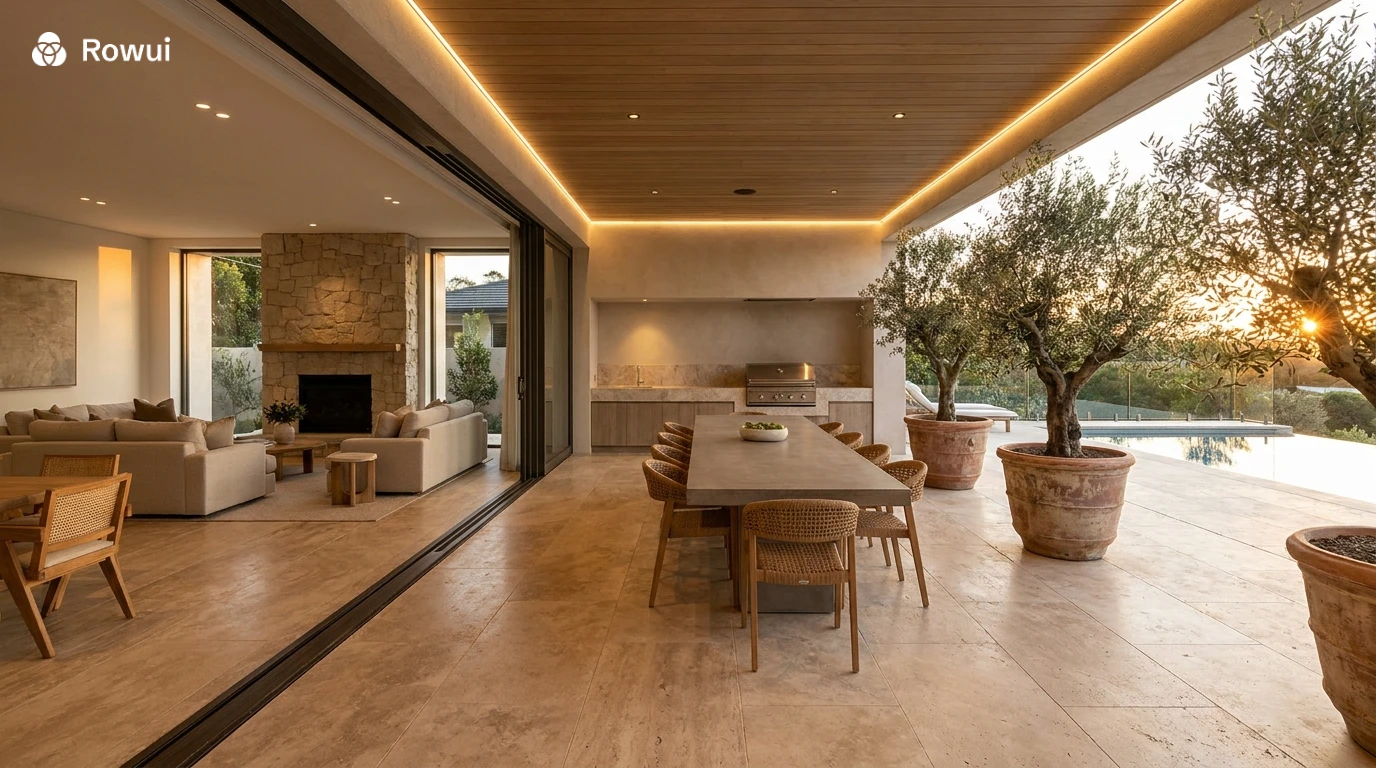
Landscaping in the luxury context is not about complexity. The most sophisticated approach is typically the simplest: repeated plant species in generous quantities, large specimen trees that provide immediate maturity and canopy, and clipped evergreen structure that provides visual interest year-round. A single specimen olive tree in an oversized terracotta pot beside the entrance communicates restraint and confidence. A garden of thirty-two different species in complicated arrangements communicates effort rather than ease.
Proportion in Practice: A Checklist for Homeowners
Understanding the principles of luxury interior design is one thing. Applying them practically in a real home project is another. The following considerations represent the most consistently important principles for homeowners undertaking a renovation or new build who want to achieve a genuinely luxurious result without necessarily engaging a full design team.
Begin with spatial planning before any material is chosen. Understand the proportions of every room, its ceiling height, its window positions, and its movement patterns, before deciding on furniture, joinery, or finishes. Choose materials by quality and appropriateness before considering cost. Three exceptional materials used correctly will always outperform ten mediocre ones used ambitiously. Commission bespoke joinery for the rooms where it matters most, typically the kitchen, the primary bedroom, and the living room, and allow the joinery to be designed as architecture rather than furniture. Invest in a lighting design before any cables are run. Every circuit should be dimmable. Plan for at least three layers of light in every principal room. Resist the temptation to fill space. Luxury interiors breathe. They have empty wall sections, clear surfaces, and visual rest. The absence of clutter is a design decision as important as any positive addition.
Conclusion: Luxury Is a Standard, Not a Budget
The most important thing to understand about luxury interior design is that it is not defined by expenditure. It is defined by the standard of thinking, the quality of material selection, the precision of detailing, and the depth of understanding of how human beings experience space. A small apartment with three exceptional materials, excellent proportions, beautifully layered lighting, and genuinely bespoke storage solutions will feel more luxurious than a large house where significant money has been spent without these principles guiding the decisions.
Luxury, in the architectural sense, is about resolution. It is about a room that has been thought through to the end, where nothing is left to chance or convenience, and where every detail contributes to a coherent and beautiful whole. This is achievable at a range of budgets by applying the same intelligence and the same rigour that professional architects and interior designers bring to every project. The materials may differ, the scale may vary, but the principles remain constant: plan carefully, choose well, detail precisely, and never mistake busyness for richness. A room that knows exactly what it is trying to be, and succeeds at it, will always feel luxurious. That is where truly refined living begins.