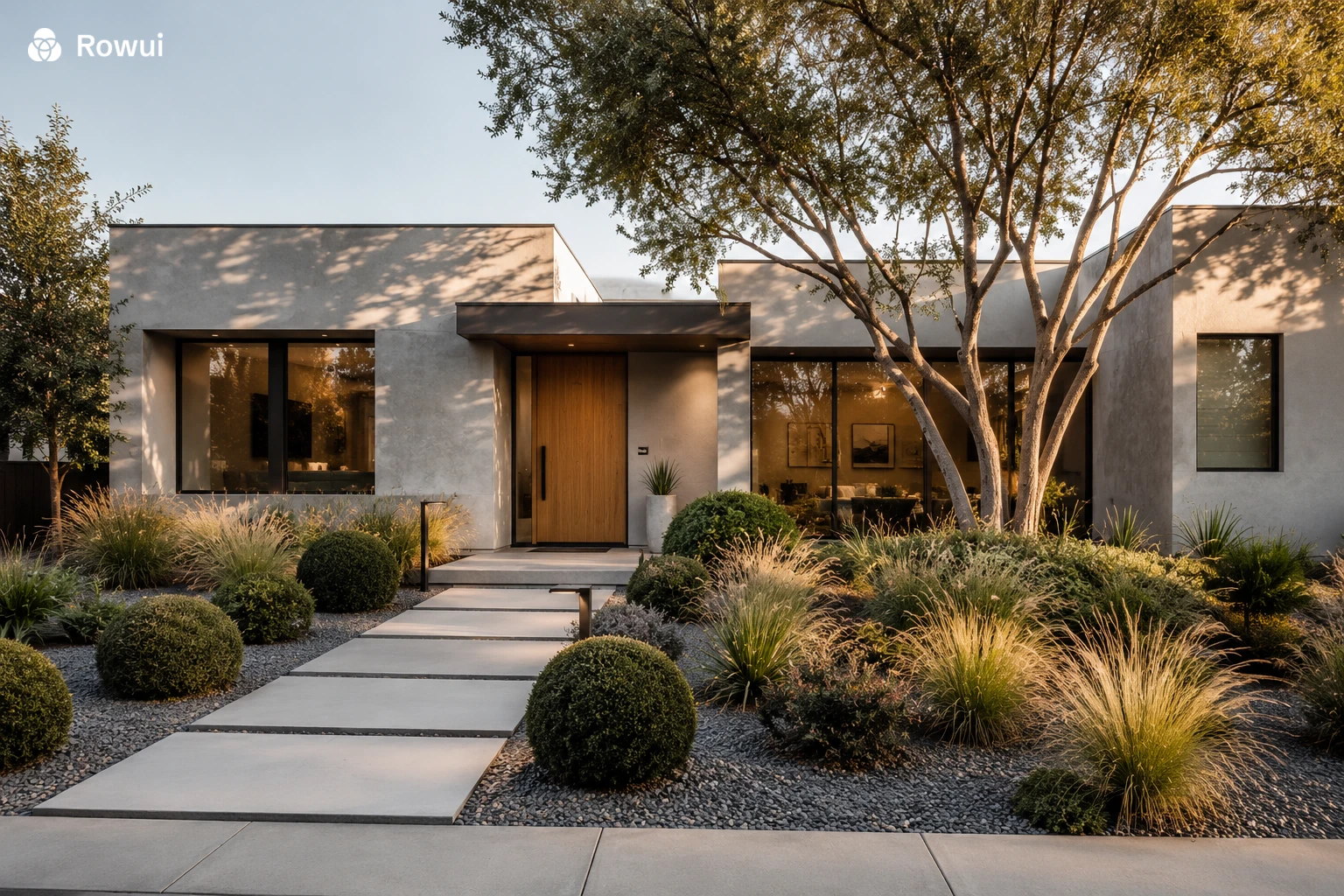
Standing in your driveway and looking at your own home, you can usually tell within seconds whether the landscaping feels intentional or like an afterthought. A modern house with the wrong planting scheme looks unfinished, no matter how much money went into the architecture. But get the landscaping right, and even a modest house starts to feel like it belongs on the cover of a design magazine. The good news is that modern landscaping is not about spending a fortune on exotic plants or hiring an army of contractors. It is about understanding a few core principles of proportion, material, and restraint, then applying them thoughtfully to your own lot.
Why Modern Landscaping Feels So Different
Traditional landscaping often relies on abundance, lots of flowering shrubs, curved beds, and a mix of textures competing for attention. Modern landscaping works the opposite way. It leans on clean lines, repetition, and negative space. A modern facade with flat planes, large glass panels, and minimal ornamentation needs a landscape that echoes that same discipline. When the planting is chaotic but the house is architecturally quiet, the whole composition feels unresolved.
This does not mean modern landscapes are cold or empty. The best examples feel calm and confident, using a limited plant palette repeated in generous quantities, paired with hard materials like concrete, steel, and stone that match the architectural language of the house itself.
Start With the Bones: Hardscape Before Plants
One mistake many homeowners make is choosing plants first and figuring out the hardscape later. In modern design, the hardscape, meaning paths, walls, patios, and driveways, should be resolved first because it establishes the geometry that everything else responds to.
Paving Materials That Read as Modern
Large format concrete pavers, poured concrete with clean control joints, and honed natural stone all read as contemporary because of their scale and lack of pattern. Avoid small interlocking pavers with busy joint lines, since they visually fragment the ground plane and fight against the simplicity of a modern facade. A single material used consistently from the driveway to the entry path creates a sense of continuity that immediately looks more expensive than a patchwork of different surfaces.
Retaining Walls and Level Changes
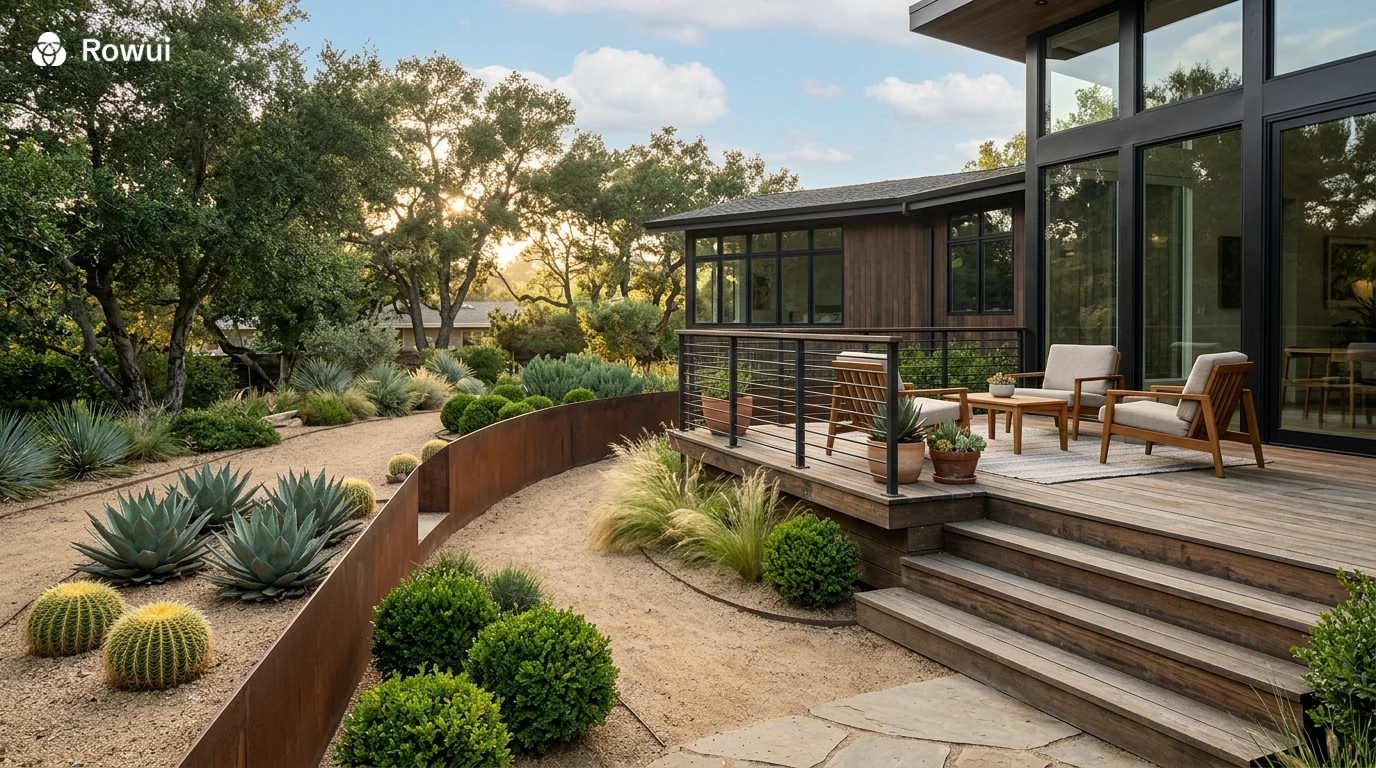
If your site has a slope, resist the urge to disguise it with mounded soil and plantings. Modern landscaping treats level changes as an opportunity, using low retaining walls in board formed concrete, gabion stone, or corten steel to create crisp horizontal lines that terrace the site. These walls double as seating, planters, or subtle boundaries between zones without needing a fence.
Choosing a Plant Palette That Supports the Architecture
Modern landscapes typically rely on a restrained palette of three to five plant species used repeatedly, rather than a wide variety scattered around the yard. This repetition creates rhythm and calm, similar to how a modern interior might repeat the same wood tone or metal finish throughout the house.
Structural Plants and Ornamental Grasses
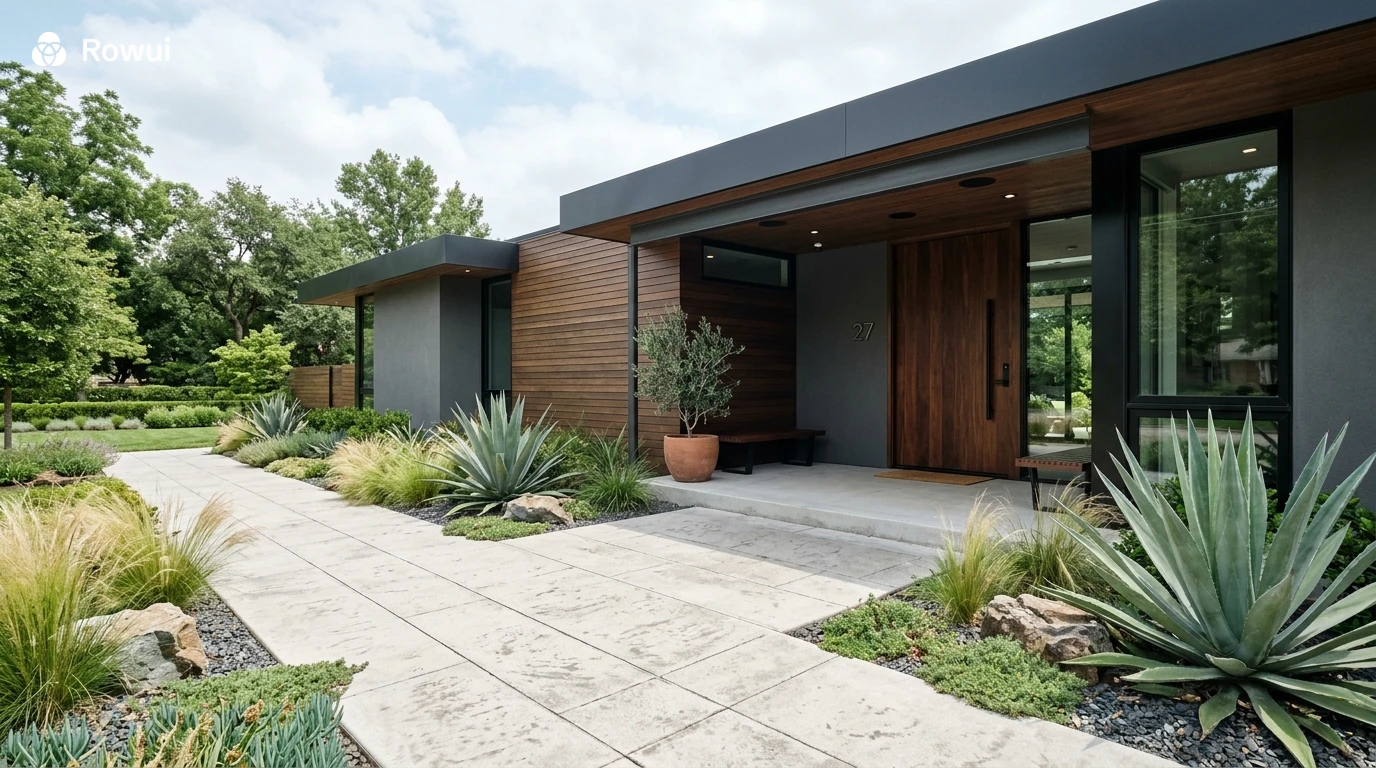
Plants with strong architectural form work best against clean facades. Think of clipped boxwood spheres, structural agave, sculptural cacti in warmer climates, or evergreen columnar trees like Italian cypress or fastigiate hornbeam. Ornamental grasses such as Mexican feather grass or miscanthus add movement without adding visual clutter, since their form stays consistent even as they sway in the wind.
Trees as Vertical Anchors
A single well placed tree can do more for a modern house than a dozen shrubs. Multi stem trees like crepe myrtle or amelanchier soften hard architectural lines while still reading as sculptural rather than fussy. Position trees to frame a view of the entry or to cast dappled shade across a west facing window wall, which also helps with passive cooling in summer.
Ground Cover Instead of Traditional Lawn
Large expanses of lawn can look dated next to a modern house, especially in dry climates. Consider replacing part or all of your lawn with drought tolerant ground covers, decomposed granite, or gravel with occasional planting pockets. This approach, sometimes called xeriscaping, reduces water use and maintenance while reinforcing the clean, graphic quality of modern design.
Designing the Entry Sequence
The path from the street or driveway to your front door is one of the most important design opportunities on your property, yet it is often the most neglected. A well designed entry sequence builds anticipation and gives visitors a clear, confident route to your door.
Pathway Width and Material
A generous path, at least four feet wide, feels welcoming rather than cramped. Straight or gently angled paths suit modern architecture better than meandering curves. Pair the path material with your house cladding or hardscape elsewhere on the property so the entry feels connected to the whole design rather than a separate add on.
Lighting the Way
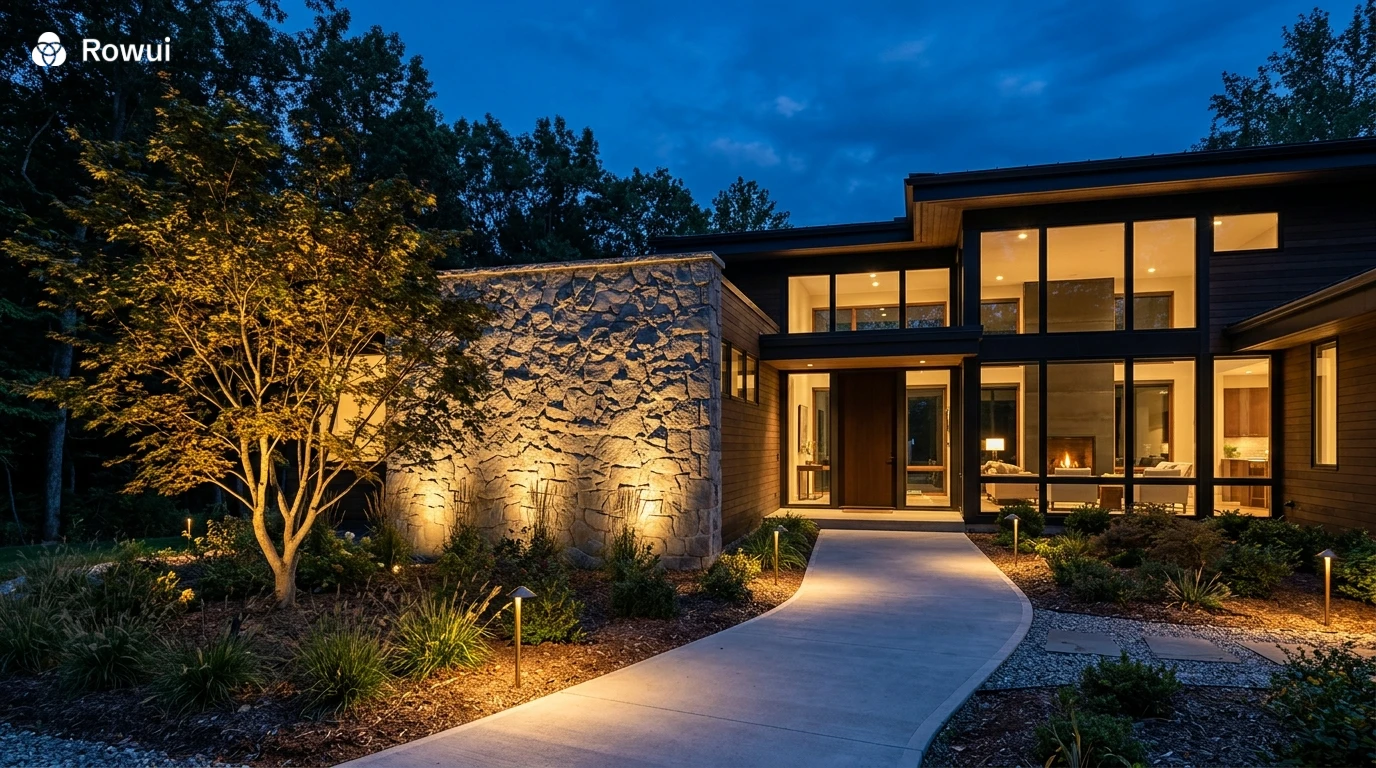
Low voltage path lights, uplighting on trees, and recessed step lights create a layered lighting scheme that feels intentional after dark. Avoid a single row of identical mushroom style fixtures marching down the path, since this reads as generic rather than designed. Instead, wash a feature wall with soft uplighting, highlight the texture of a stone facade, and let the path lighting stay low and subtle so it guides feet without overpowering the architecture.
Working With Facades, Windows, and Doors
Landscaping should never fight with the architecture of the house. Instead it should frame and highlight key features like large windows, a striking front door, or an interesting roofline.
Framing Views and Windows
Position taller plants and trees to the sides of large glass walls rather than directly in front of them, preserving the view both from inside and outside the house. A single specimen tree off center from a picture window can add a natural focal point without blocking natural light.
Highlighting the Front Door
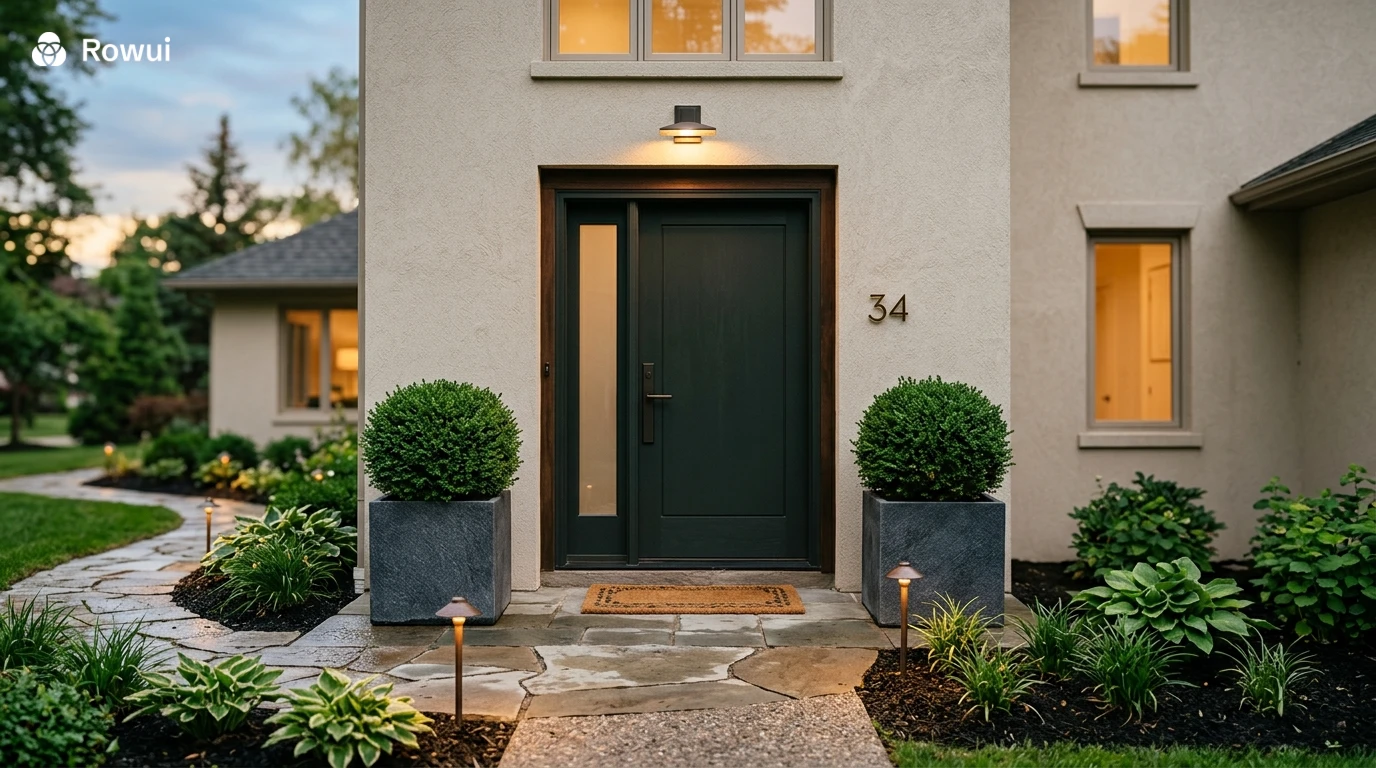
A bold front door in a saturated color like deep green, charcoal, or burnt orange deserves simple planting nearby so it remains the visual focus. Two matching planters with the same species on either side of the door create symmetry and formality, even within an otherwise asymmetrical modern facade.
Outdoor Living Spaces That Extend the House
One defining trait of modern residential design is the blurring of indoor and outdoor space. Large sliding or folding glass doors mean the patio or deck functions as an extension of the living room, so it deserves the same design attention.
Decking and Patio Materials
Thermally modified wood, composite decking in warm tones, or large format porcelain pavers all pair well with modern interiors because they mimic the material honesty found inside the house. Keep the outdoor flooring level with the interior floor where possible, since even a small step down breaks the visual connection between spaces.
Shade Structures and Pergolas
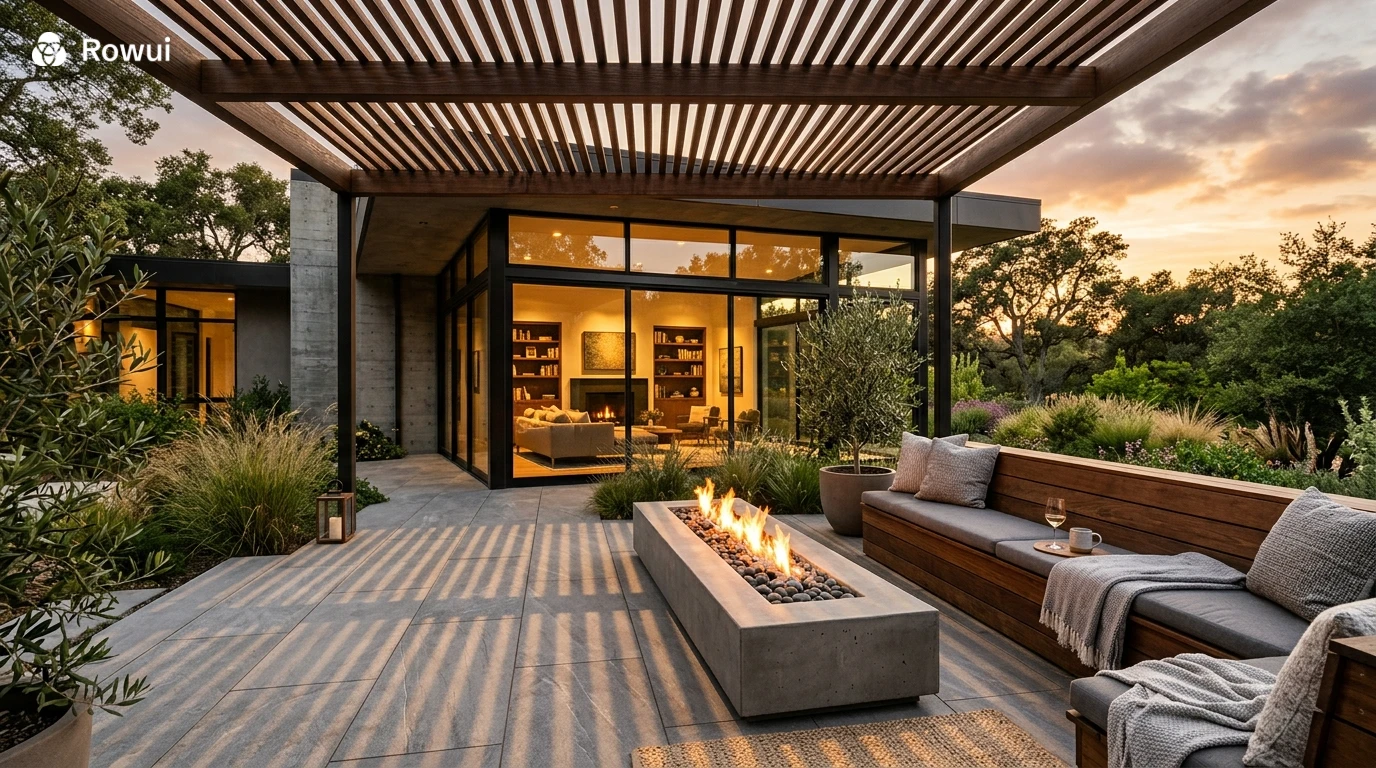
A minimalist pergola with slim steel or timber slats provides dappled shade without blocking the architecture behind it. Position the structure to align with the grid of the house, whether that means matching window mullions, roof overhangs, or existing structural columns, so it looks like it was designed alongside the house rather than bolted on afterward.
Fire Features and Water Elements
A simple linear fire pit in concrete or steel, or a shallow reflecting pool along a garden wall, adds a focal point for evening gatherings while reinforcing the geometric language of modern design. These features work best when kept low profile and integrated into the hardscape rather than treated as separate decorative objects.
Fencing, Privacy, and Boundaries
Privacy is a real concern for most homeowners, but a tall solid fence around the entire property can feel like a fortress and undercut the openness modern architecture strives for.
Layered Privacy Instead of Solid Walls
Combine a lower boundary wall with strategic planting above it, such as bamboo, ornamental grasses, or a hedge of clipped photinia, to create privacy that feels natural rather than defensive. Horizontal slatted screens in wood or metal allow airflow and dappled light through while still blocking direct sightlines from neighbors.
Material Consistency at the Boundary
Whatever fencing material you choose, try to echo something already present on the house, whether that is the same wood tone as window frames, the same metal finish as the front door hardware, or the same stone as a feature wall. This consistency ties the boundary of the property back into the overall design rather than letting it feel like a separate, generic addition.
Lighting the Landscape as a Whole
Good landscape lighting does more than provide safety and visibility. It sculpts the garden at night, turning ordinary daytime plantings into a dramatic nighttime composition.
Layer your lighting in at least three types: path lights for safe navigation, uplighting on trees and architectural walls for drama, and soft ambient lighting under seating areas or steps for comfort. Warm white light, generally in the range of two thousand seven hundred to three thousand kelvin, suits most modern homes better than cooler, bluer tones, which can feel clinical outdoors.
A Practical Starting Point for Homeowners
You do not need to redesign your entire property at once. Start with the areas that have the most visual impact and the most daily use, typically the entry path, the front door surround, and any outdoor living space visible from your main living areas. Resolve the hardscape geometry first, choose a limited plant palette that repeats across the site, and add lighting as a final layer once the bones are in place.
Modern landscaping rewards patience and restraint more than any other style. A landscape that looks slightly sparse on planting day will fill in beautifully within two or three growing seasons, while a landscape planted too densely from the start quickly becomes overgrown and loses the clarity that made it modern in the first place. Think of your landscape the same way you would think of a well designed room: every element should earn its place, and the empty space between elements is just as important as the elements themselves.