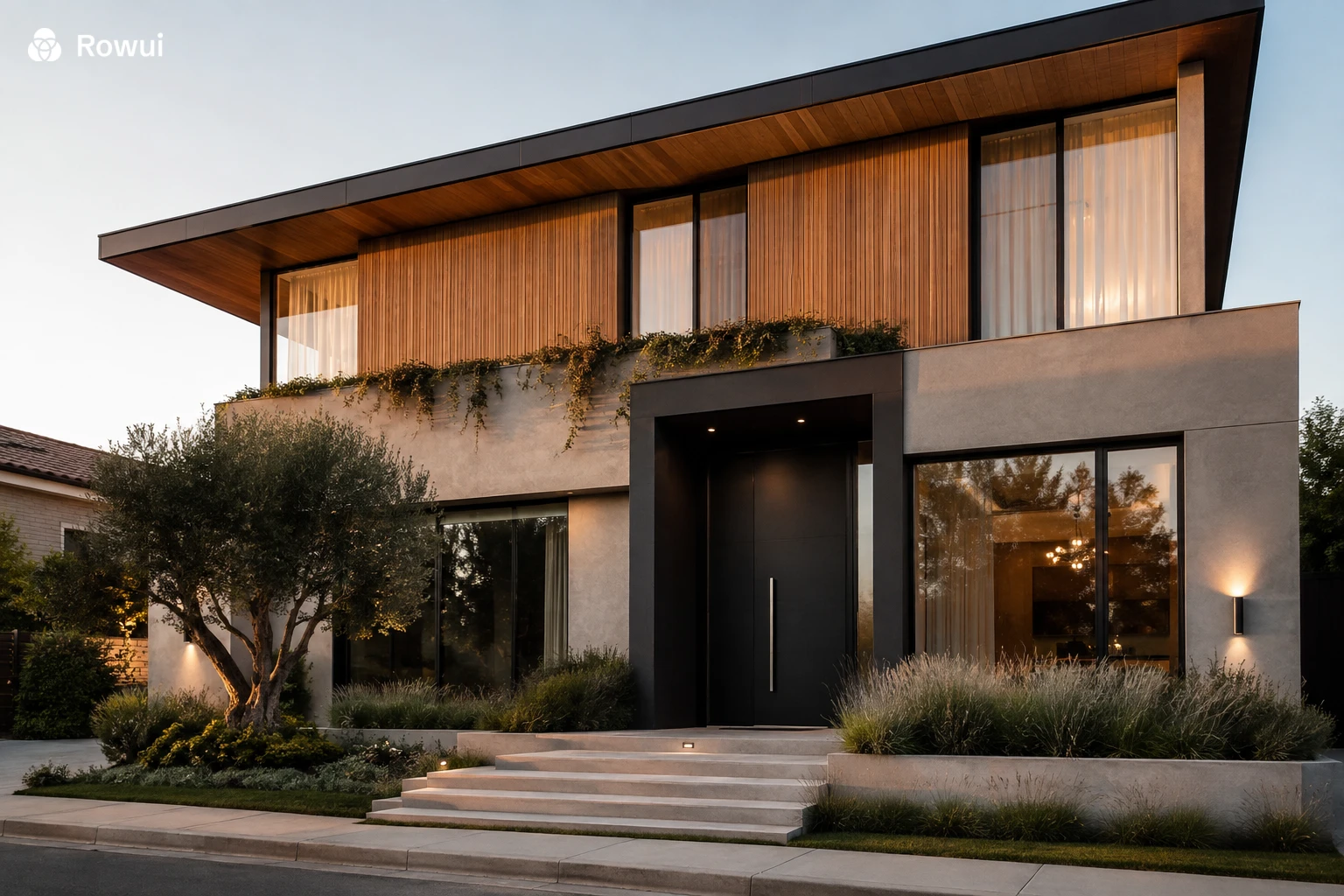
Stand across the street from your own house for a moment and really look at it. That first impression, the one a visitor forms before they ever reach your front door, is almost entirely shaped by the facade. It is the face of your home, and like any face, small details of proportion, material and light change how it reads to everyone who passes by. Many homeowners spend years perfecting the inside of their house while the exterior quietly falls behind, looking dated or disconnected from the life happening within. The good news is that a modern facade does not require a complete rebuild. With the right choices in materials, massing, windows and lighting, almost any home can be transformed into something confident, current and genuinely welcoming.
What Makes a Facade Feel Modern
Modern design is often mistaken for a specific style, all flat roofs and glass boxes, but at its core it is really a set of principles. Clean lines, honest materials, a clear sense of proportion and a restrained color palette are what give a facade that contemporary feeling, regardless of whether the house is a suburban ranch or a tall city rowhouse. A modern facade avoids unnecessary ornament and instead lets good geometry, quality materials and thoughtful light do the talking.
This matters because the facade sets expectations for everything else. A cluttered, busy exterior with mismatched trim and competing textures can make even a beautifully renovated interior feel like an afterthought. A calm, well proportioned exterior signals care and intention before anyone steps inside.
Proportion Before Decoration
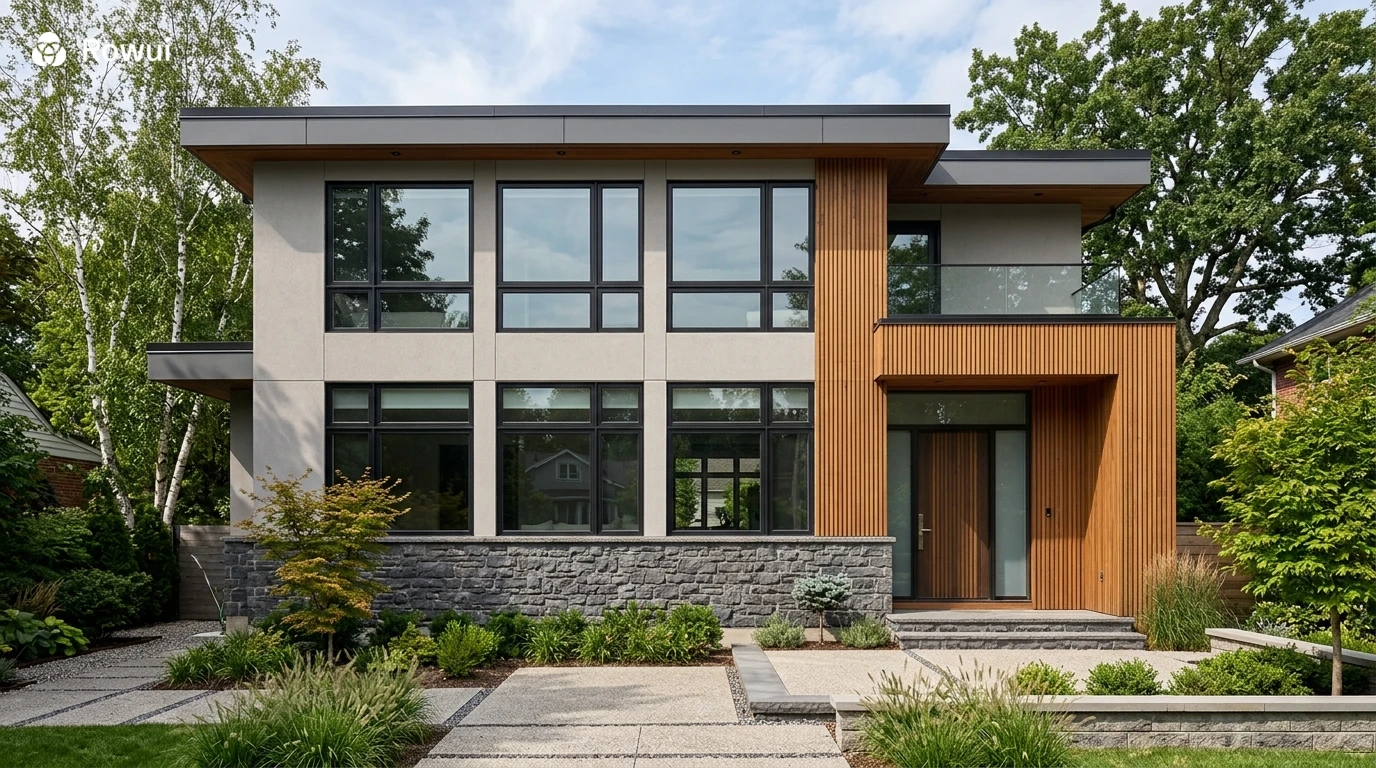
Before choosing a single material or color, look at the proportions of your facade. Are the windows aligned with each other vertically and horizontally? Is there a clear balance between solid wall and glass? Architects often talk about the ratio of void to mass, meaning the relationship between openings like windows and doors and the solid wall surrounding them. A facade with too many small, scattered windows can feel busy and unresolved, while one with a few large, well placed openings feels calm and intentional.
If your budget does not allow for major structural changes, you can still improve proportion through paint. Using one consistent tone across trim, fascia and wall surfaces removes visual noise and lets the actual shape of the house read more clearly.
Choosing Materials That Age Well
Material choice is where a modern facade truly comes alive. The best contemporary exteriors usually combine two or three materials, no more, each chosen for texture, durability and how it will look in five, ten or twenty years, not just on installation day.
Timber Cladding and Warmth
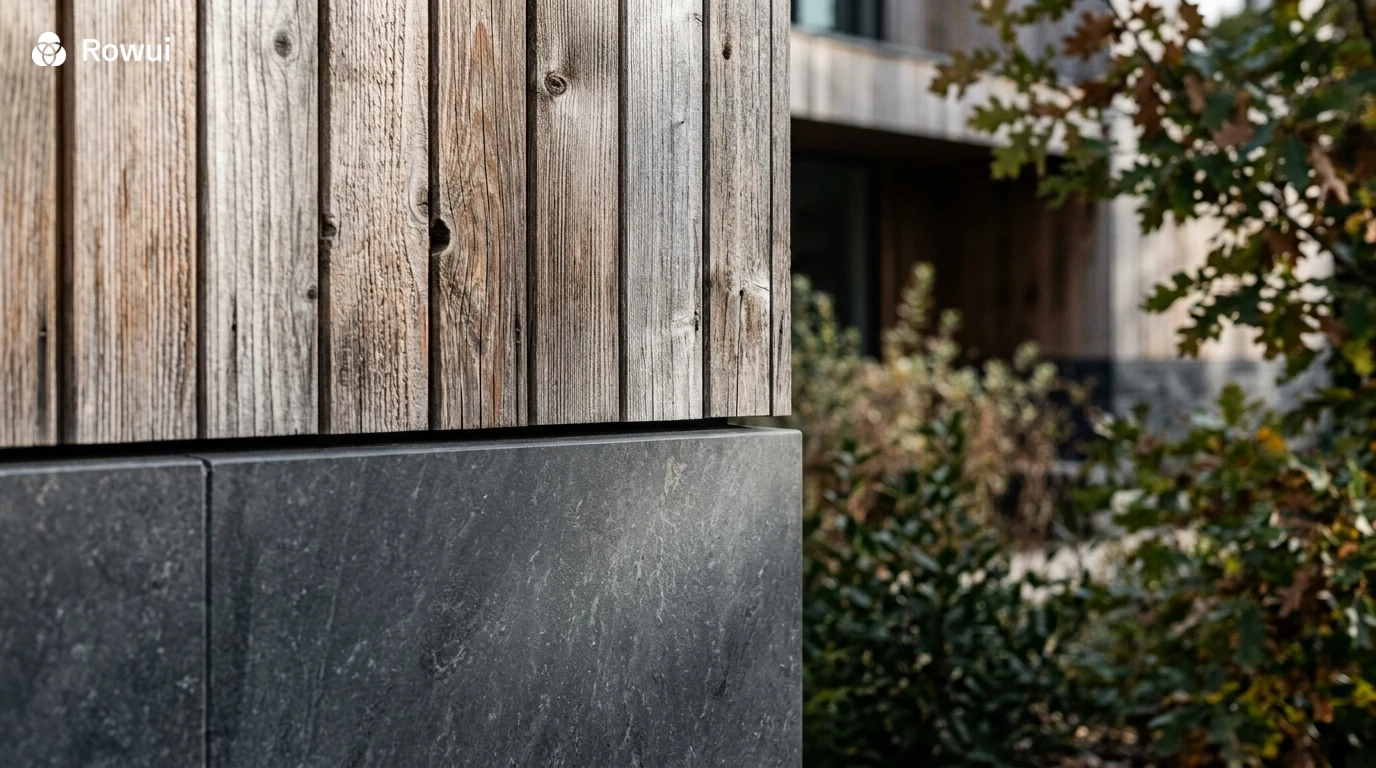
Vertical or horizontal timber cladding remains one of the most popular ways to soften a modern facade. Thermally treated wood or composite timber boards bring warmth and texture that pure concrete or metal cannot match on their own. Used as an accent around the entrance or as a full band across the upper floor, timber creates a natural focal point. Choose a finish that will weather gracefully into a soft silver gray if you prefer a low maintenance approach, or commit to periodic oiling if you want to preserve the original honey tone.
Render, Brick and Stone
Smooth painted render is a staple of contemporary design because it creates crisp, shadow free surfaces that emphasize clean geometry. Pairing render with a base of natural stone or dark brick grounds the house visually, giving it a sense of weight where it meets the ground. This combination, light render above and darker stone below, is one of the most reliable formulas in modern residential design because it mimics how buildings have always been read, solid and heavy at the base, lighter as they rise.
Metal Accents and Panels
Standing seam metal panels, in charcoal, bronze or matte black, add a crisp industrial edge when used sparingly, often around a garage, a porch roof or a single wall plane. Metal reflects light differently throughout the day, which gives the facade a subtle sense of movement that static materials like brick cannot offer.
Color Palettes That Feel Current
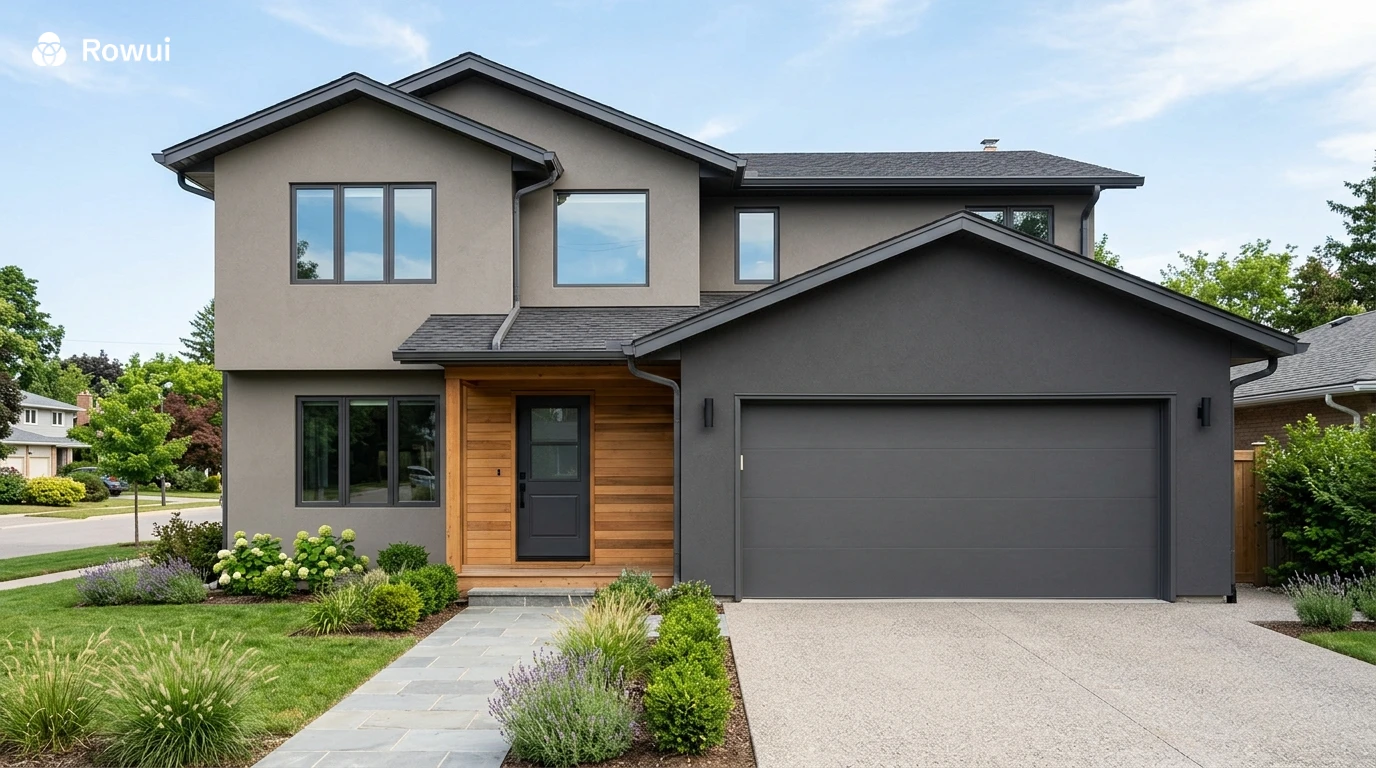
Modern facades tend to favor a restrained palette built around neutrals, off whites, warm grays, charcoal and deep earth tones, with one material or color used as a quiet accent rather than a loud statement. A common and effective approach is a two tone facade, where the main volume of the house is a light neutral and a secondary volume, often where the entrance or garage sits, is a much darker shade. This creates depth and helps break up what might otherwise be a flat, monotonous elevation.
Avoid trends that lean too heavily on a single dramatic color, since these can date quickly. Instead, let texture do the work of visual interest, pairing matte render with textured timber or a honed stone finish, so the palette stays timeless even as design trends shift around it.
Windows and Doors as Design Features
In a modern facade, windows are not just functional openings, they are compositional elements. Large format windows, floor to ceiling glazing and slim black framed panels have become signatures of contemporary residential architecture because they do two things at once: they flood interiors with natural light and they create strong, deliberate rectangles on the exterior that anchor the overall design.
Window Placement and Grouping
Rather than scattering windows evenly across a wall, modern design often groups them, combining two or three openings into a single composed block, or stacking a tall window above a shorter one to create a vertical rhythm. This grouping strategy avoids the busy, polka dot appearance of older facades and instead reads as considered architecture. If you are renovating an existing home, even reframing a couple of windows into a single larger opening with a shared frame can dramatically modernize the look.
The Front Door as a Focal Point
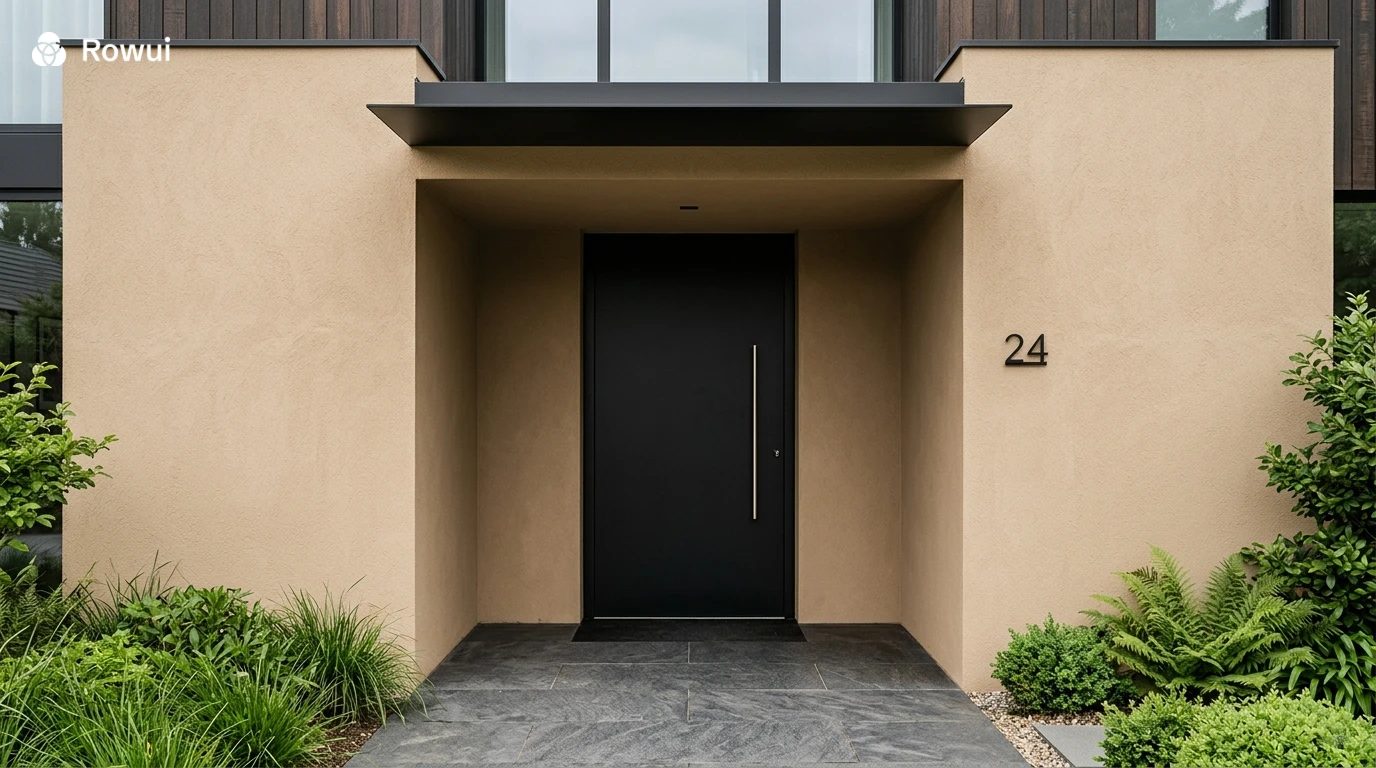
Your entrance deserves more attention than most homeowners give it. A tall, solid door in a deep tone such as charcoal, forest green or matte black immediately reads as confident and current, especially when paired with minimal hardware and a slim horizontal or vertical pull handle rather than an ornate knob. Recessing the entrance slightly, or covering it with a simple overhead canopy in matching metal or timber, adds both shelter and architectural depth, turning a flat doorway into a genuine threshold.
Rooflines and Massing
The roof shape has a bigger impact on a facade's character than most people realize. Steep pitched roofs read as traditional, while low pitched, flat or shed roofs feel immediately contemporary, especially when paired with deep overhangs that cast strong shadow lines across the wall below. If a full roof replacement is not realistic, consider whether a parapet extension or a simple fascia upgrade could visually flatten the roofline enough to shift the overall feel of the house.
Massing, the way different volumes of the house stack and shift against each other, is equally important. A single box shaped house can feel heavy and static, while a house with a slightly cantilevered upper floor, a recessed garage or a stepped entry volume creates the layered, sculptural quality associated with contemporary design.
Lighting the Facade After Dark
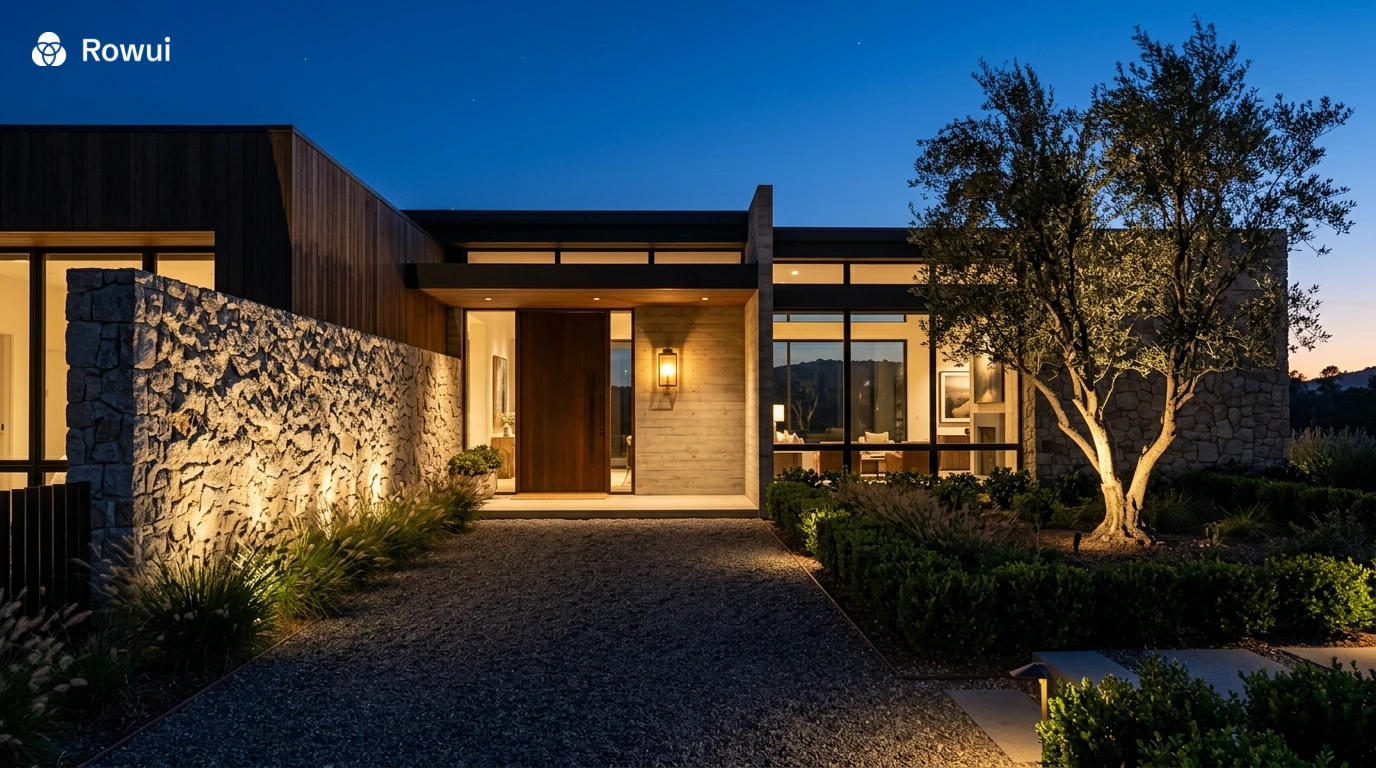
A facade does not stop existing when the sun goes down, and in fact, exterior lighting is one of the most underused tools for making a home feel modern. Wall grazing lights placed low along a textured surface like stone or timber emphasize material depth, while linear LED strips tucked under roof overhangs or stair edges create a soft glow without visible fixtures. Avoid a single bright porch light overpowering everything else. Instead, layer several lower intensity sources, a soft wash along the facade, a warm light beside the door, perhaps a subtle uplight on a specimen tree, so the house reads as considered rather than simply illuminated.
Landscaping That Supports the Architecture
Even the most beautifully designed facade can be undermined by landscaping that fights against it. Structured, architectural planting, ornamental grasses, clipped hedges, a single well placed tree, tends to complement clean modern lines far better than a wild mix of flowering shrubs. Gravel, large format paving and simple concrete paths reinforce the same restrained material language used on the house itself.
Consider how planting frames the entrance sequence. A narrow linear planting bed running alongside a concrete path, or a single sculptural tree positioned just off center from the front door, draws the eye and adds a natural softness that balances the hard geometry of render, glass and metal.
Practical Upgrades for Existing Homes
Not every homeowner is starting from scratch, and full facade renovations are not always necessary to achieve a modern feel. Smaller, targeted changes can shift the character of a house significantly.
Repainting With Intention
A full repaint using a considered two tone or three tone scheme, rather than a single flat color, is one of the most cost effective transformations available. Pair it with new gutters and downpipes in a matching tone so they disappear into the facade rather than standing out as an afterthought.
Adding a Feature Cladding Panel
Applying a section of timber or metal cladding across a single wall plane, often around the entry or garage, can modernize a facade without touching the rest of the structure. This kind of targeted intervention creates the contrast and texture associated with new builds while keeping renovation costs contained.
Upgrading Garage Doors
Garage doors often dominate a significant portion of a home's street facing wall, yet they are frequently overlooked. A flush panel garage door in a color matching the main facade, rather than a contrasting white, instantly reduces visual clutter and lets the door recede into the overall composition instead of competing with it.
Bringing It All Together
A modern facade is not about following a rigid checklist of trends, it is about applying a few consistent principles: clear proportion, honest materials, restrained color, purposeful windows and thoughtful lighting, all working together rather than competing for attention. The homes that feel most successfully modern are rarely the most expensive or the most dramatic. They are the ones where every decision, from the depth of a window frame to the color of a downpipe, was made with the whole composition in mind.
If you take one idea away from this, let it be this: before you choose a single paint color or material sample, step back and study your house as a whole shape first. Understand its proportions, its strongest lines and its natural focal points, then let every material and lighting decision reinforce that shape rather than distract from it. A facade transformed with intention, even through modest, budget conscious changes, will always read as more considered and more genuinely modern than one assembled from trends alone.