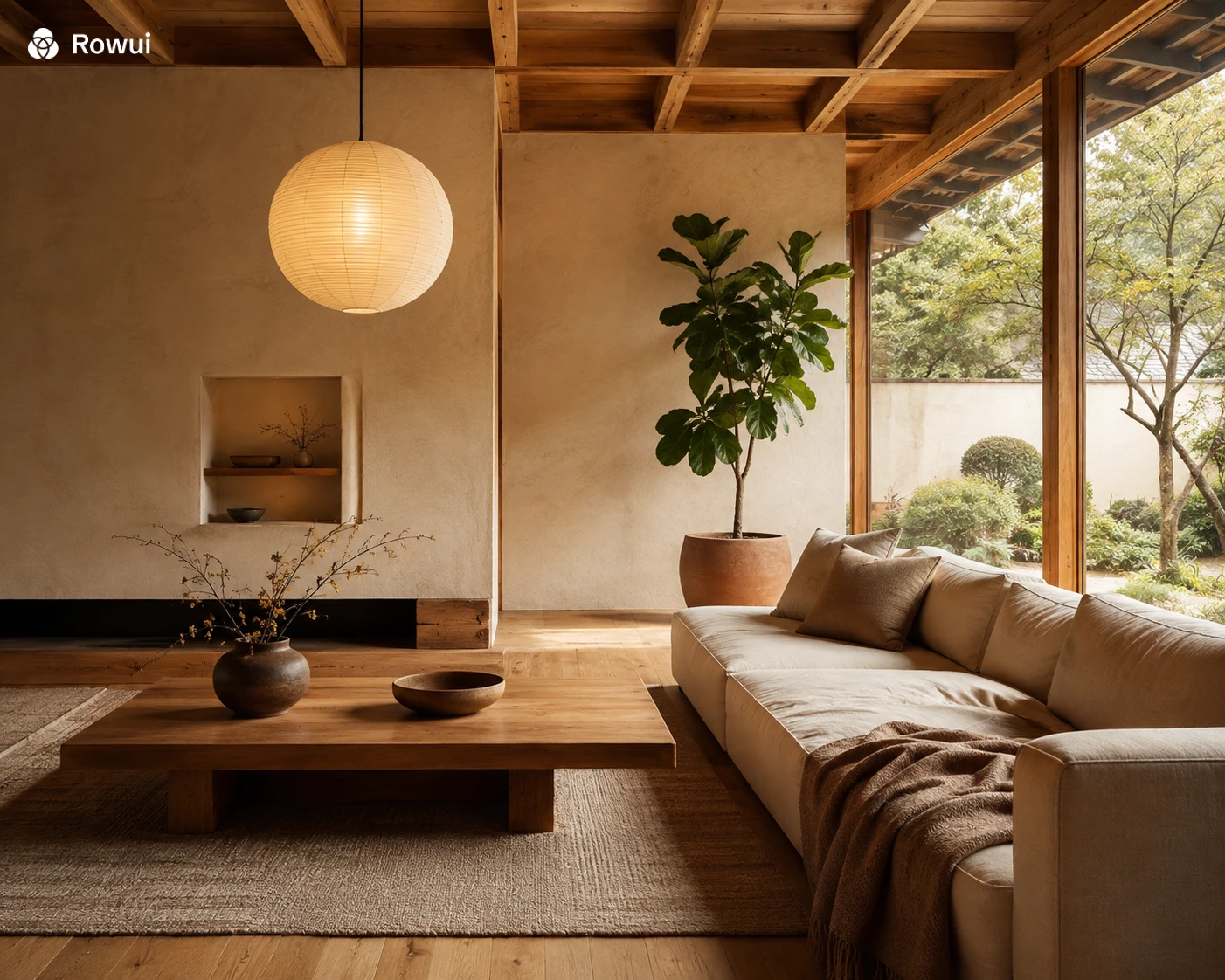
There is a moment, when you walk into a perfectly designed room, where everything feels effortlessly right. The light is calm. The surfaces are clean but not cold. The furniture sits with quiet purpose. Nothing shouts for attention, yet everything feels considered. That feeling has a name now, and it is Japandi. A design philosophy that merges the warmth of Scandinavian living with the refined restraint of Japanese interiors, Japandi has moved far beyond a passing trend to become one of the most thoughtfully livable approaches to home design available today. If you have ever felt exhausted by clutter, overwhelmed by maximalism, or disappointed by minimalism that feels too sterile, Japandi might be exactly what your home has been waiting for.
This guide walks you through everything you need to know about Japandi interior design, from its philosophical roots to its practical application across every room in your home. Whether you are renovating an entire house or simply refreshing a single living room, these principles will help you create spaces that feel genuinely peaceful, beautifully functional and quietly elegant.
What Is Japandi Interior Design?
Japandi is not simply a mashup of two aesthetics. It is the discovery that Japanese and Scandinavian design traditions share a deep philosophical common ground, one that prioritizes craft, function, natural materials and the quiet beauty of simplicity. When these two traditions are brought together thoughtfully, the result is something warmer than pure Japanese minimalism and more refined than typical Scandinavian hygge styling.
The word itself is a portmanteau of Japan and Scandinavia, but the concept goes back centuries. Japanese design has long been guided by the philosophy of wabi-sabi, which finds beauty in imperfection, impermanence and the natural patina of aged materials. Scandinavian design emerged from a tradition of functional craftsmanship shaped by long winters, a respect for natural resources and a belief that beautiful objects should also serve a purpose. Both philosophies reject excess. Both celebrate material honesty. Both believe that a well-made, simple object is more beautiful than an ornate, complicated one.
Wabi-Sabi Meets Hygge
Wabi-sabi invites you to appreciate the crack in a ceramic bowl, the grain of an unfinished timber beam, the gentle asymmetry of a hand-thrown vase. Hygge, the Danish concept of cozy contentment, encourages warmth, softness and the pleasure of a comfortable home. In Japandi, these two ideas meet in rooms that are uncluttered but never bare, refined but never precious, calm but never cold. The result is interior design that feels deeply human even at its most restrained.
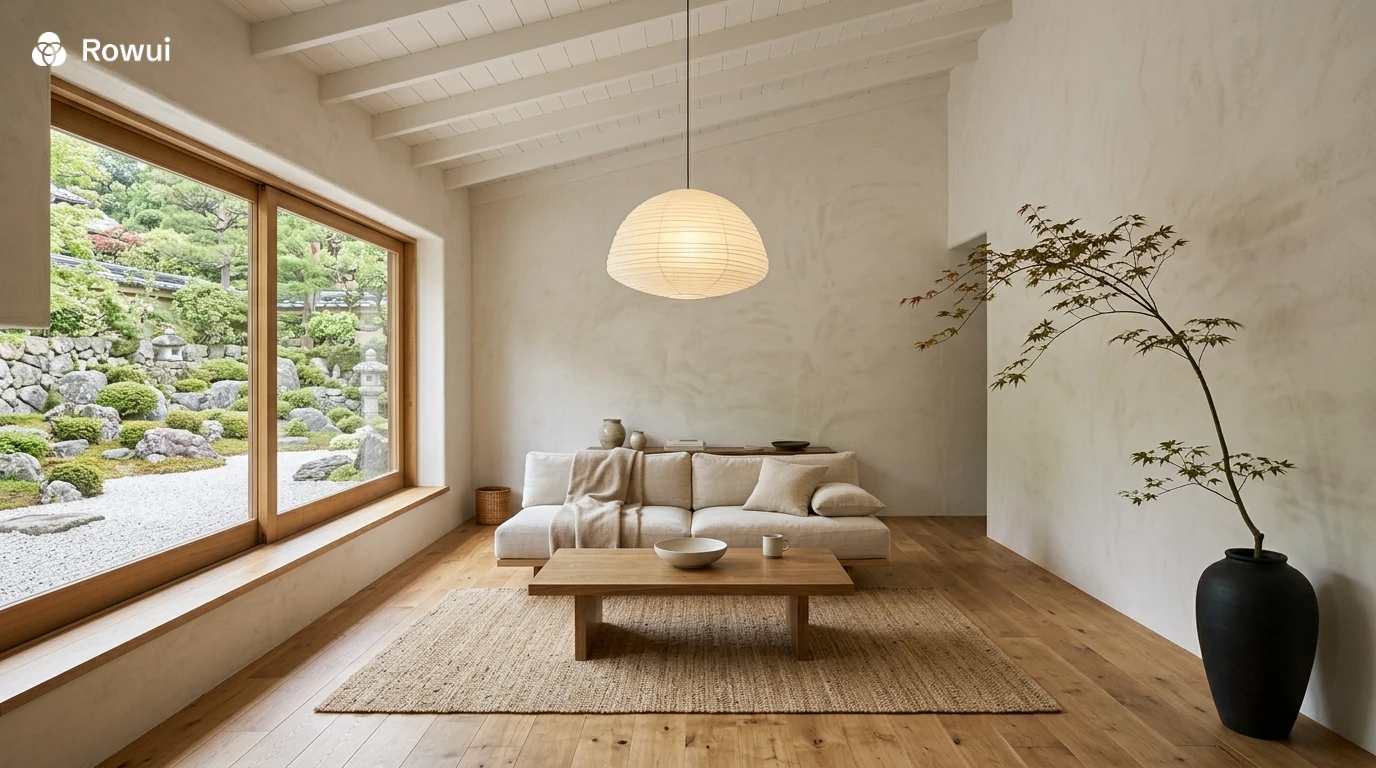
The Core Principles of Japandi Design
Understanding Japandi means understanding a set of values rather than a checklist of products. These principles guide every decision, from the colour of your walls to the handle on your kitchen cabinet.
Simplicity With Soul
Japandi spaces are simple, but simplicity here does not mean empty. Every object in a Japandi room earns its place either through function, beauty or both. A ceramic jug on a shelf is there because it is useful and because its form is beautiful. A woven basket holds blankets and adds texture simultaneously. The discipline is in editing ruthlessly and choosing deliberately, keeping only what genuinely adds to the life of the space.
Natural Materials as the Foundation
If Japandi has a single non-negotiable, it is natural materials. Timber, stone, linen, cotton, rattan, bamboo, clay, leather and wool are the building blocks of this aesthetic. These materials bring life and warmth to a minimalist space because they carry inherent variation, texture and depth. A white room lined with raw plaster walls and a solid oak floor feels alive and grounded. The same room with painted drywall and laminate flooring feels clinical regardless of how tidy it is kept.
Functional Furniture With Intentional Form
Japandi furniture tends to be low, solid and beautifully proportioned. It draws from both Japanese floor-level living traditions and Scandinavian mid-century craft furniture. You will recognize it by its clean lines, absence of ornamentation, visible joinery details and honest use of materials. A dining table of solid ash with tapered legs and a slightly matte finish. A sofa in undyed linen sitting close to the ground. A bed frame in smoked oak with no headboard clutter. These pieces are confident in their quietness.
A Restrained but Warm Colour Palette
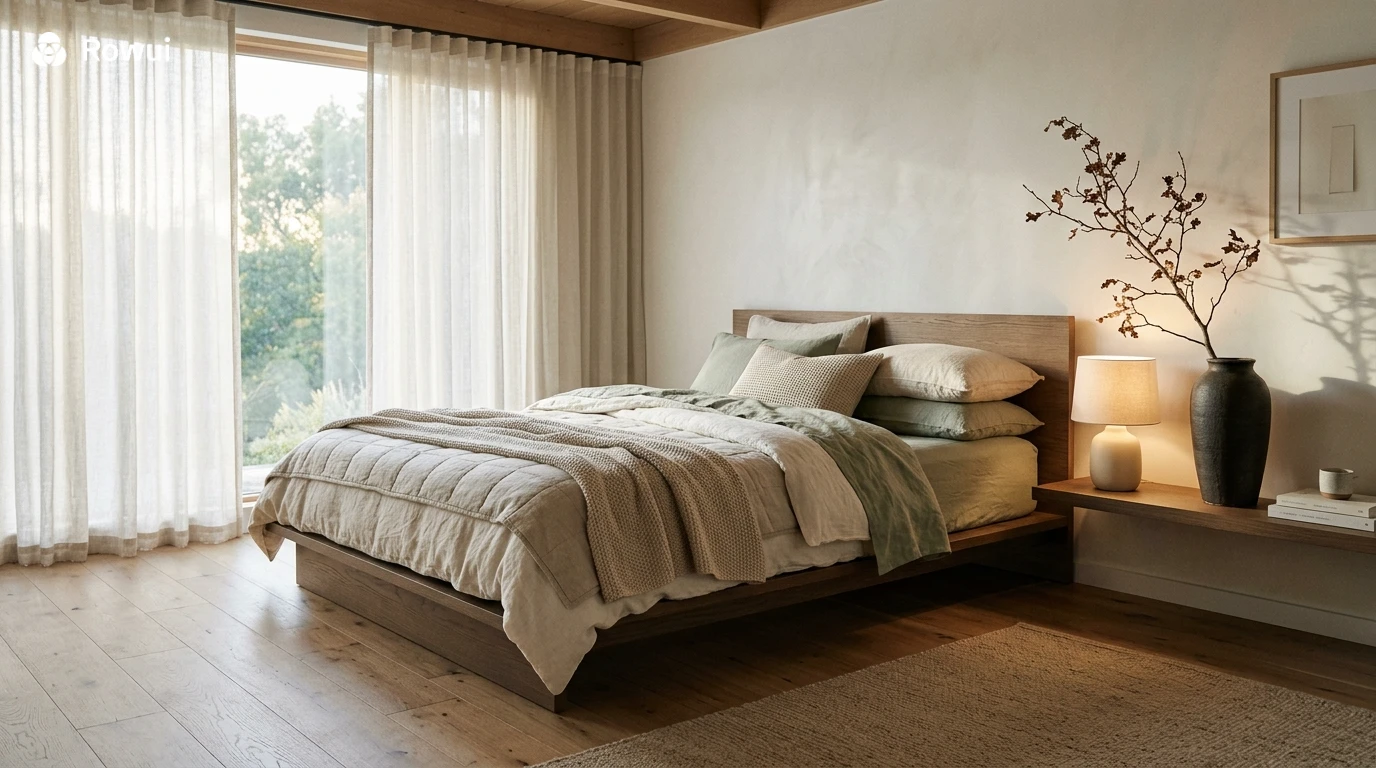
Japandi colour palettes are neither cold nor colourful in a conventional sense. They live in the space between white and warm, drawing on earthy neutrals, soft greens, muted terracottas, deep charcoals and the full range of timber tones. Think warm white plaster walls paired with a slate grey sofa and a honey-toned timber floor. Or deep sage green cabinetry against a pale stone countertop and a warm cream ceiling. These combinations feel grounded and restful rather than flat or clinical.
Negative Space Is Not Wasted Space
One of the most powerful lessons Japandi borrows from Japanese design is the concept of ma, the intentional use of empty space as a design element in itself. In Western design, negative space often feels like something to be filled. In Japandi, a bare wall beside a carefully placed shelf, an empty corner occupied only by light, or a clear floor between two pieces of furniture all contribute to the sense of calm and spaciousness that defines the aesthetic. Letting a room breathe is an active design decision, not an oversight.
Japandi Living Room Design
The living room is where Japandi principles are most immediately felt and most visually rewarding. This is a space for gathering, resting and quiet enjoyment, and Japandi suits all three purposes beautifully.
Choosing the Right Sofa and Seating
A Japandi living room sofa sits low to the ground, typically between 30 and 40 centimetres in seat height. It should have simple, clean lines without tufting, decorative legs or excessive cushioning. Upholstery in undyed linen, warm charcoal wool or a textured boucle in oat or cream works well. Add a single large floor cushion or zaisu chair at ground level to reinforce the Japanese influence and create flexible, casual seating options.
Avoid matching furniture sets. A Japandi room is assembled rather than matched, with pieces chosen for their individual character and shared material language. The sofa in linen, an armchair in leather, a rattan side table and a ceramic floor lamp can all coexist beautifully if they share tonal warmth and material honesty.
Coffee Tables and Low Furniture
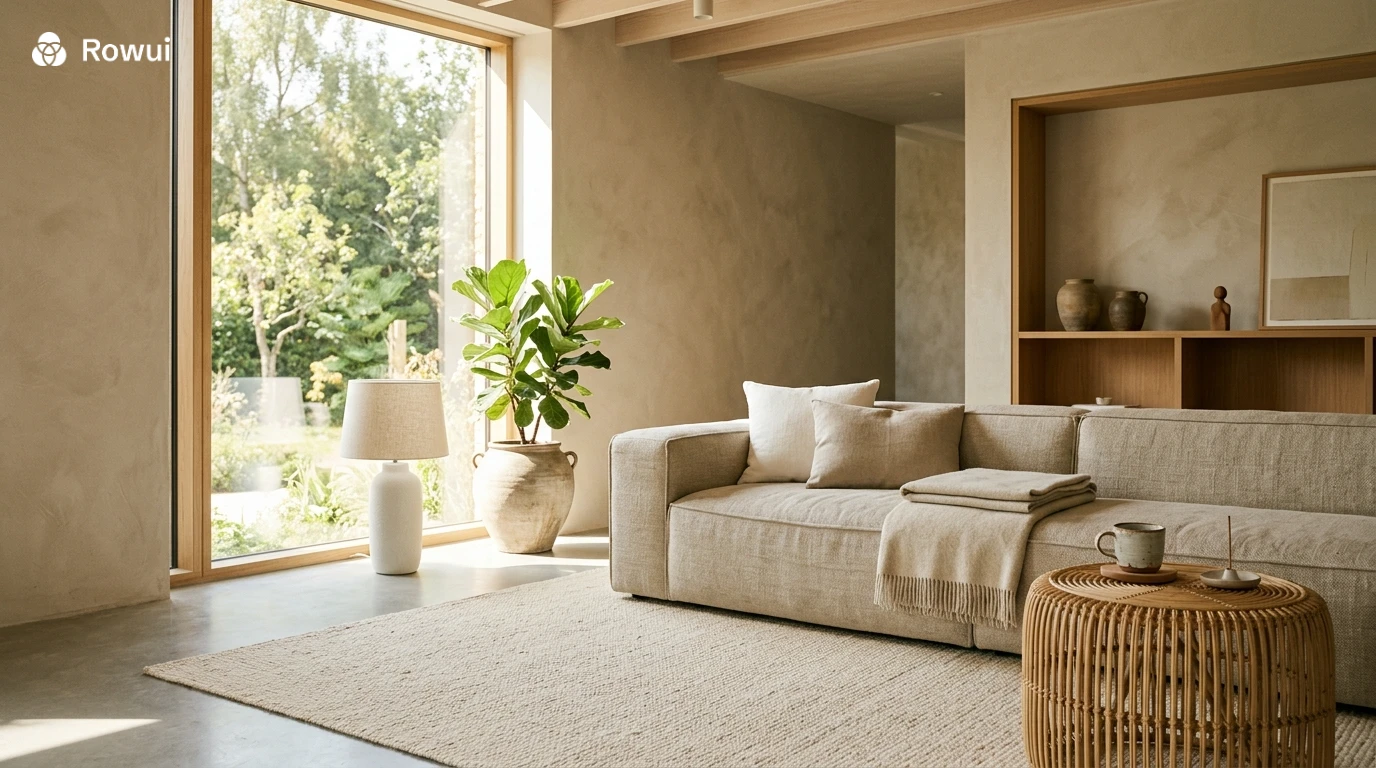
Japandi coffee tables are typically very low, often no more than 35 to 40 centimetres tall. Solid timber, stone tops on timber bases, or wabi-sabi inspired hand-crafted pieces in irregular forms all work well. A low table styled with a single ceramic bowl, one small plant and perhaps a stack of two books creates a composition that feels deliberate without being overthought.
Walls, Floors and Texture
The best Japandi living rooms use texture to add depth without adding colour. A limewashed or bare plaster wall in a warm off-white or pale greige adds visual interest through its surface quality rather than its hue. A timber floor in a matte, oiled finish in honey, warm grey or blonde tones provides warmth underfoot and connects the space to the natural world. A jute or sisal rug, or a flat-weave wool rug in undyed ivory or sage, grounds the seating area and adds another layer of natural material.
Art and Decorative Objects
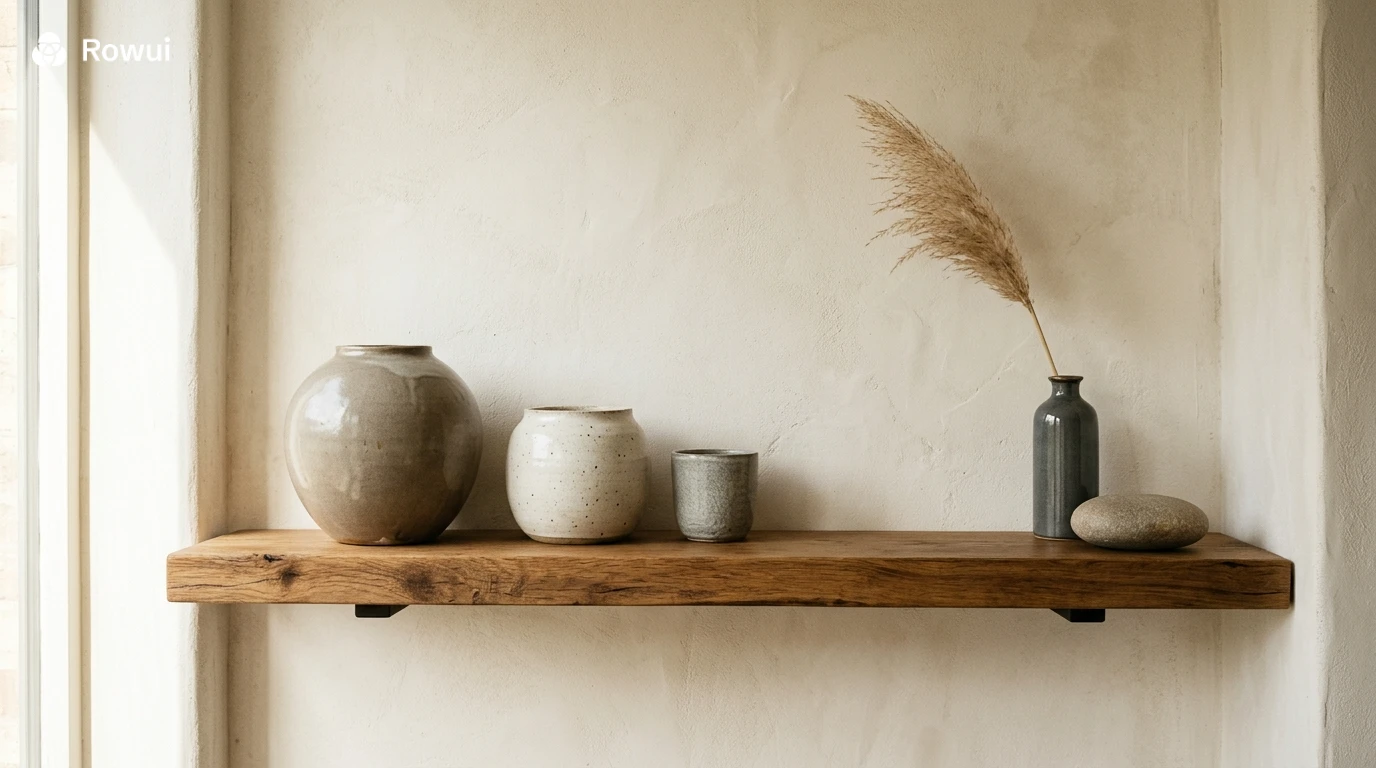
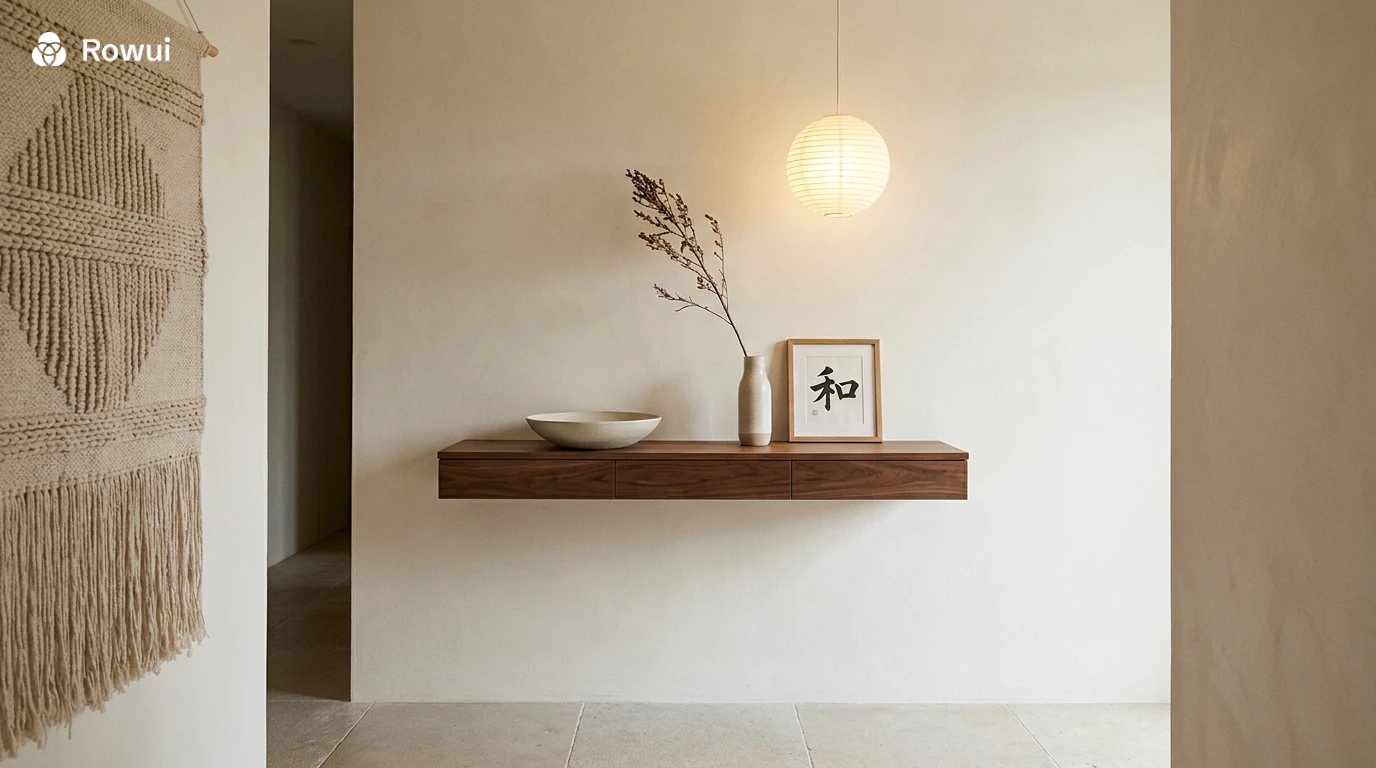
Japandi decoration is highly edited. One or two pieces of art displayed with space around them rather than gallery-wall density. A single large format ink painting, a simple abstract print in muted earth tones, or a piece of calligraphy on raw handmade paper all sit beautifully. Objects on shelves should be sparse: a hand-thrown pot, a smooth river stone, a dried botanical stem. The power is in the negative space surrounding each piece as much as in the piece itself.
Japandi Kitchen and Dining Design
The kitchen and dining space are where Japandi's commitment to functional beauty becomes most practical and most transformative for daily life.
Japandi Kitchen Cabinets and Finishes
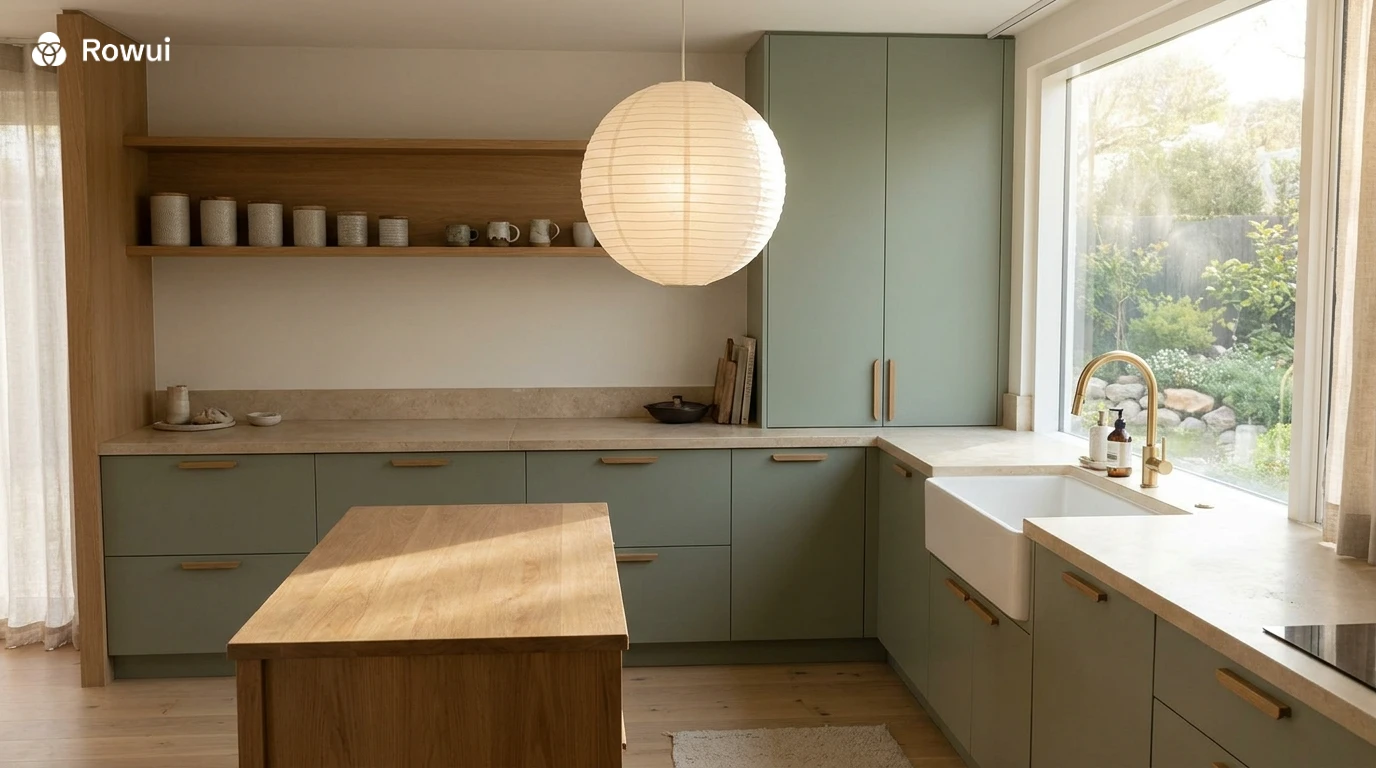
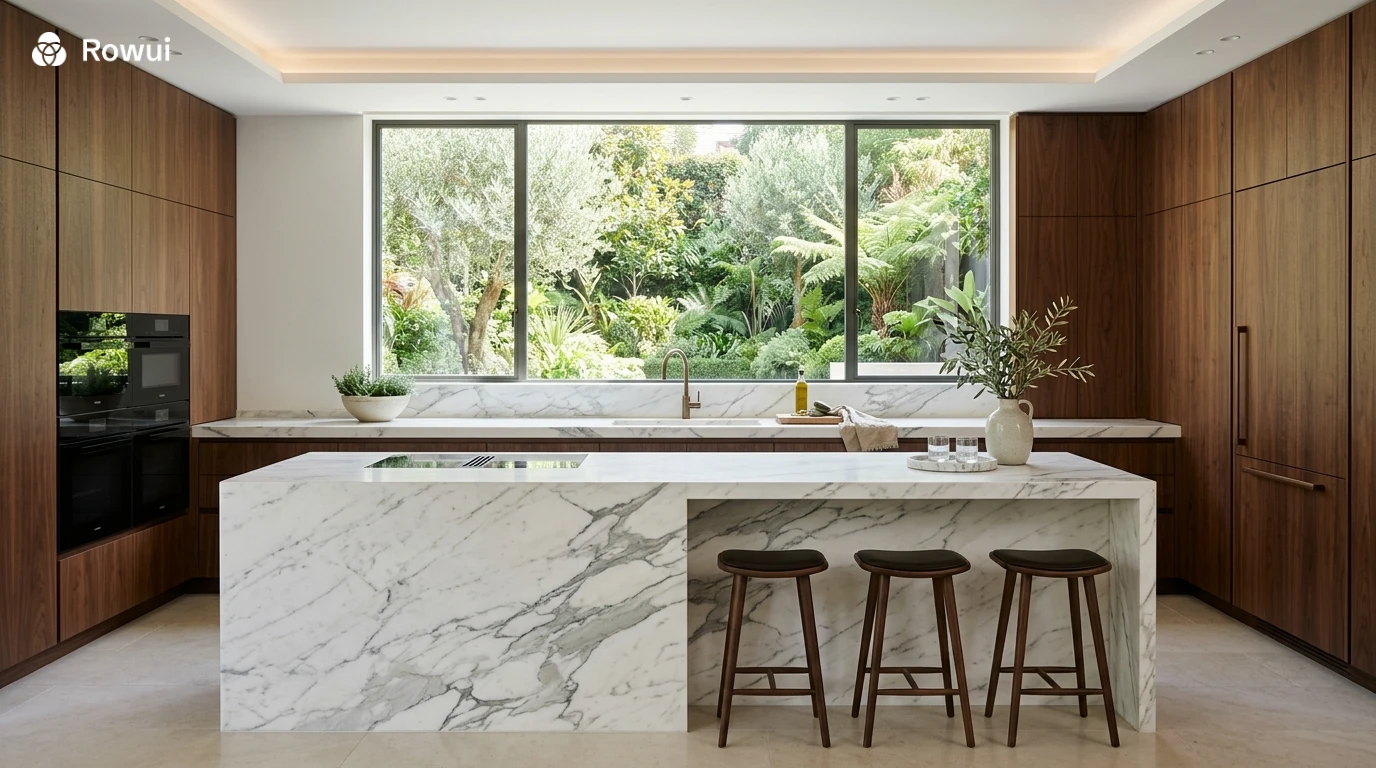
Japandi kitchens favour flat-fronted cabinetry with no visible handles, or with simple integrated pulls in a warm metal finish such as brushed brass, aged bronze or matte black. Cabinet colours tend toward muted deep tones like dark sage green, charcoal, warm navy or slatey blue, contrasted against stone or timber countertops. Alternatively, full timber veneer cabinetry in a matte lacquered oak or walnut finish creates an incredibly warm and considered kitchen aesthetic.
Open shelving, if used, should be real timber rather than painted MDF, and styled with restraint: a row of matching ceramic canisters, a small collection of everyday pottery, a few carefully chosen cookbooks. Avoid the cluttered open shelf trap by keeping only items that are both functional and beautiful in view.
Countertops and Splashbacks
Natural stone countertops in a honed rather than polished finish bring wabi-sabi beauty to the kitchen. Limestone, soapstone and honed marble all age beautifully and develop patina over time. For splashbacks, large format handmade tiles in warm off-white, soft sage or clay tones introduce texture and craft. Alternatively, a plaster splashback in a matching tone to the walls creates a seamless, calm effect that lets the cabinetry and countertop speak for themselves.
Japandi Dining Areas
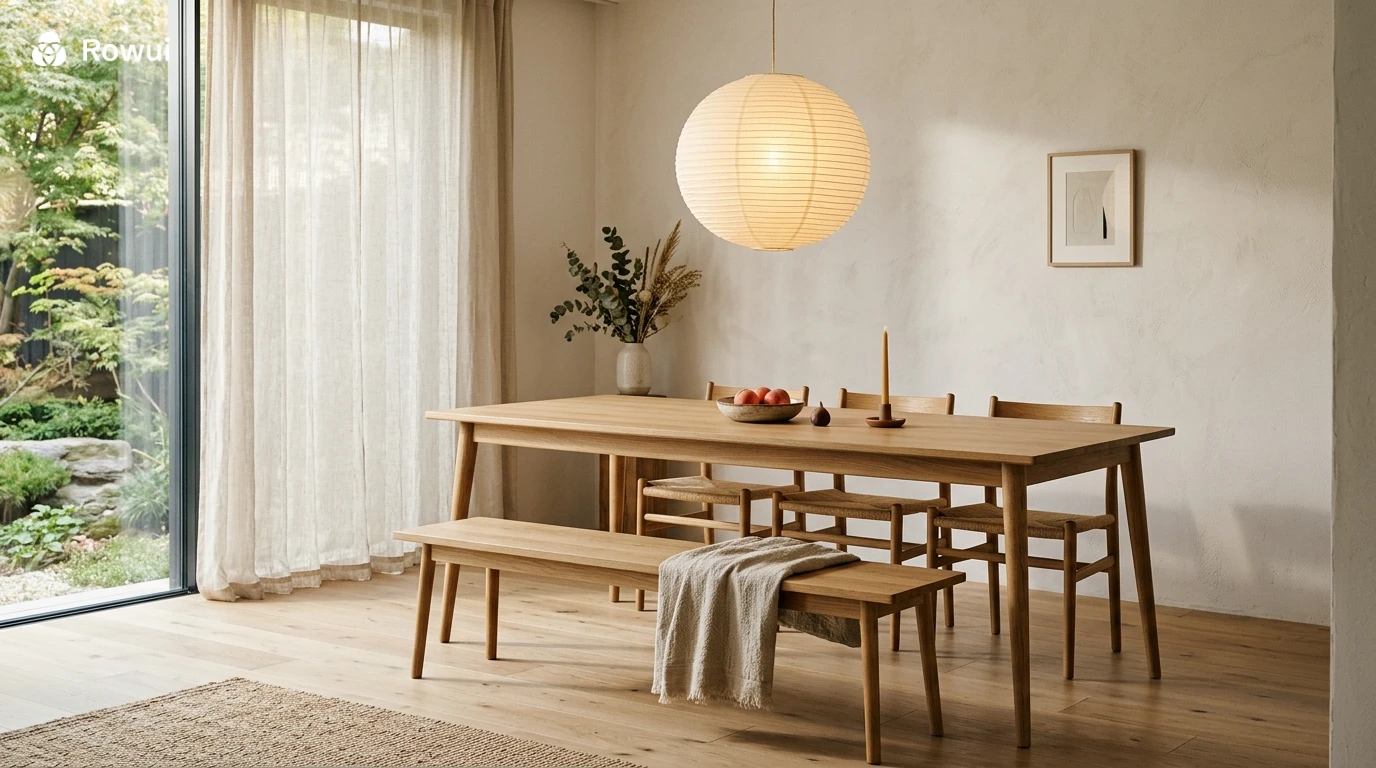
The Japandi dining table is one of the most powerful pieces in the home. A solid timber table, ideally in oak, ash or walnut, with clean lines and honest joinery, needs little else to be beautiful. Pair it with chairs that mix materials, perhaps timber frames with rush or cane seats, or simple timber benches on one side and upholstered chairs on the other. This combination of hard and soft, formal and casual, is deeply characteristic of Japandi.
Lighting above the dining table is critical. A single pendant in washi paper, handblown warm glass or matte white ceramic hung at the right height (approximately 70 to 80 centimetres above the table surface) creates an immediate sense of intimacy and warmth. Avoid multi-bulb chandeliers with visible metal structures or anything that feels industrial in this context.
Japandi Bedroom Design
The bedroom is perhaps the most natural home for Japandi design, because this aesthetic produces exactly the kind of environment that supports genuine rest. Calm, quiet, dark at night, naturally lit by day and free of visual noise.
The Platform Bed and Bedding
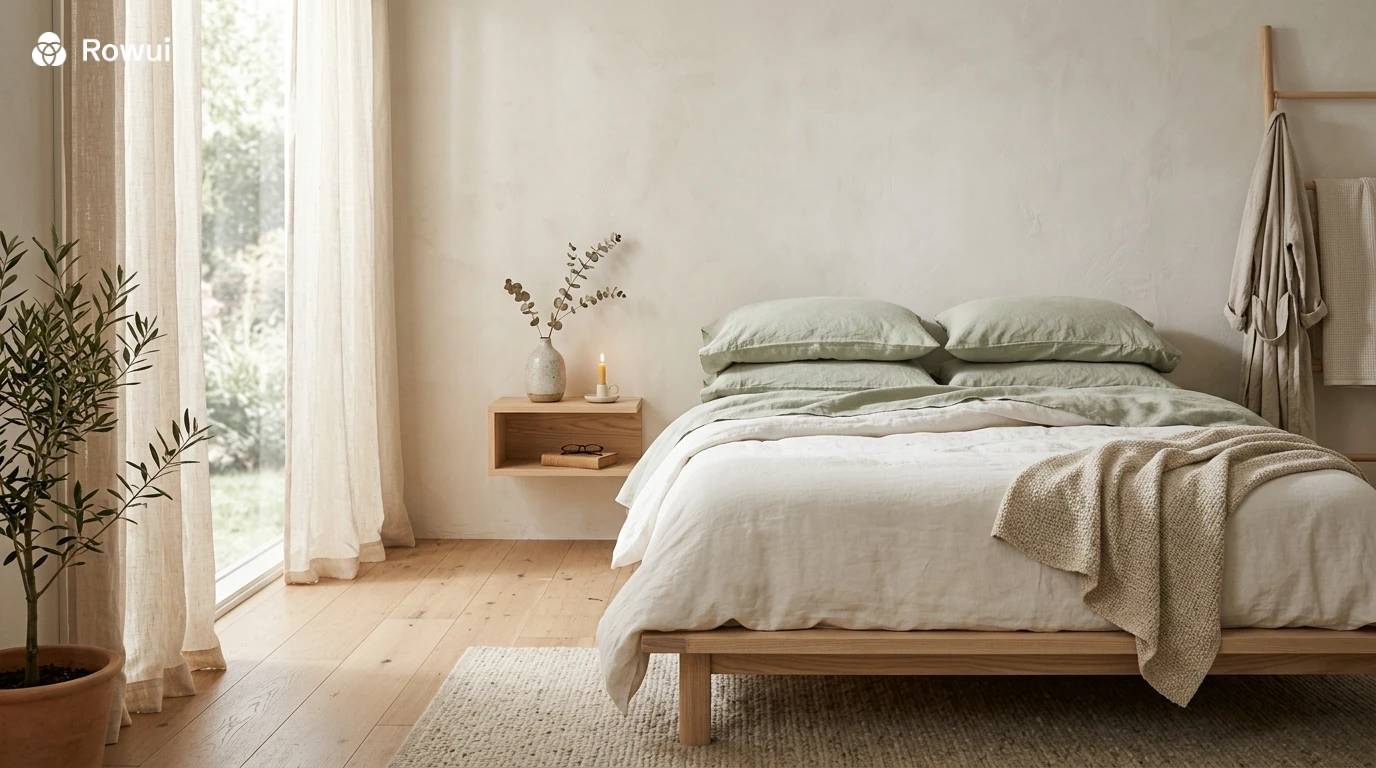
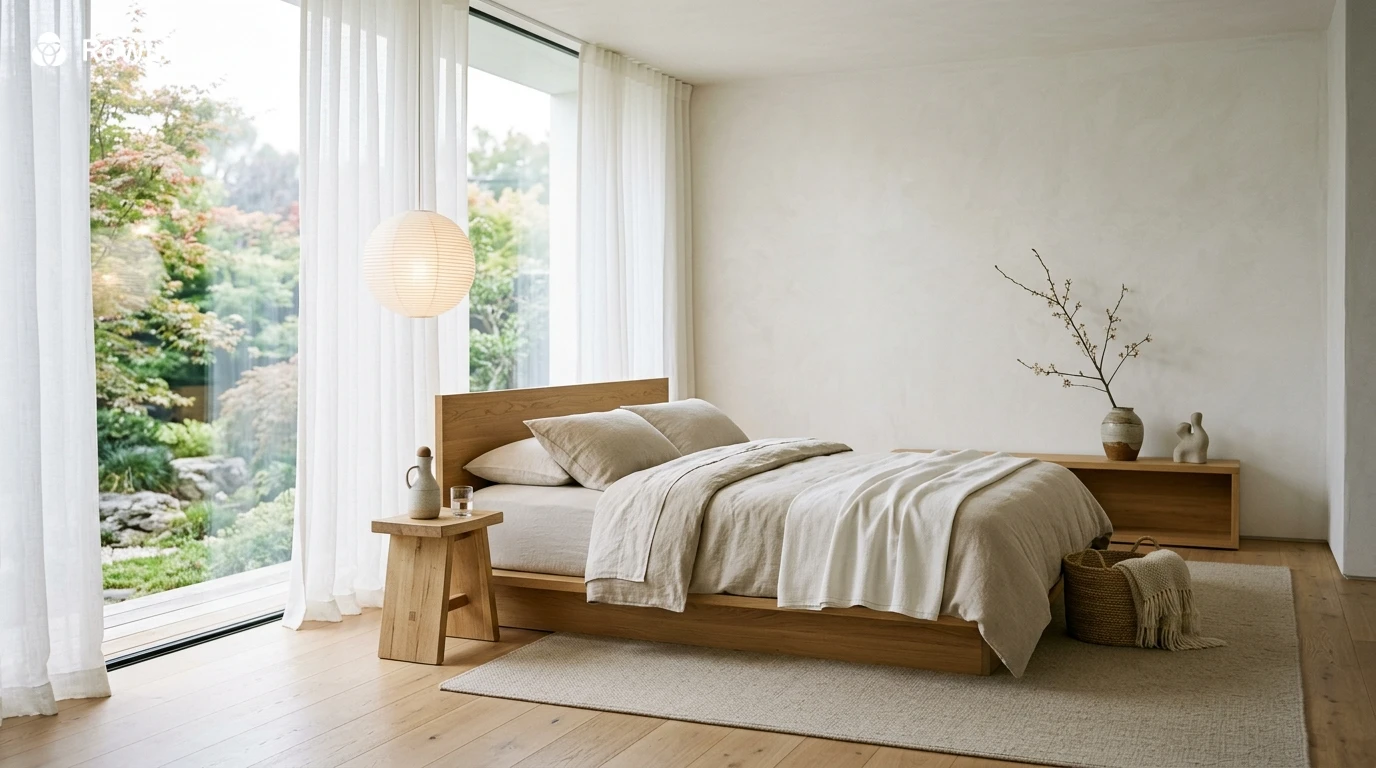
A low platform bed in solid timber is the cornerstone of the Japandi bedroom. The low profile creates a sense of groundedness and connection to the floor, which in Japanese interiors is a traditional place of living and rest. Beds in smoked oak, solid walnut or natural ash, with or without a headboard (both work if proportioned well), suit this style perfectly. The mattress depth should be modest rather than towering, consistent with the low, quiet aesthetic of the room as a whole.
Bedding in natural linen, either undyed or in muted tones like warm white, sage, oat or clay, is the Japandi choice. Layer a linen duvet with a lightweight cotton blanket and add a single textured throw in a complementary tone. Avoid patterned bedding, excessive cushion arrangements or anything that creates visual complexity in what should be the calmest space in your home.
Bedroom Storage and Furniture
Wardrobes and storage in a Japandi bedroom should be fully integrated into the architecture where possible, with flush-fitting doors in a material that recedes rather than competes. Sliding doors in timber veneer or a soft matte lacquer avoid the swing radius of hinged doors and maintain the calm, unobstructed feeling of the space. Bedside tables should be small, solid and simple: a timber cube, a cane-sided cabinet or even a single floating shelf serves the purpose without adding visual weight.
Plants and Natural Elements in the Bedroom
A single plant, thoughtfully chosen and well positioned, contributes enormously to the Japandi bedroom atmosphere. A medium-sized fiddle leaf fig in a matte terracotta pot beside the window, a trailing pothos on a high shelf, or a single stem in a simple ceramic bud vase on the bedside surface all bring life and natural irregularity to the space. The Japanese art of ikebana, the disciplined arrangement of stems and branches, is a direct inspiration for Japandi plant styling, which prizes a single beautiful specimen over a jungle of competing greenery.
Japandi Bathroom Design
The Japandi bathroom draws heavily from the Japanese tradition of the onsen, the ritual bathing space that treats washing as a meditative, restorative act rather than a functional necessity. When these values are applied to a domestic bathroom, the results are stunning.
Materials and Finishes
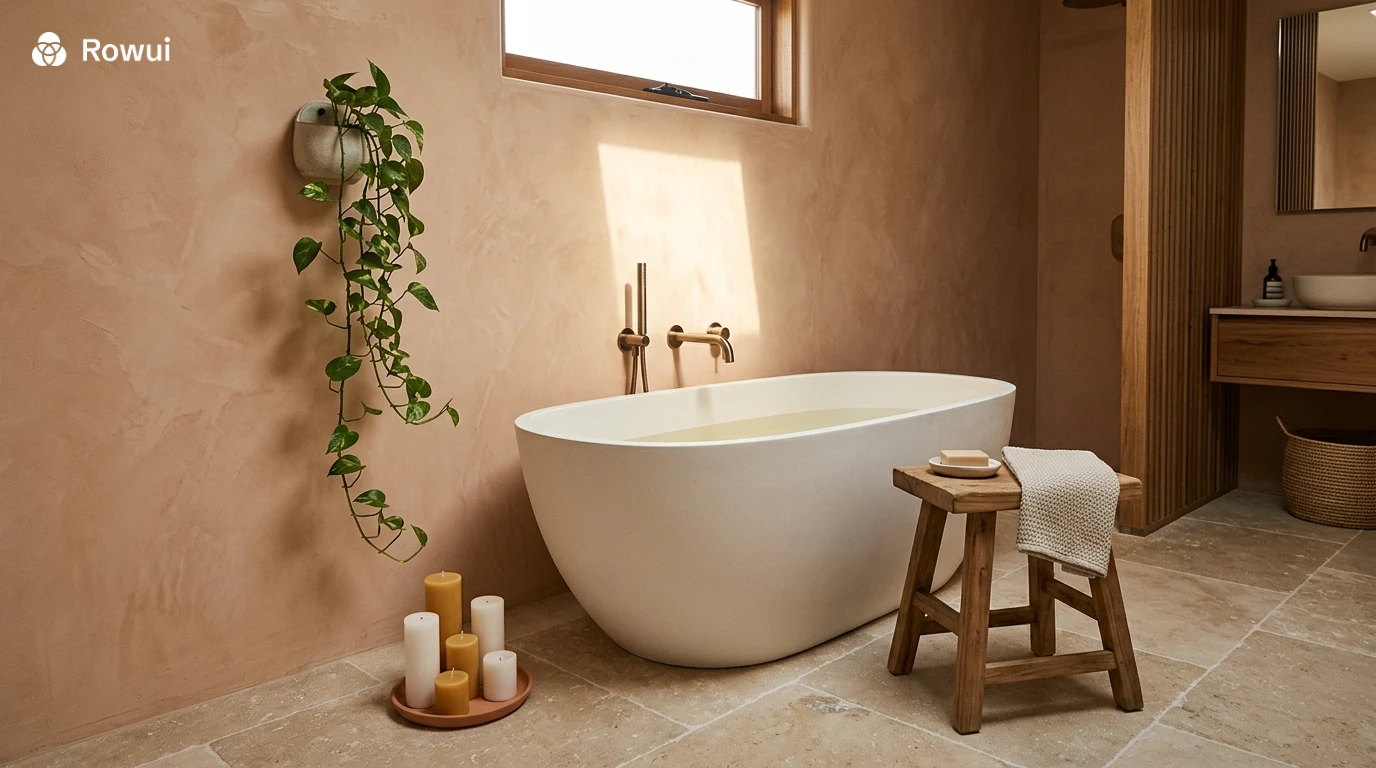
Natural stone tiles in a honed finish, large format limestone or travertine, matte terracotta and handmade ceramic tiles all belong in a Japandi bathroom. Walls in a smooth tadelakt plaster, a traditional Moroccan waterproof lime plaster that has a beautiful soft sheen and tactile surface quality, create an extraordinary sense of warmth and material richness. Pair dark timber accents in teak or iroko, which are naturally water-resistant timbers, with warm matte fixtures in brushed brass or aged bronze.
The Freestanding Bath and Shower
A freestanding bath in matte white stone resin or concrete is the ultimate Japandi bathroom statement. Positioned to receive natural light from a high window or skylight, it becomes a sculptural centrepiece that anchors the entire room. If a freestanding bath is not possible, a deep Japanese soaking tub built into a timber-clad platform creates a similarly ceremonial bathing experience in a more compact form.
Japandi showers favour large, open wet-room formats with minimal hardware. A simple fixed overhead rain shower head in matte black or brushed stainless, a teak shower mat and a single shelf in matching stone or timber for minimal products creates an environment that feels like a considered spa rather than a functional cubicle.
Vanity and Storage
A floating vanity in solid timber with a stone or concrete basin top keeps the bathroom floor visible and contributes to the sense of spaciousness. Drawer storage conceals products completely, leaving only a single hand soap dispenser in ceramic and perhaps one small plant or candle on the vanity surface. Mirrors should be simple: either a plain frameless edge-lit mirror or one framed in natural timber, round or rectangular, with no backlit surround or ornate frame.
Lighting in Japandi Interiors
Light is one of the most powerful tools in Japandi design, and it is one that is easy to get wrong. Harsh overhead lighting, cold LED tones and fixtures that draw attention to themselves rather than to the space are the enemies of this aesthetic.
Layered Natural and Artificial Light
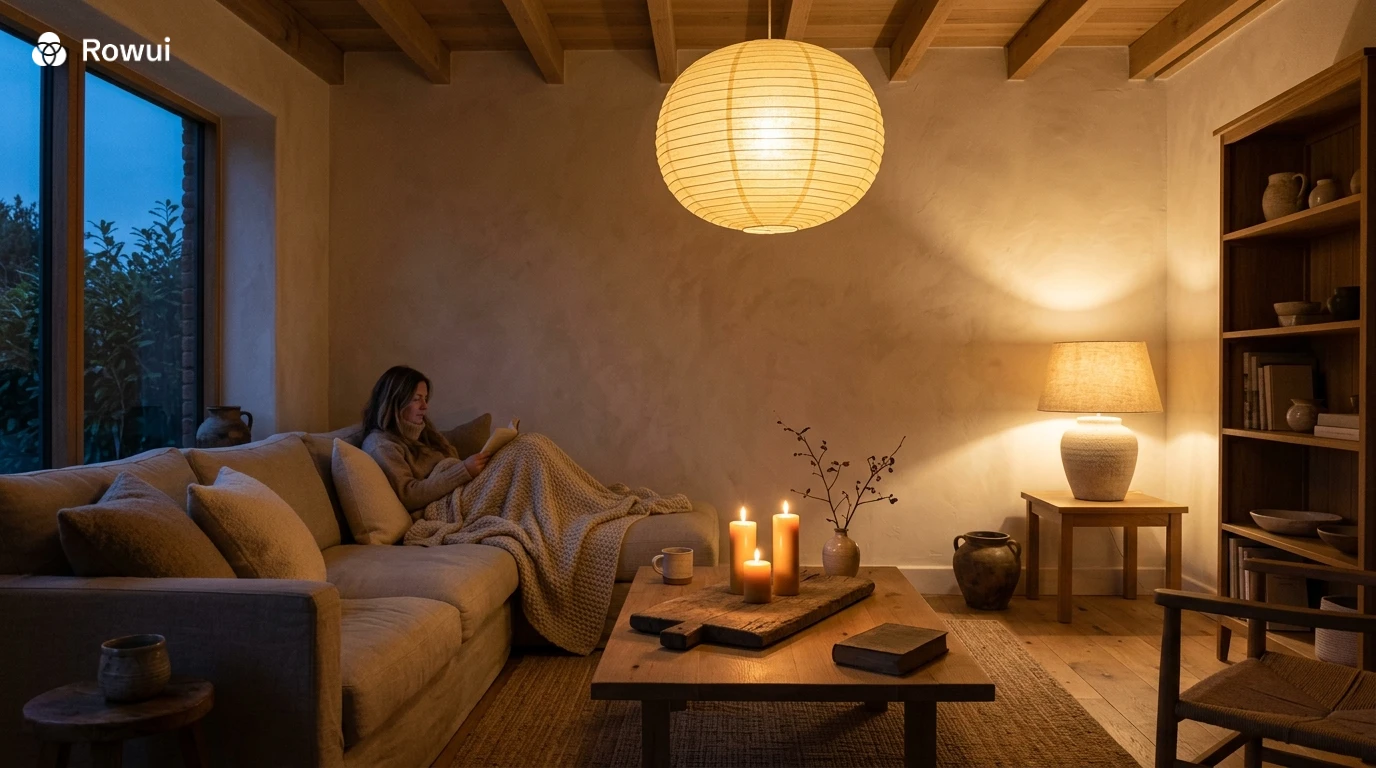
Japandi lighting strategy is built on layers. First, maximise natural light through clean, unobstructed windows dressed in sheer linen panels that filter light softly without blocking it. Second, use warm-toned artificial light (always 2700K to 3000K in colour temperature, never cool white or daylight) delivered from multiple low-level and mid-level sources rather than a single central ceiling fixture. Table lamps in ceramic or washi paper shades, floor lamps in natural materials and carefully positioned recessed downlights on dimmer circuits all contribute to the warm, enveloping glow that characterises Japandi evenings.
Pendant Lights and Lampshades
Pendant light selection in Japandi interiors requires real care. Washi paper pendants, which produce a beautiful diffused warm glow, are perhaps the most quintessentially Japandi choice. Handblown amber or smoke glass pendants, matte white ceramic globe pendants and simple rattan or seagrass shades all work beautifully. Avoid anything with visible hardware, industrial exposed bulb styling or heavily patterned or coloured shades that would compete with the restrained palette of the room.
Candles and Candlelight
Candles are not merely decorative in Japandi spaces but are a functional light source that contributes to the ritual quality of evening in the home. Unscented or lightly scented natural wax candles in simple column or pillar forms, grouped in twos or threes on a ceramic tray or a timber board, create exactly the kind of warm, moving light that no electrical fixture can fully replicate. This is a direct borrowing from Scandinavian hygge traditions and sits naturally within the Japandi philosophy.
Natural Materials in Japandi Design: A Closer Look
Because natural materials are so central to Japandi interior design, it is worth understanding each major material category in detail, including how to source, use and care for them.
Timber: The Backbone of Japandi
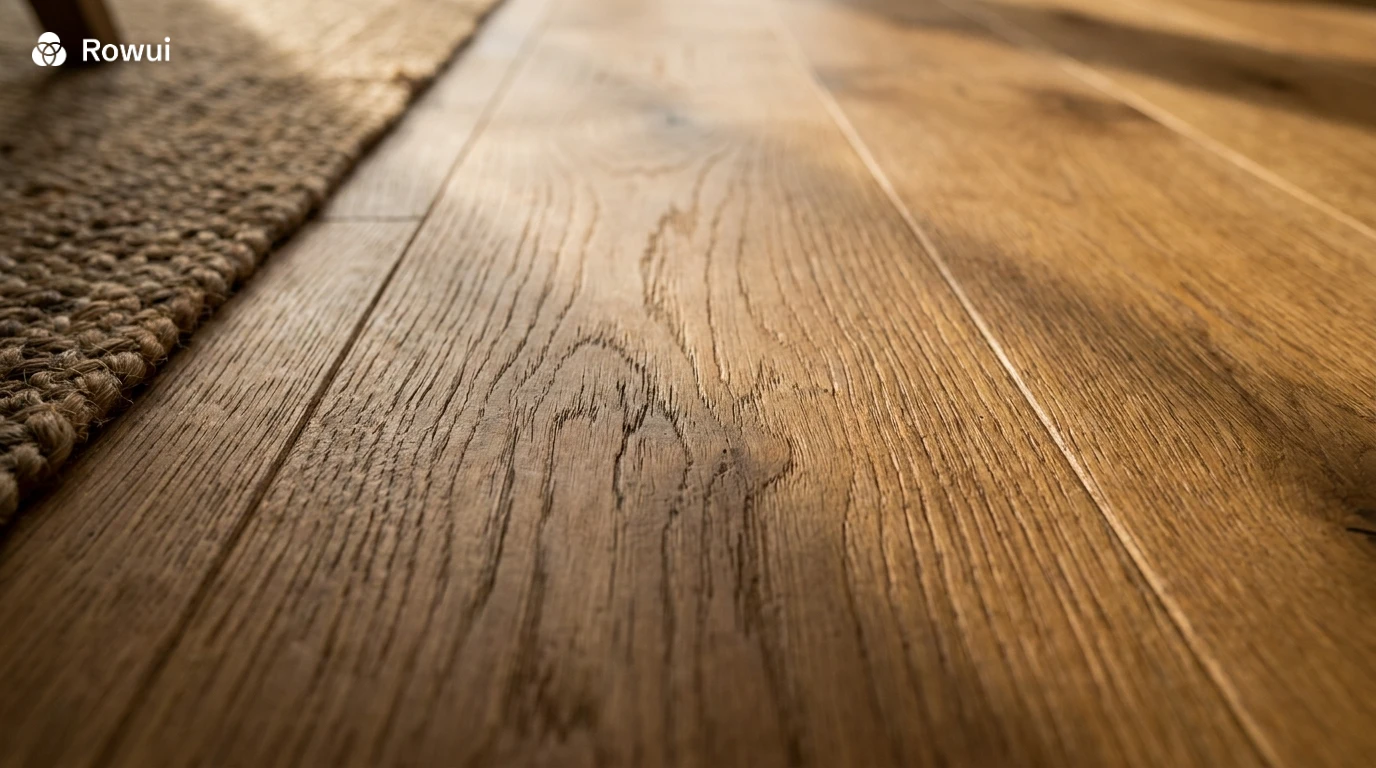
Timber is the most important material in the Japandi palette. Light to medium toned timbers such as oak, ash, beech and bamboo bring warmth without heaviness. Darker timbers like walnut, wenge and smoked oak add depth and sophistication. The key is the finish: always matte or oiled, never glossy lacquer. A gloss finish removes the tactile quality and natural depth that makes timber so alive and replaces it with a reflective sheen that reads as artificial. Oiled or hard-wax oiled timber floors and surfaces are the Japandi standard.
Stone: Permanence and Texture
Stone brings a sense of permanence, geological time and textural richness that no manufactured surface can replicate. In Japandi interiors, stone appears as flooring in honed limestone or travertine, as kitchen and bathroom countertops in honed marble or soapstone, as decorative objects such as smooth river pebbles and as architectural details like stone sills and thresholds. The honed or matte finish is essential: polished stone has a different, more formal character that does not belong in Japandi spaces.
Linen, Wool and Natural Textiles
Textiles in Japandi interiors are always natural fibre. Linen is the dominant fabric for curtains, upholstery and bedding because of its beautiful drape, natural variation and the way it ages gracefully. Wool adds warmth in rugs, blankets and cushions. Cotton and hemp appear in loose weave throws and cushion covers. The colour range for textiles is the same as the wider Japandi palette: warm whites, creams, sages, warm greys, muted terracottas and charcoals. Avoid synthetic fibres entirely in visible positions, as they lack the depth, variation and natural ageing that define this aesthetic.
Ceramic and Clay
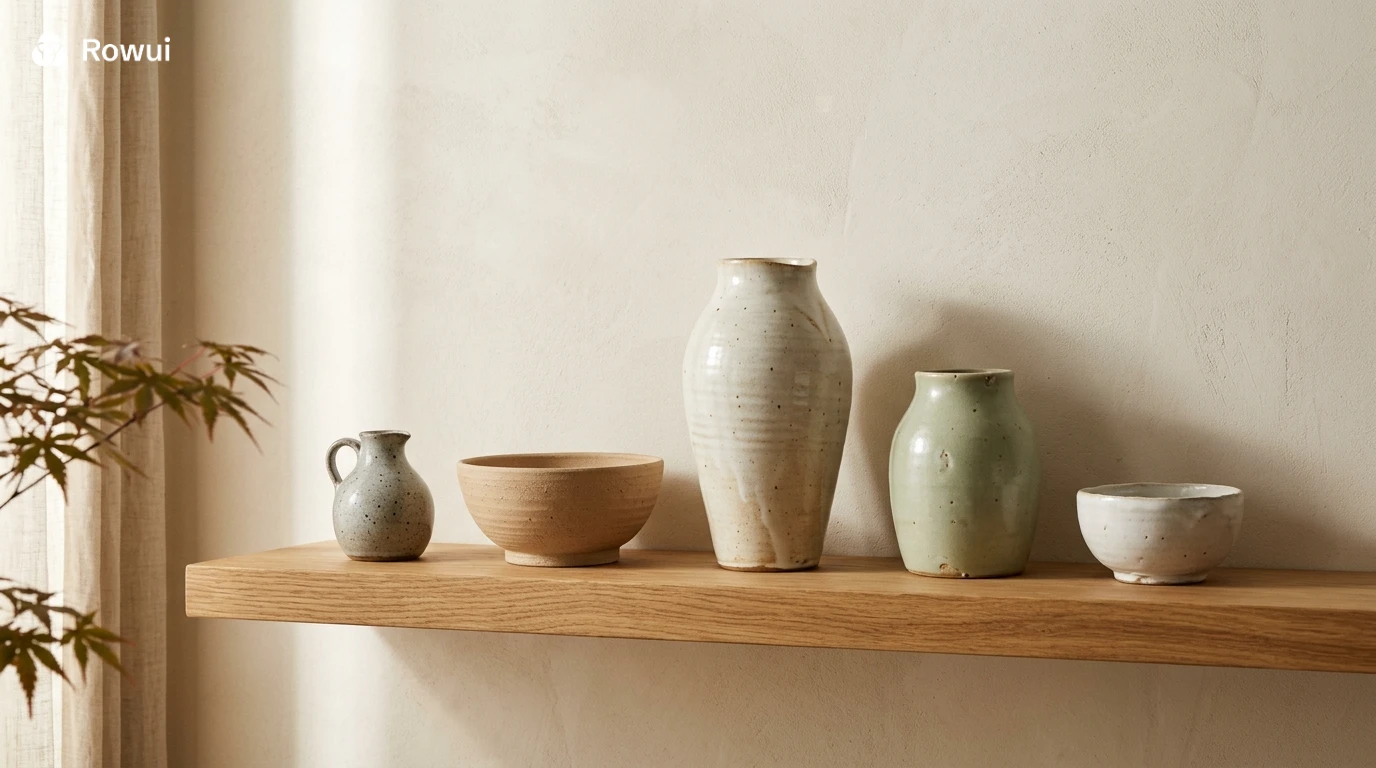
Handmade ceramic objects are deeply embedded in both Japanese and Scandinavian craft traditions and are among the most characteristic accessories of Japandi interiors. A collection of hand-thrown bowls, mugs and vases in warm off-white, speckled clay, sage glaze or carbon black create still-life compositions on open shelves and dining tables that feel genuinely beautiful. The slight irregularity of hand-thrown ceramics is an expression of wabi-sabi: the beauty of the imperfect and the handmade.
Japandi Colour Palettes in Practice
Choosing the right colours for a Japandi interior requires understanding the difference between warm neutrals and cold ones, and between a palette that feels alive and one that feels flat. Here are three complete Japandi colour schemes that work beautifully in real homes.
Palette One: Warm White and Timber
Walls in a warm off-white with a faint yellow or pink undertone (such as Farrow and Ball's Pointing or Dulux's Natural White) paired with honey-toned oak timber floors and furniture, accented by soft sage green plants and warm brass fixtures. This is the lightest, most Scandinavian-leaning Japandi palette and works beautifully in rooms with limited natural light.
Palette Two: Sage, Stone and Walnut
Walls in a muted sage green or warm sage grey, cabinetry in dark walnut or smoked oak, countertops and floors in honed limestone, accented by warm charcoal soft furnishings and brushed bronze hardware. This palette is deeper and more grounded, leaning toward the Japanese influence, and works beautifully in kitchens, studies and bedrooms where a sense of enclosure and calm is desirable.
Palette Three: Charcoal, Clay and Ash
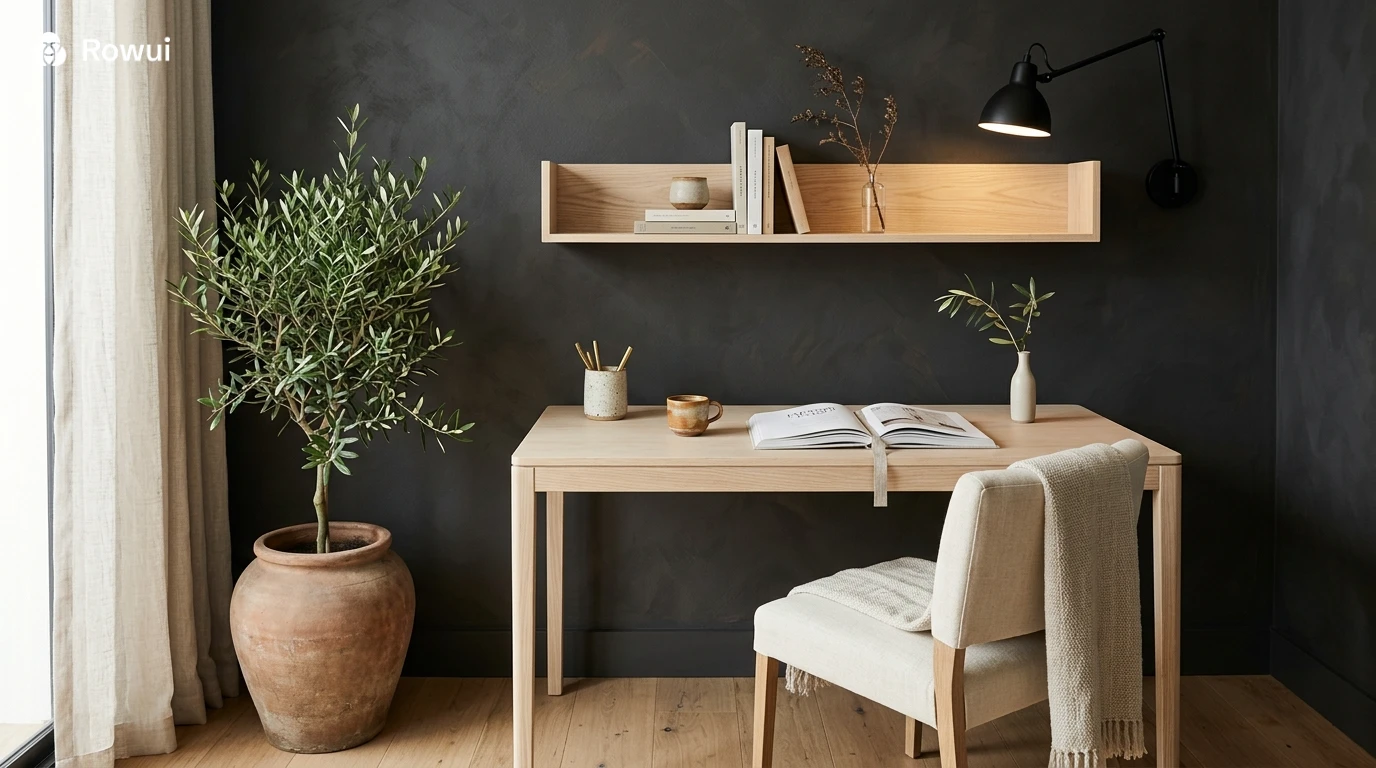
Walls in a deep warm charcoal or off-black, floors in light ash timber, soft furnishings in undyed linen and warm cream, accents in terracotta clay and matte black. This is the most dramatic Japandi palette and creates a stunning contrast between the dark architecture and the warm, organic softness of the textiles and natural accessories. It requires confidence and good natural light to work well but is extraordinarily beautiful when executed correctly.
Japandi for Small Spaces
One of the most practical aspects of Japandi design is that it is exceptionally well suited to small homes and apartments. The emphasis on negative space, functional furniture and restrained material palettes means that Japandi principles actively make small spaces feel larger, calmer and more livable than decorating approaches that attempt to compensate for size with colour or pattern.
Multifunctional Furniture
In a small Japandi home, every piece of furniture should serve more than one purpose if possible. A storage ottoman doubles as a coffee table and extra seating. A bench at the foot of the bed provides both seating and blanket storage. Built-in window seats with concealed storage below are a classic small-space Japandi solution. The key is that multifunctional pieces should never look compromised or temporary: they should be as beautiful and well-crafted as any single-purpose piece would be.
Mirrors and Light
Japandi uses mirrors differently from maximalist design traditions. Rather than large ornate mirrors used to create spectacle, Japandi prefers simple round or rectangular mirrors in timber or frameless formats, positioned to reflect natural light and views of plants or sky rather than more furniture. A well-placed mirror in a small Japandi bathroom or hallway doubles the sense of space while contributing to the calm, reflective quality of the aesthetic.
Bringing Nature Into the Japandi Home
The connection to the natural world is fundamental to both Japanese and Scandinavian design philosophies, and in Japandi interiors it is expressed in multiple overlapping ways beyond simply adding plants.
Indoor Plants and Botanicals
Plants in Japandi interiors are chosen with the same care as furniture. A single large specimen plant such as a Japanese maple bonsai, a fiddle leaf fig or a tall olive tree in a matte ceramic pot can anchor an entire room. Dried botanicals, preserved pampas grass and seasonal branches from the garden bring nature inside in a more transient, wabi-sabi way. The arrangement of a single dried magnolia branch in a tall floor vase is as architecturally considered as any piece of furniture in the room.
Views, Gardens and Connection to Outside
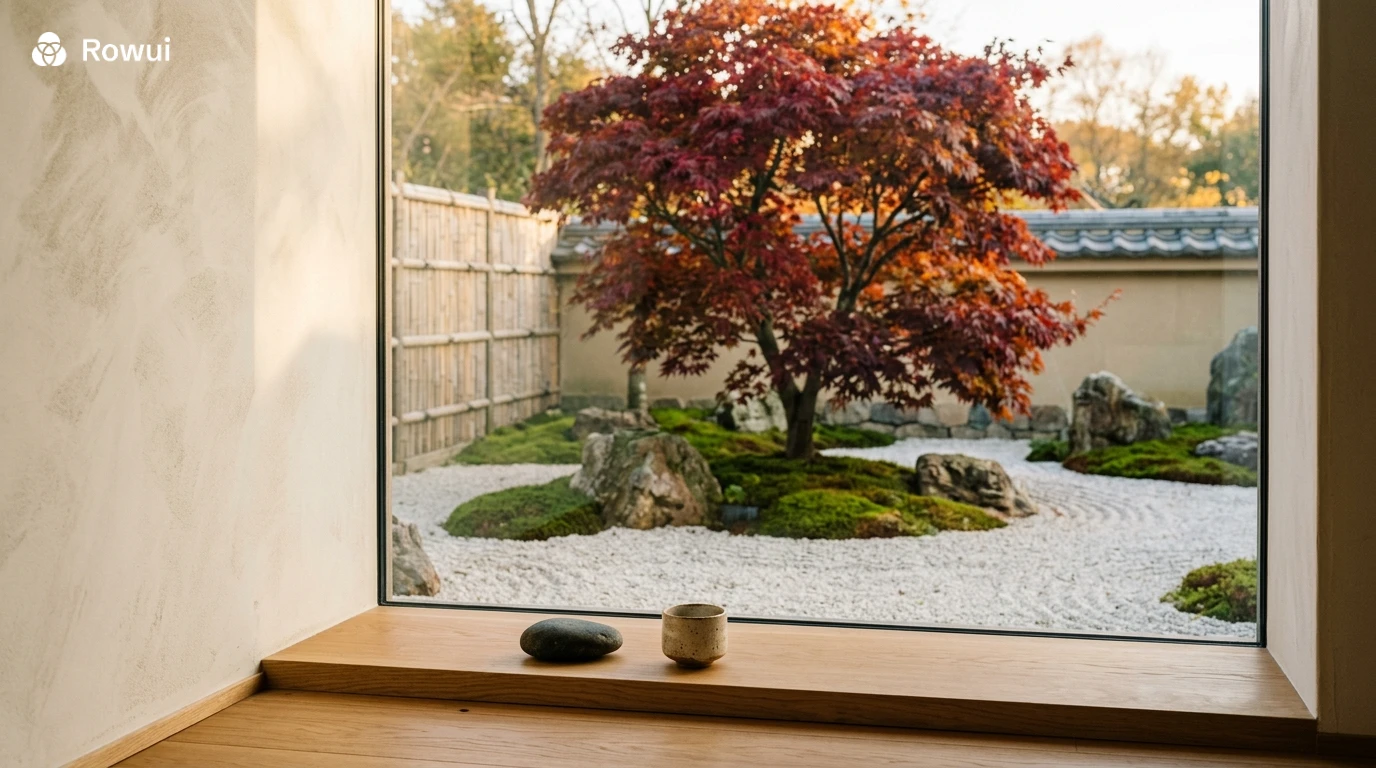
Where the architecture of the home allows, Japandi interiors should be designed to frame and invite views of the outside. A low, unobstructed window that looks onto a simple garden of raked gravel, a bamboo grove or a Japanese maple is a living artwork that changes with the light, seasons and weather. Even in urban apartments, a small balcony planted with grasses, mosses and a single specimen tree creates a sense of this connection that enriches the interior enormously.
Common Japandi Design Mistakes and How to Avoid Them
Because Japandi has become popular, it has also become the subject of imitation that misses its essential character. Understanding the most common mistakes will help you achieve the real thing rather than a superficial version of it.
Confusing Minimalism With Emptiness
True Japandi is not empty. It is edited. Every surface that appears bare should feel intentionally so, and there should always be at least one considered object, material quality or light quality that gives the eye something to rest on. A truly empty room, stripped of all character and warmth, is not Japandi but simply unfinished. The discipline is in choosing what to keep and how to display it, not in removing everything.
Choosing Cold Neutrals
White walls with a grey or blue undertone, cool greige, stark concrete grey and icy pale tones all work against the warmth that is central to Japandi. The palette must always lean warm: creamy whites, warm greys with a yellow or pink base, sages with a khaki or brown undertone, and earth-adjacent neutrals. When in doubt, test paint samples in your actual room with your actual light before committing.
Buying Japandi-Themed Products Rather Than Understanding the Philosophy
It is tempting to simply buy products labelled as Japandi or minimalist Scandinavian and hope they add up to the aesthetic. They rarely do. Japandi is a philosophy first and a collection of objects second. You could achieve a deeply convincing Japandi interior with relatively affordable vintage timber furniture, inexpensive linen from a fabric shop and handmade ceramics from a local market, if you apply the principles correctly. Conversely, a room full of expensive Japandi-branded products with no underlying philosophical coherence will always feel like a retail showroom rather than a home.
How to Start Your Japandi Journey: Practical First Steps
If you are inspired to bring Japandi principles into your home but are unsure where to begin, the following approach will help you make meaningful progress without the paralysis of trying to transform everything at once.
Start With One Room
Choose the room where you spend the most time or the room that currently causes you the most visual stress. The living room or bedroom are both excellent starting points. Begin by removing everything from the space except the furniture, then slowly and deliberately reintroduce only the items that genuinely belong, following the Japandi principles of function, natural materials and intentional placement.
Invest in One Anchor Piece
If budget is a consideration, invest it in one genuinely high-quality anchor piece for the room you are starting with. A beautiful solid timber dining table, a handmade ceramic pendant lamp or an excellent quality linen sofa. These pieces set the standard for everything else in the room and will last for decades. Everything else can be sourced more affordably, second-hand or made by hand, and the quality anchor piece will elevate the whole.
Edit Before You Buy
The most transformative and most free Japandi action you can take right now is to remove. Before buying a single new object, identify ten things in your most used room that do not belong in the Japandi vision and remove them. Put them in a box. Live without them for two weeks. You will almost certainly find that the room feels more spacious, calm and livable than it did before you spent a single penny on redesign.
The Enduring Appeal of Japandi Design
In a world that increasingly competes for our attention with noise, speed and visual complexity, there is something profoundly countercultural and deeply appealing about a design philosophy that does the opposite. Japandi is not a reaction against beauty but a pursuit of a more quiet, lasting form of it. It asks us to slow down, to look carefully, to appreciate the grain of wood and the roughness of plaster and the way afternoon light moves across a linen curtain.
It is also, importantly, a practical philosophy. Homes designed with Japandi principles are easier to clean, easier to maintain, easier to live in and more adaptable to changing needs over time. The commitment to quality natural materials means that a Japandi home actually improves with age as timber deepens, plaster develops character and ceramics accumulate the history of use.
Whether you are designing a new home from the ground up, renovating a tired space or simply trying to bring more calm into your daily life through the environment you inhabit, Japandi offers a genuinely useful, genuinely beautiful way forward. Its principles are timeless because they are rooted not in fashion but in human need: the need for warmth, for quiet, for beauty that does not exhaust and for spaces that feel, above all else, like home.
Conclusion
Japandi interior design is one of the most coherent, livable and enduring design philosophies available to homeowners today. It succeeds because it answers a genuine human need: the need for spaces that are calm without being cold, beautiful without being fussy, and simple without being bare. Its combination of Japanese wabi-sabi philosophy and Scandinavian warmth creates interiors that feel both deeply restful and genuinely alive.
The practical takeaway is this: start with the philosophy, not the products. Commit to natural materials, warm neutrals and intentional editing. Invest in quality where it matters most, embrace imperfection as a form of beauty, let negative space work for you, and resist the urge to fill every surface. If you approach your home with these values, you will create a Japandi interior that is not just aesthetically convincing but genuinely enriching to live in, one that you will love more, not less, as the years go by.