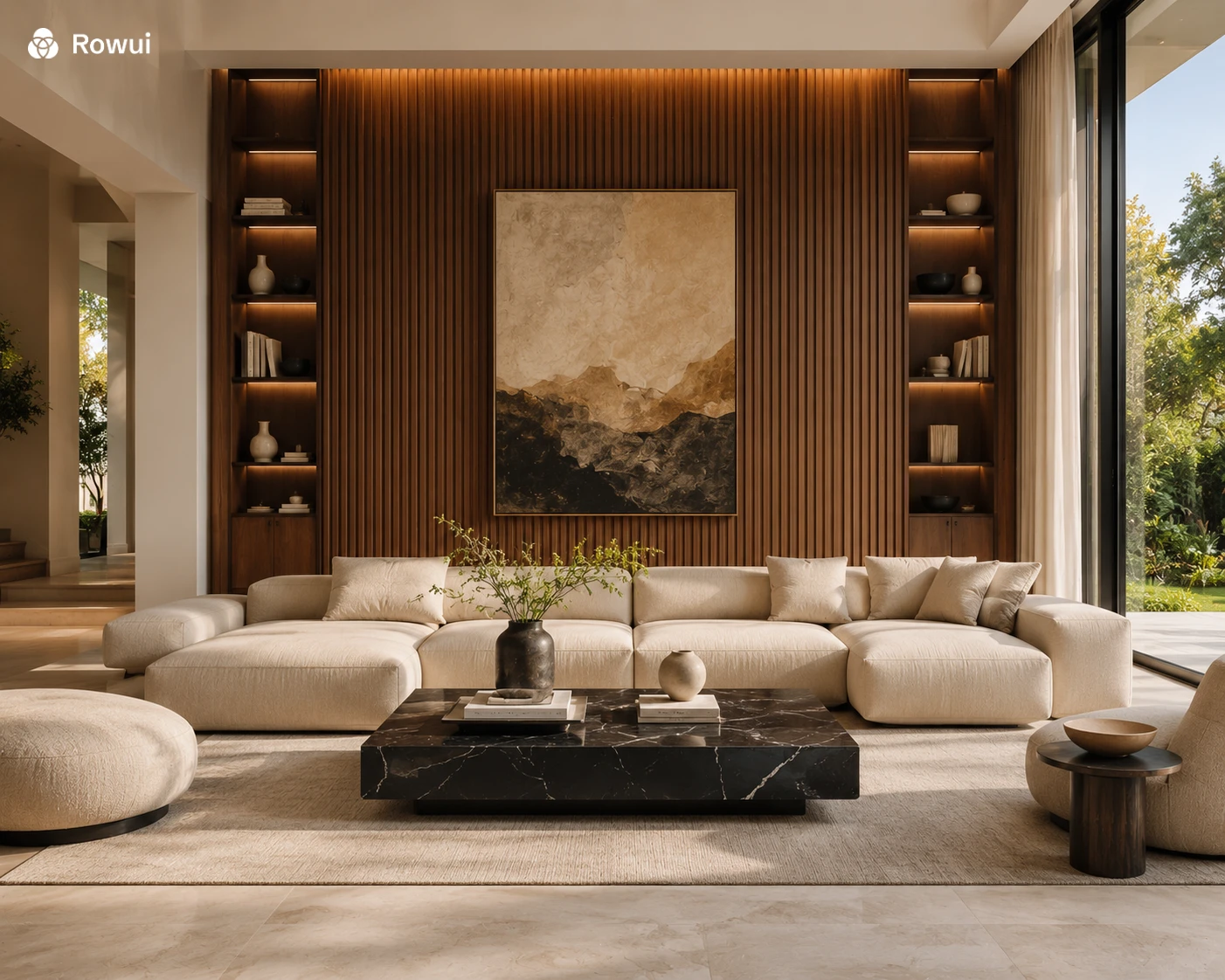
Walk into any beautifully designed home and you will feel something before you can name it. There is a mood, a rhythm, a sense of intention that pulls everything together. That feeling has a name, and it comes from a coherent interior design style. Whether you are renovating a single room, starting from scratch in a new home, or simply trying to understand why some spaces feel so right while others feel scattered and unresolved, understanding the major interior design styles is one of the most powerful things you can do as a homeowner. It gives you a shared language with designers, a filter for making decisions about furniture and finishes, and a vision that helps every choice feel connected rather than accidental. This guide explains the most important interior design styles in clear, practical terms, walking you through what defines each one, how it looks and feels in a real home, and how you can bring those qualities into your own space regardless of your budget or the age of your house.
Why Interior Design Styles Matter More Than You Think
Many homeowners approach decorating the same way they approach grocery shopping, picking up things they like one at a time without a unifying plan. The result is often a home filled with individually appealing objects that somehow never quite come together. A style framework solves this problem. It acts as an invisible set of rules that tells you which sofa belongs in the room, which paint colour will feel right, whether to choose linen or velvet, raw timber or lacquered cabinetry, pendant lights or recessed spotlights.
Understanding different interior design styles does not mean locking yourself into a rigid formula. The best homes often draw from more than one tradition. But knowing the rules of each style gives you the confidence to bend them intentionally, rather than arriving at an accidental muddle through indecision. Think of interior styles the way a musician thinks about genre. Understanding jazz does not mean every note must be a jazz note. It means knowing the grammar well enough to improvise with purpose.
The styles covered in this article range from the restrained elegance of contemporary design to the warm nostalgia of traditional interiors, from the rugged character of industrial spaces to the breezy ease of coastal living. Each one has a distinct visual language, a palette, a material palette, a set of proportions and a philosophy about how a home should feel. Learning to read that language will transform the way you see and create spaces.
What Is Contemporary Interior Design
Contemporary interior design is one of the most misunderstood styles in architecture and home design, largely because the word contemporary simply means of the present moment. It is not a fixed aesthetic the way Art Deco or Farmhouse are fixed aesthetics. It is a living style that evolves with design culture, absorbing current trends while maintaining a core set of principles that keep it distinct from its close cousin, modern design.
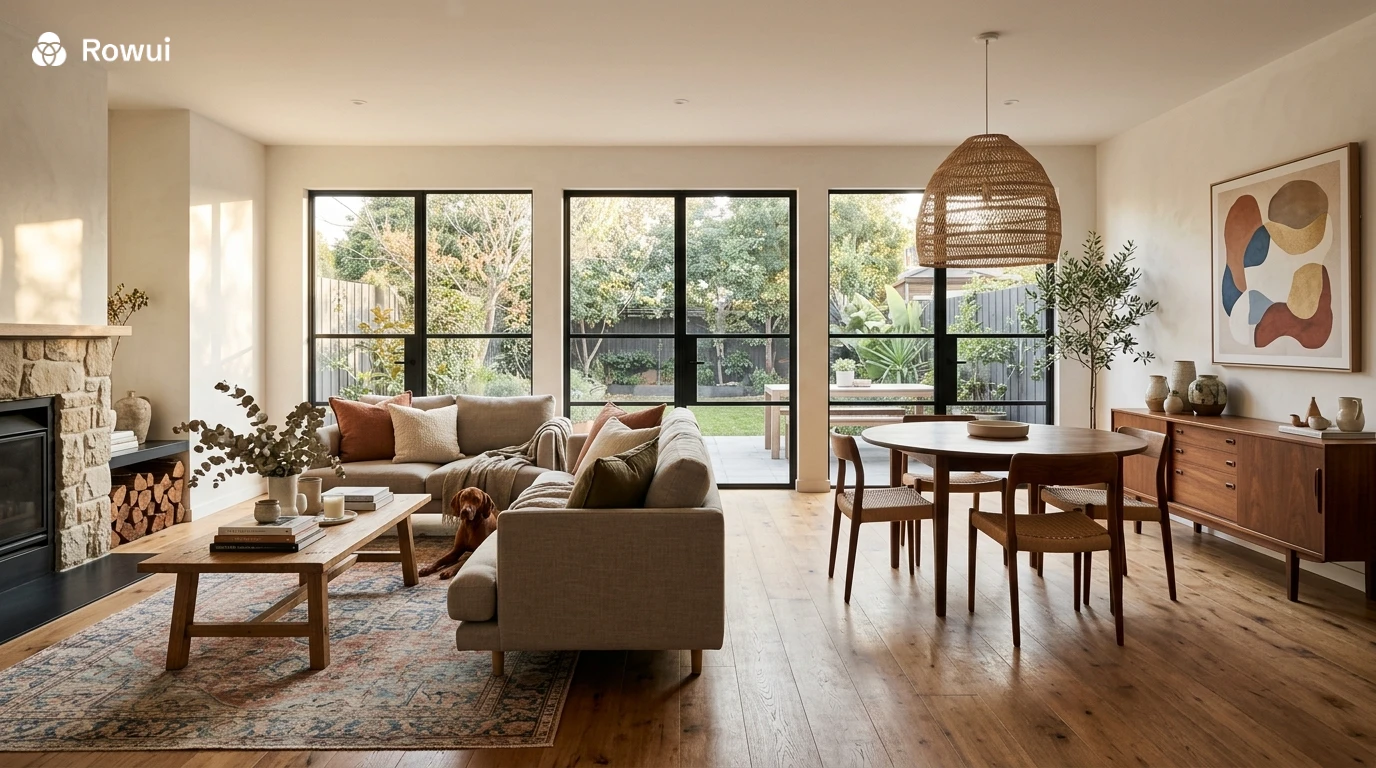
At its heart, contemporary interior design values simplicity, clean geometry and a sense of effortless refinement. It avoids excessive ornamentation without stripping a room of all warmth. Where modernism from the early twentieth century was often quite stark and ideological in its rejection of decoration, contemporary design is more pragmatic and liveable. It embraces texture, layered neutrals, and carefully selected statement pieces that give a room personality without visual noise.
Key Characteristics of Contemporary Interiors
Contemporary rooms tend to feature neutral colour palettes anchored by whites, warm greys, soft taupes and greiges, with occasional accents of deeper tone introduced through cushions, art or a single upholstered piece. The palette is never cold or clinical. Warmth comes from materials rather than colour, with natural stone, tactile linen, brushed brass hardware and matte wood tones adding depth and humanity to otherwise restrained rooms.
Furniture in contemporary interiors sits low to the ground, with clean lines and minimal fuss. Sofas tend to have wide arms or no arms at all, with cushion-integrated backs rather than throw-pillow mountains. Dining tables are often rectangular with slim legs in wood or metal. Coffee tables favour geometric forms in marble, glass, or concrete. Nothing shouts for attention, but everything is quietly considered.
Lighting is architectural in contemporary spaces. Recessed ceiling fixtures provide clean ambient light, while sculptural pendants or floor lamps serve as design statements. Large-format windows are a defining feature of contemporary architecture, and interior designers working in this style always treat natural light as a primary design material, keeping window treatments minimal so daylight can move freely through the space.
How to Bring Contemporary Style Into Your Home
Start by editing ruthlessly. Contemporary interiors breathe through negative space, so removing excess furniture, clearing surfaces and paring back accessories is always the first step. Repaint walls in a warm white or soft greige. Replace ornate hardware with simple brushed brass or matte black alternatives. Invest in one or two quality pieces of furniture with clean profiles rather than filling a room with many mid-range items. Add texture through a woven rug, a linen throw, or a natural-edge timber shelf. Keep art simple and large rather than clustered and small.
What Is Modern Interior Design
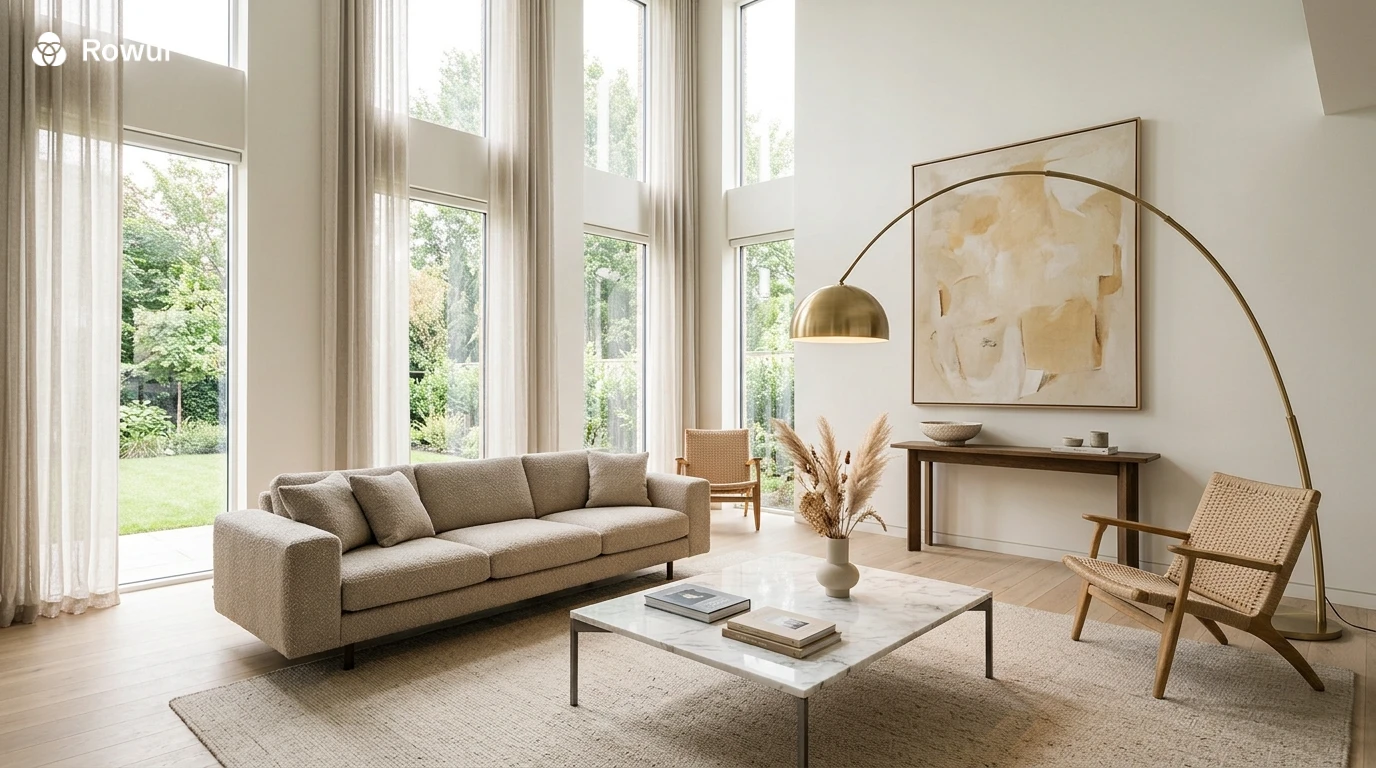
Modern interior design refers specifically to the modernist movement that emerged in the early to mid twentieth century, drawing from the Bauhaus school, Scandinavian functionalism and the International Style in architecture. Unlike contemporary design, which shifts with the times, modern design is historically grounded. It has a fixed set of references and a philosophy captured in the famous phrase attributed to Ludwig Mies van der Rohe: less is more.
Modern interiors are characterised by open floor plans, a strong emphasis on horizontal lines, the integration of indoor and outdoor space, and the honest expression of materials. Concrete, glass, steel and timber are left largely unadorned, celebrated for what they are rather than concealed beneath plaster, paint or cladding. Furniture is functional, ergonomic and elegant, with mid-century pieces like the Eames lounge chair, the Barcelona chair or the Tulip table remaining icons of the style to this day.
The Palette and Materials of Modern Design
The colour palette of a true modern interior leans toward pure whites, blacks, greys and occasionally a single bold accent colour introduced through upholstery or art. There is no pattern in wallpaper or soft furnishings. If pattern appears at all, it is geometric and restrained. Natural timber in teak, walnut or oak introduces warmth, and it appears in flooring, cabinetry and furniture in its most honest form, without heavy stain or elaborate moulding.
Kitchens in modern homes are flat-fronted, handleless and streamlined. Bathrooms feature floating vanities, frameless glass shower enclosures and wall-hung toilets. Every detail serves the function and the form simultaneously. Clutter is the enemy of a modern interior, and storage is always considered at an architectural level, built into walls and cabinetry so that surfaces remain clear.
What Is Traditional Interior Design
Traditional interior design is rooted in the formal European decorating traditions of the eighteenth and nineteenth centuries, drawing on English, French and American classical styles. It is the aesthetic of gracious, well-appointed homes that feel established, comfortable and rich with character. Where contemporary design edits down, traditional design layers up, building rooms that feel collected over time, full of history and warmth.
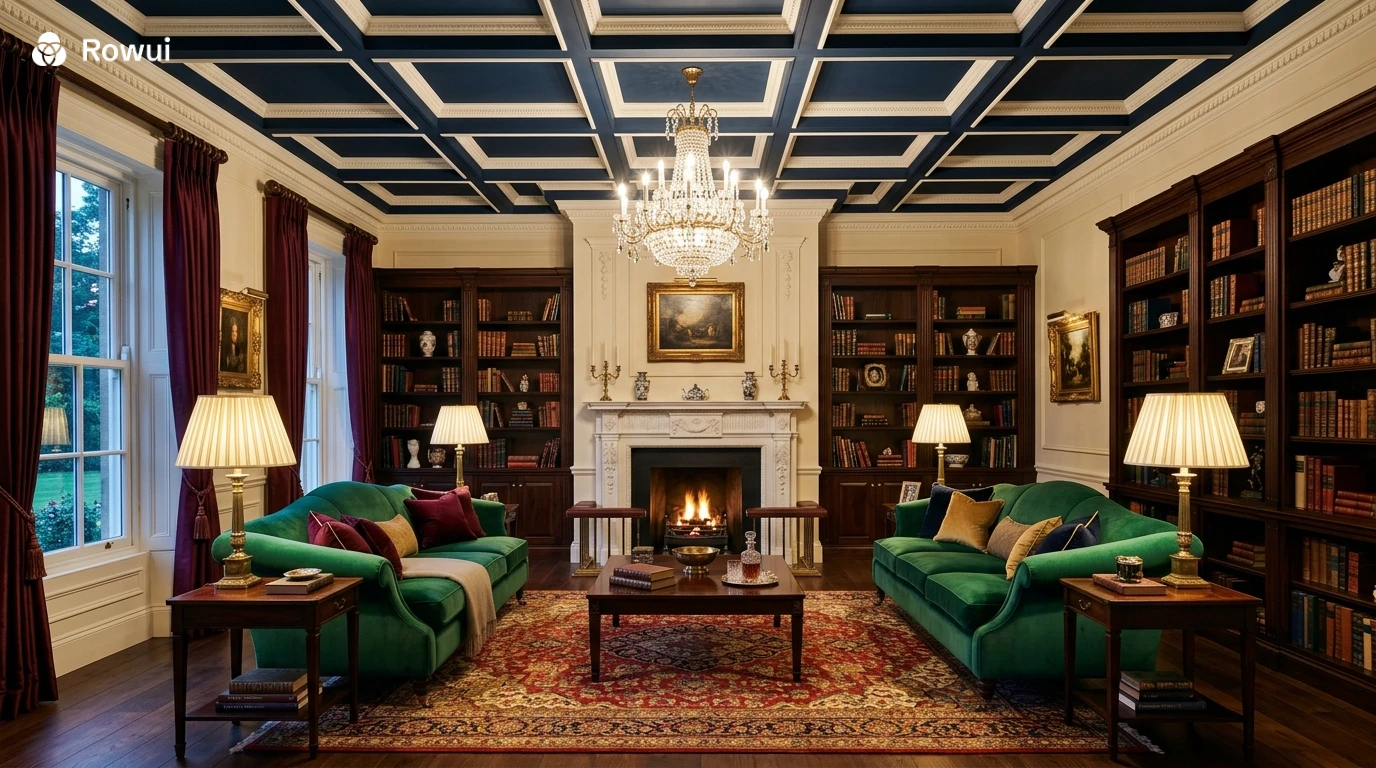
A traditional interior is never sparse. It embraces symmetry, architectural detail and a sense of grandeur scaled appropriately to the room. Crown mouldings, wainscoting, coffered ceilings, panelled doors and fireplace surrounds are the bones of a traditional interior. These architectural elements establish the formality and depth that define the style.
Colour, Pattern and Furniture in Traditional Interiors
Traditional colour palettes are rich and layered. Deep navy, hunter green, burgundy, warm terracotta, antique gold and creamy ivory all feel at home in a traditional interior. These colours appear not only on walls but in upholstery fabrics, drapery and rugs. Pattern plays a central role in the traditional home. Damask, toile, chinoiserie, floral prints, plaids and stripes are used confidently and often in combination, a practice that requires skill but produces rooms of extraordinary richness when done well.
Furniture in traditional interiors is substantial and crafted with care. Camelback sofas, wingback armchairs, roll-top desks, four-poster beds, claw-foot bathtubs and Queen Anne dining tables all belong in this world. Timber finishes tend toward warm mahogany, cherry or walnut with medium to dark stain. Hardware is brass or antique bronze, often with a decorative profile rather than a plain geometric form.
Lighting in Traditional Spaces
Crystal chandeliers, candelabra-style ceiling fixtures, table lamps with pleated shades and wall sconces are the lighting vocabulary of a traditional interior. Lighting in these spaces is warm, layered and deliberately decorative. A traditional room without a chandelier or a pair of matching table lamps feels unfinished. Lamps are placed symmetrically, one on each side of a sofa or bed, reinforcing the balance and formality that the style depends on.
What Is Transitional Interior Design
Transitional interior design is perhaps the most popular style in residential design today, and with good reason. It occupies the productive middle ground between traditional warmth and contemporary simplicity, drawing from both worlds to create spaces that feel timeless, comfortable and quietly sophisticated without committing to either extreme. If you love the clean lines of contemporary design but find it too cold, or you love the warmth of traditional design but find it too fussy, transitional design was built for you.
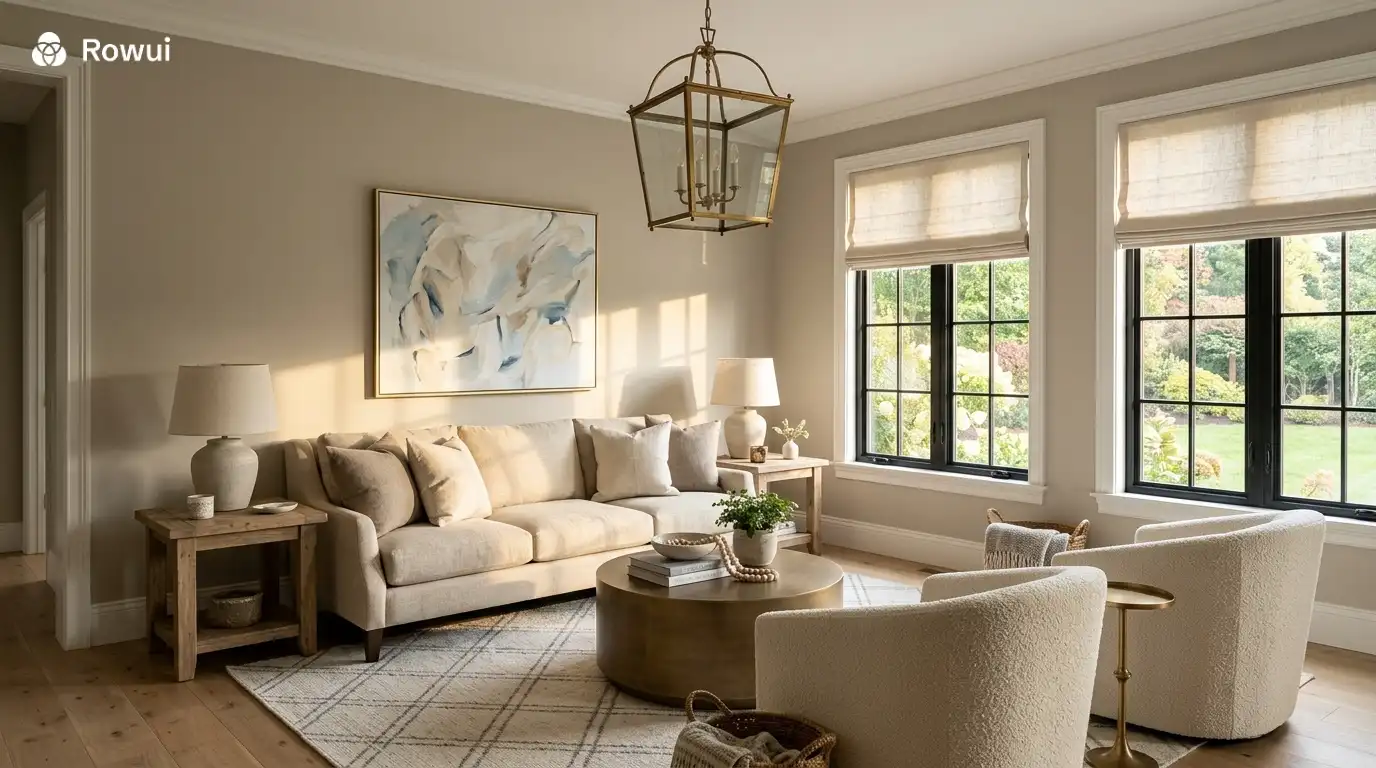
The genius of transitional design lies in the way it pairs opposites. A sleek contemporary sofa in a warm greige linen might sit on a Persian-style rug with a subtle pattern. A kitchen with flat-front cabinetry might be topped with a marble slab that has classic veining. A bathroom might have a frameless glass shower alongside a freestanding soaking tub with traditional curves. These combinations feel resolved rather than conflicted because the designer has maintained a consistent palette, material quality and sense of proportion throughout.
Building a Transitional Interior
Start with a neutral foundation. Walls in warm white, soft linen or a muted greige give the transitional interior its breathing room. Flooring should be a quality hardwood in a mid-tone finish, light enough to feel fresh, warm enough to feel grounded. Choose furniture with clean profiles but comfortable proportions. A deep seat and generous cushioning signal livability, while slim legs and a low back signal restraint.
Layer in texture through rugs, cushions and throws rather than through pattern. Where pattern does appear, keep it subtle: a geometric weave, a tonal stripe or a very quiet abstract print. Introduce a single element with traditional character, perhaps a vintage mirror with an ornate frame, or a classic lantern-style pendant light, and let everything else remain contemporary. That one traditional note is enough to give the room warmth and depth without tipping into period pastiche.
What Is Scandinavian Interior Design
Scandinavian interior design has captured the imagination of homeowners around the world for decades, and it is easy to understand why. Rooted in the Nordic countries of Sweden, Norway, Denmark and Finland, this style emerged from a climate and culture that demanded spaces be functional, beautiful and conducive to wellbeing during long, dark winters. The result is an aesthetic that prizes simplicity, craftsmanship, natural light and the careful integration of nature into the home.
Scandinavian design is deeply humanist. Unlike minimalism, which can feel austere or ideological, Scandinavian interiors are warm and liveable. They celebrate the beauty of everyday objects made well, whether that is a carefully turned wooden bowl, a hand-thrown ceramic mug or a hand-tufted wool rug. There is a Danish concept called hygge, often translated as a sense of cosiness, warmth and conviviality, that captures the emotional aspiration of Scandinavian interior design better than any style description could.
The Palette and Materials of Scandinavian Interiors
Walls in Scandinavian homes are overwhelmingly white or very pale, maximising the reflection of natural light during short winter days. Floors are typically light-toned wood, often whitewashed oak or pale pine, which further amplifies the sense of brightness and airiness. Against this pale backdrop, natural materials introduce warmth and texture. Sheepskin throws, linen cushions, unbleached wool rugs, raw clay ceramics and candles in abundance create rooms that feel both simple and deeply sensory.
The accent colour palette in Scandinavian design is muted and nature-derived. Dusty blues, sage greens, terracotta, charcoal and mustard yellow appear as secondary tones, used sparingly against the white ground. Black is used as a graphic accent in light fixtures, thin-framed furniture legs and window trim, creating a visual sharpness that prevents the palette from feeling washed out.
Furniture and Craft in the Scandinavian Home
Scandinavian furniture is among the most influential in the history of design. The work of designers like Hans Wegner, Arne Jacobsen and Alvar Aalto established a vocabulary of organic, functional, beautifully crafted pieces that remain as relevant today as they were in the 1950s. In a Scandinavian interior, you would find solid timber dining chairs with contoured seats and gentle curves, open shelving in natural oak, low-profile sofas with wooden legs and linen upholstery, and pendant lights with a sculptural but understated presence.
Bringing Scandinavian style into your home begins with light. Paint walls white, strip back heavy curtains in favour of simple linen panels that let daylight through, and consider whitewashing or bleaching timber floors if they are currently in a darker tone. Edit furniture down to pieces that are well-made and purposeful. Add layers of natural texture through throws and rugs. Place a collection of simple ceramic vessels, a few dried botanicals, and a cluster of candles, and you have the essential Scandinavian composition.
What Is Industrial Interior Design
Industrial interior design takes its inspiration from the factories, warehouses and loft conversions of post-industrial cities, particularly in New York, London, Berlin and Melbourne. What began as necessity, artists and creatives moving into affordable industrial buildings and making a virtue of their raw character, became one of the most influential design movements of the late twentieth and early twenty-first century. Today, industrial style is sought after in new homes as well as converted buildings, bringing a raw, edgy, characterful quality to spaces of all types.
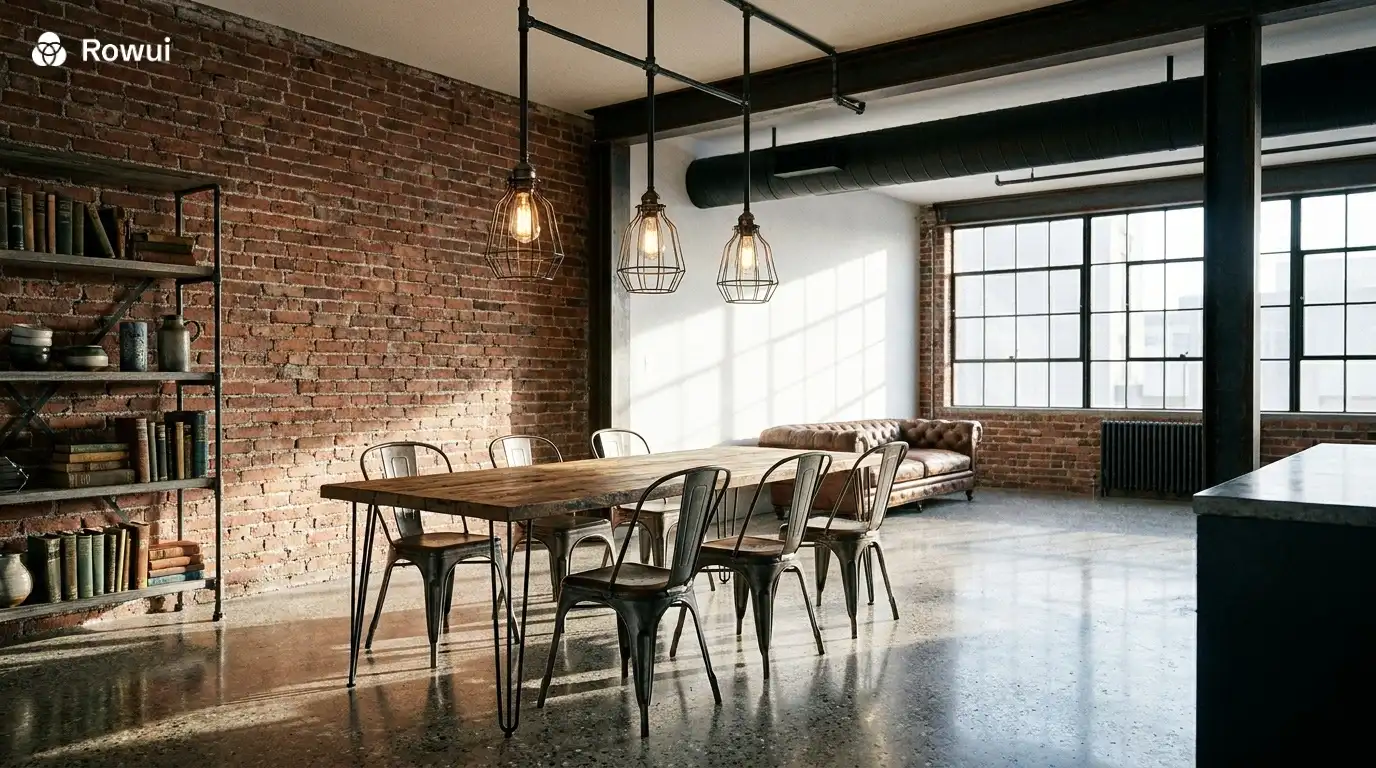
The industrial interior is defined by the deliberate exposure of structure and materials that would normally be concealed. Brick walls left bare. Concrete floors sealed and polished rather than covered. Steel beams and ductwork left visible overhead. Timber reclaimed from old buildings, marked by use and age. These are the bones of industrial design, and they form a backdrop that is simultaneously gritty and beautiful, full of texture, shadow and depth.
Colour, Light and Furniture in Industrial Spaces
The colour palette of industrial design is rooted in the materials themselves. Warm terracotta from exposed brick, grey from concrete and steel, warm brown from reclaimed timber, and the occasional rust or oxide red from aged metal. Against this textural backdrop, black is used generously as a unifying accent in metal frames, light fixtures, shelving, and window frames. It creates a visual cohesion that ties the disparate raw materials together.
Lighting in industrial interiors is one of its most distinctive features. Pendant lights with oversized Edison bulbs in wire cages or metal shades hang low over dining tables and kitchen islands. Pipe-and-socket track lighting runs along exposed ceiling beams. Factory-style wall sconces with articulated arms appear beside workspaces and beds. The light sources themselves are visible and celebrated rather than hidden, adding an additional layer of visual texture to the space.
Furniture in an industrial interior mixes materials with confident ease. A dining table with a reclaimed timber top and hairpin steel legs. A leather sofa, aged and slightly worn, that feels more comfortable for its imperfections. Metal bar stools with wooden seats. A bed frame in blackened steel. Open shelving in raw steel angles or reclaimed scaffold boards. Nothing is overly precious or polished, and that deliberate roughness is exactly what gives the style its appeal.
Making Industrial Design Work in a Suburban Home
You do not need a converted warehouse to achieve industrial character. In a standard suburban home, you can introduce the spirit of industrial design through targeted material choices and finishes. Install concrete-look porcelain tiles in a kitchen or bathroom. Choose flat-front kitchen cabinetry in a dark charcoal or forest green, paired with black hardware and an exposed steel range hood. Use open shelving instead of upper cabinets. Paint window frames and skirting boards black. Hang pendant lights with metal shades. Expose a brick feature wall by removing plaster from a single chimney breast. These interventions introduce industrial character without requiring a structural overhaul.
What Is Coastal Interior Design
Coastal interior design channels the ease, light and natural beauty of life near the ocean. It is one of the most aspirational styles in residential design, beloved for its ability to make a home feel like a permanent holiday, a place where bare feet are welcome, salt air is implied, and the boundary between inside and outside is deliberately blurred. Whether you live three minutes from the beach or three hours from the nearest coastline, coastal design principles can bring that quality of breezy, unhurried living into your home.
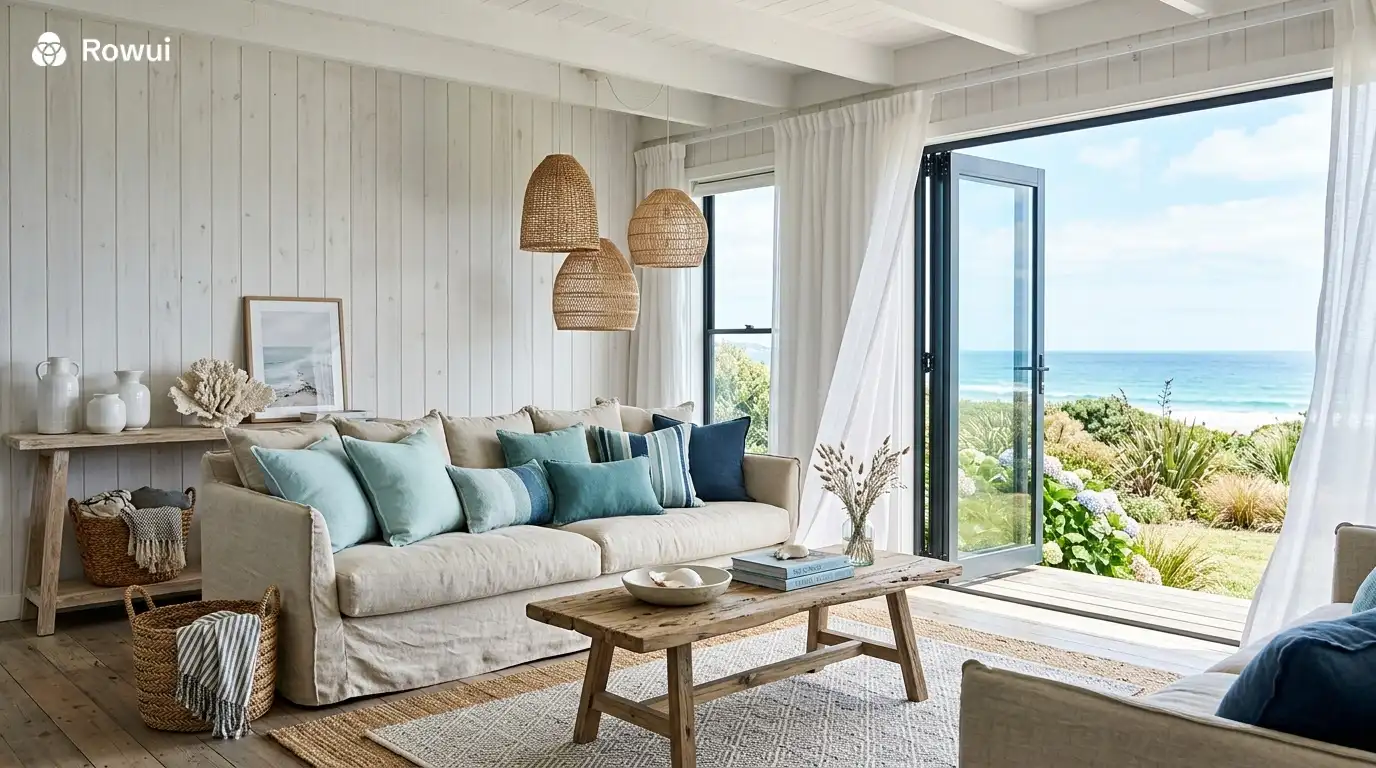
The defining qualities of coastal design are lightness, natural materials, an ocean-inspired palette and a deliberate absence of formality. This is not a style concerned with grandeur or perfection. It is a style concerned with comfort, texture and a certain relaxed beauty that comes from things looking slightly sun-bleached, hand-made and effortlessly assembled rather than carefully curated.
The Coastal Colour Palette
The coastal palette draws directly from the natural environment of the shore. Soft whites and off-whites dominate walls and large upholstered pieces, evoking sea foam, bleached driftwood and white-painted beach cottages. Against this pale ground, accents of ocean blue appear in cushions, rugs, glassware and artwork, ranging from the palest aqua to a deep navy that suggests deep water at dusk. Sandy beiges, warm taupes, and the subtle golden tone of weathered timber introduce the colours of the shore itself.
Avoid the cliche of cartoon anchors, novelty seahorses and aggressively nautical accessories that can tip coastal design into theme-park territory. The best coastal interiors suggest the ocean through material quality and palette rather than literal imagery. A worn jute rug, a collection of natural coral and driftwood on a shelf, a piece of abstract artwork in blues and greens, a rattan pendant light, these references are subtle and sophisticated.
Materials and Furniture in Coastal Interiors
Natural materials are essential to coastal design. Wicker and rattan appear in furniture frames, pendant lights and decorative baskets. Linen and cotton in natural, unbleached tones cover sofas and chairs. Jute and sisal rugs texture the floor. Timber, particularly in its lighter bleached or whitewashed form, is used in flooring, shelving and furniture. Reclaimed wood, marked by age and use, has a particularly coastal quality.
Furniture in coastal interiors is comfortable, relaxed and slightly oversized. Deep-seated sofas in slipcover linen invite you to sink in and stay. Round dining tables in bleached oak or whitewashed mango wood encourage a sense of informality. Beds are dressed in layers of white linen, with texture coming from a cotton waffle blanket or a chunky knit throw rather than a formal bed skirt and piped cushions. Everything feels as though it could be taken outside without a second thought.
What Is Country Interior Design
Country interior design celebrates the warmth, simplicity and character of rural life. It is a style rooted in practicality and craft, in the idea that a home should be functional first and beautiful as a consequence of being well-made and well-loved. Country interiors feel lived-in from the moment you enter, suggesting a home that has been inhabited over generations, gathering character, patina and personality along the way.
While the specific aesthetic varies by region, whether we are talking about English country, French country, American farmhouse or Australian rural homestead, the underlying principles are consistent. Natural materials, handmade objects, warm colours, comfortable furniture and a relationship with the garden and landscape are the constant threads running through all expressions of country design.
English Country Style
English country interiors are perhaps the richest and most layered expression of the style. They combine an absolute comfort with a certain aesthetic abandon, mixing floral chintz with Persian rugs, family portraits with botanical prints, overstuffed sofas with antique side tables, in a way that should feel chaotic but instead feels wonderfully complete. The English country interior is the aesthetic of the old country house, the manor farmhouse and the village rectory, spaces that have been furnished slowly over time with things chosen for love rather than coordination.
Key elements include a stone or terracotta tile floor in the kitchen, often worn smooth with age, a deep ceramic farmhouse sink, open dresser shelving stacked with mismatched china, a large scrubbed timber kitchen table, and an Aga or range cooker as the emotional centrepiece of the room. Living rooms feature deep sofas in faded floral fabric, a working fireplace with a timber or stone surround, bookshelves stacked generously, and table lamps with patterned shades casting warm pools of golden light.
French Country Style
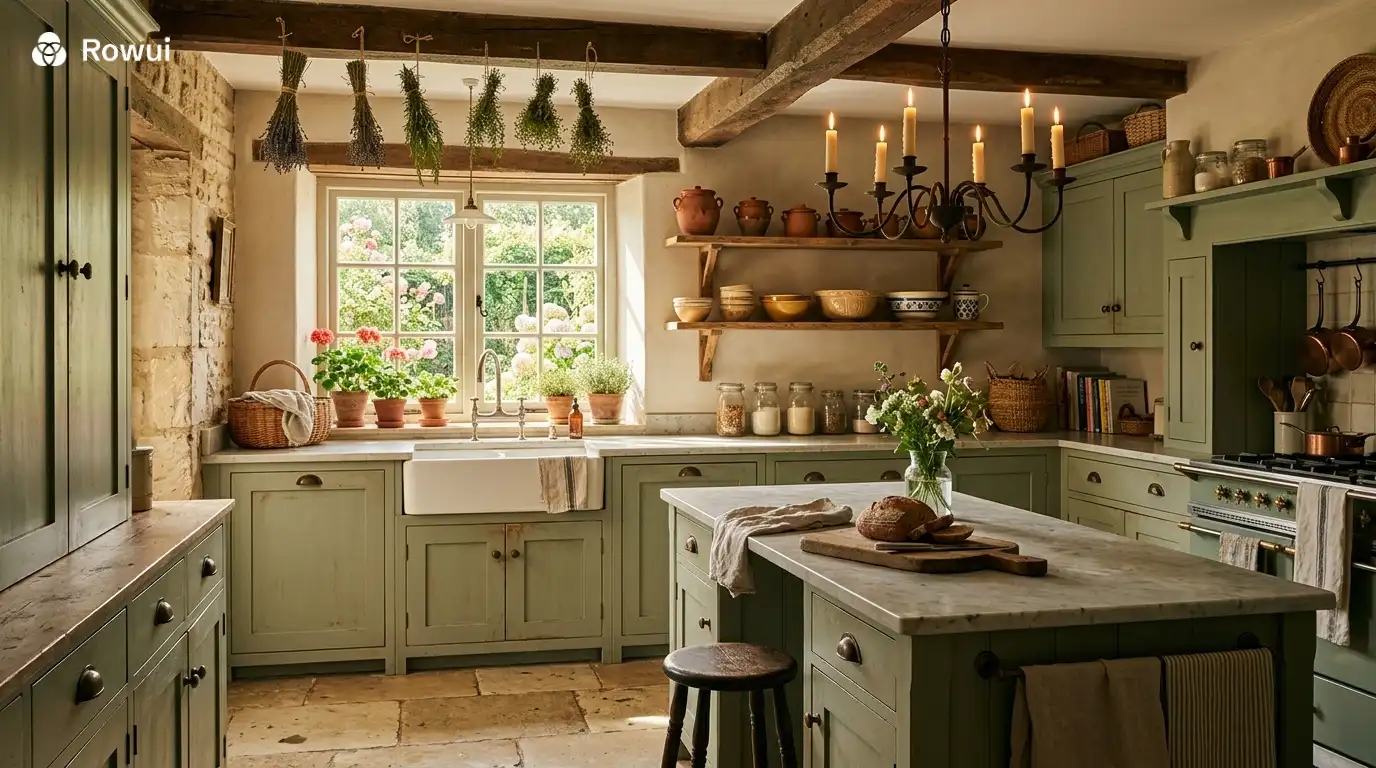
French country design, particularly from the Provence region, brings a more refined elegance to the rural aesthetic. It is warmer and more sensory than English country, drawing on the colours of the French countryside, lavender, sunflower yellow, terracotta, olive green and bleached stone, and the craftsmanship of Provencal artisans. Limestone floors, linen upholstery in natural tones, iron chandeliers with drip candle detail, painted timber cabinetry in soft sage or off-white, and distressed furniture with gentle curves are the hallmarks of this sub-style.
The French country kitchen is one of the most coveted room types in residential design. Open shelving displays terracotta pots, glazed ceramic serving dishes, bundles of dried herbs and bottles of olive oil and wine. Cabinetry is painted in a warm white or pale grey-green, with simple iron hardware. A marble or butcher-block counter provides a working surface. The overall feeling is one of abundance, sensory pleasure and quiet luxury rooted in the everyday.
What Is Farmhouse Interior Design
Farmhouse interior design has become one of the dominant residential styles of the past decade, propelled into global consciousness by the American design movement that celebrates the aesthetic of the working rural homestead. It is closely related to country design but has its own distinct visual language, one that is slightly more pared back, slightly more graphic and slightly more accessible to a wide audience than the rich layering of English country or the refined sensuality of French Provencal style.
The farmhouse interior is built on a few core architectural elements. Shiplap timber wall panelling, whether painted white or left in natural wood, is the most recognisable feature. Exposed ceiling beams, either original structural timber or decorative additions, reinforce the agricultural character. Wide-plank timber floors, often in a grey-washed or white-oiled finish, complete the base. Against this backdrop, a limited palette of white, warm wood, black metal and occasional natural fibre creates a look that is clean, warm and deeply comfortable.
Farmhouse Kitchen and Living Spaces
The farmhouse kitchen is defined by its apron-front sink, its white shaker-style cabinetry, its open shelving in natural timber, and its large island with a butcher-block or quartz counter. Lighting typically features a row of pendant lights in black metal with glass shades, hung low over the island. Hardware throughout is in matte black or aged bronze. The pantry is open or concealed behind vintage-style sliding doors. Everything is functional, clearly made for a working household, but considered with enough design awareness to feel beautiful.
Living spaces in farmhouse interiors centre on a large comfortable sofa in white or cream linen, often a slipcovered style that can be washed. A reclaimed timber coffee table or a pair of wooden stools serve as the centre point. A shiplap fireplace surround frames an original fireplace or a modern insert. Woven baskets, a cowhide or geometric rug, and a gallery wall of black-framed botanical prints or vintage farm maps complete the look.
What Is Mid-Century Modern Interior Design
Mid-century modern interior design refers to the design culture of roughly 1945 to 1975, a period of extraordinary creativity in architecture and design across America and Europe. It is simultaneously retro and thoroughly contemporary feeling, a quality that explains its extraordinary enduring popularity. Mid-century modern homes and interiors feel optimistic, adventurous and sophisticated in a way that continues to resonate with homeowners today.
The style emerged from a post-war enthusiasm for new materials, new manufacturing techniques and new ideas about how people should live. Designers like Charles and Ray Eames, Florence Knoll, Eero Saarinen, Hans Wegner, Arne Jacobsen and George Nelson produced furniture and objects that were simultaneously beautiful, functional and affordable to produce at scale. Their work defined the aesthetic of an era and established a design vocabulary that remains instantly recognisable.
Colour and Pattern in Mid-Century Interiors
The mid-century modern palette is bolder than most other styles covered in this article. Warm olive greens, burnt orange, mustard yellow, teal and turquoise appear alongside warm timber tones and clean whites. These colours feel of their era without feeling dated, partly because they are drawn from nature rather than from fashion, and partly because they are so warmly toned that they work beautifully with the organic timber and wool materials that accompany them.
Pattern in mid-century design tends toward the geometric, the abstract and the botanical. Graphic prints on upholstery fabrics, terrazzo flooring patterns, mosaic tile and abstract artwork all appear in mid-century interiors. The patterns are bold enough to make a statement but always secondary to the iconic furniture that is the true centrepiece of the style.
Furniture Icons and How to Use Them
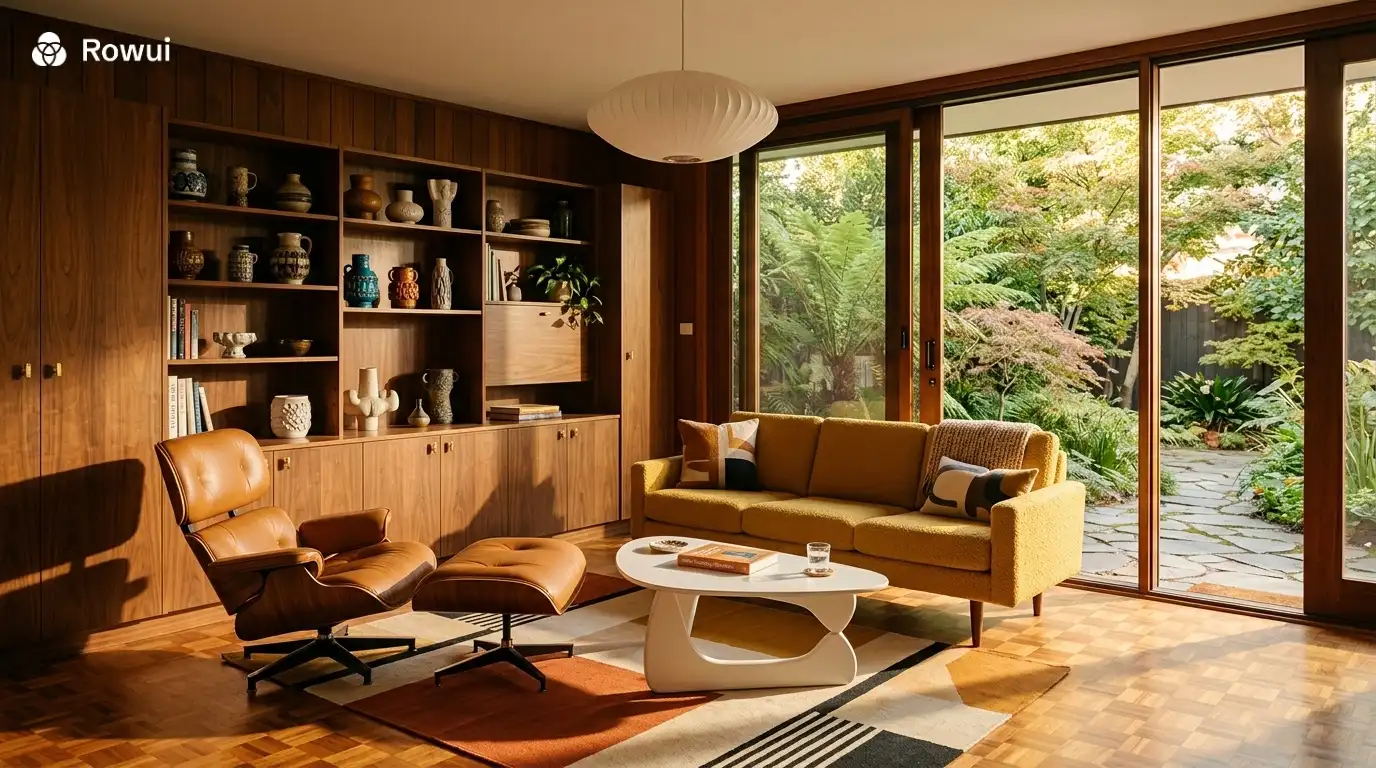
The furniture pieces associated with mid-century modern design are among the most famous objects in design history. The Eames Lounge Chair and Ottoman. The Egg Chair by Arne Jacobsen. The Tulip Table by Eero Saarinen. The Wishbone Chair by Hans Wegner. The Nelson Bubble Lamp. These pieces remain in production today, and while originals and licensed reproductions carry significant price tags, the market for quality mid-century-inspired furniture at accessible price points is extensive.
Building a mid-century modern interior does not require a full suite of design classics. A single iconic piece, perhaps an Eames-style rocking chair or a Noguchi-style coffee table, can anchor the entire room and signal the style clearly. Pair it with warm walnut veneer cabinetry, a graphic geometric rug in amber and cream, a tulip-style pendant light and warm white walls, and the effect is unmistakable.
What Is Bohemian Interior Design
Bohemian interior design, often abbreviated to boho, is the most personal and idiosyncratic of all the major design styles. It resists rules, celebrates individuality, draws from global craft traditions, and prizes the handmade, the collected and the deeply personal over the curated and the coordinated. A bohemian interior tells the story of the person who lives in it through objects gathered from travels, markets, vintage shops and cultural traditions around the world.
The boho interior is layered, textural, colourful and deliberately abundant. Where contemporary design removes, bohemian design adds. Stacked rugs on the floor, hanging tapestries on walls, collections of plants in mismatched ceramic pots, lanterns and fairy lights, embroidered cushions, woven wall hangings, vintage furniture discovered at markets, African baskets, Indian block-print textiles and Moroccan ceramic vessels all coexist in a space that should feel overwhelming but instead feels abundantly alive.
Colour and Pattern in Bohemian Interiors
The bohemian palette is rich and earthy, drawing from the traditional craft cultures of Morocco, India, Central America, West Africa and Southeast Asia. Deep terracotta, saffron yellow, jewel-toned purple and emerald green appear alongside warm off-whites, natural linen and aged timber. Pattern is everywhere and mixed with abandon, but the key to making it work is to maintain a consistent warmth of tone. When all the colours in a room share a warm, earthy undertone, even wildly different patterns can coexist without clashing.
Plants are perhaps the most important single element of the bohemian interior. They appear at every scale, from a towering fiddle-leaf fig in a wicker planter to a collection of trailing pothos on a shelf, from a hanging string of pearls in a macrame pot holder to a spread of succulents on a windowsill. The green of living plants softens and unifies a bohemian room, adding freshness and life that no artificial element can replicate.
What Is Minimalist Interior Design
Minimalist interior design takes the principles of modernism and pushes them to their logical extreme, stripping the interior environment down to only what is essential and finding extraordinary beauty in what remains. It is the most demanding of all interior styles to execute well, because it eliminates the ability to hide behind decoration, pattern or accessories. Every surface, every material, every proportion and every junction is fully exposed, and each must be perfect.
The minimalist interior is not merely a contemporary interior with fewer objects. It is a philosophical approach to space in which the absence of things is itself a design decision. Negative space, the empty wall, the bare floor, the unadorned surface, carries as much visual weight and intentional meaning as the objects that do appear. The result, when executed with the right quality of materials and the right precision of detail, is a space of extraordinary serenity and psychological rest.
Materials and Surfaces in Minimalist Design
Because so little appears in a minimalist interior, the quality and character of materials must do extraordinary work. Polished concrete floors. White plaster walls with no skirting board and no cornice, just a clean shadow gap detail where floor meets wall. A single slab of bookmatched marble forming the kitchen counter and backsplash. White oak cabinetry with no handles and no visible hinge. A single sculptural pendant light in matte ceramic or blown glass. These materials are expensive not because they are decorated but because their quality is intrinsic and unavoidable.
Colour in a minimalist interior is almost always a very quiet neutral. Pure white, warm off-white, pale warm grey, soft stone. Occasionally a single wall in a deeper tone, a warm charcoal or a muted sage, introduces depth. What never appears in a true minimalist interior is pattern, excess furniture, exposed storage or visual clutter of any kind. Everything that exists serves a purpose, and most storage is concealed behind flush, handle-free doors that disappear into the wall plane.
What Is Eclectic Interior Design
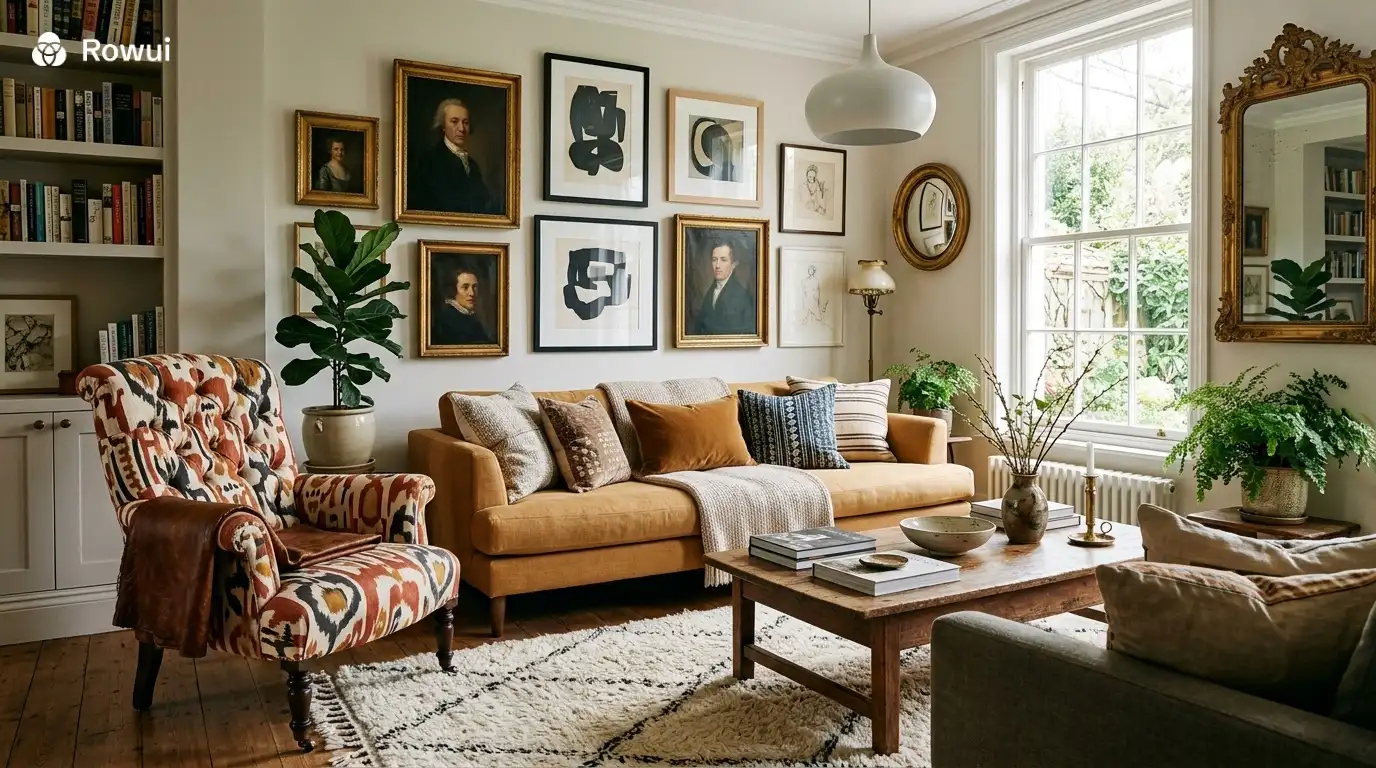
Eclectic interior design is often misunderstood as a style for those who cannot make up their minds. In reality, it is among the most sophisticated and skilled approaches to designing a home, one that requires a deep understanding of multiple styles and an instinctive sense of how to balance, contrast and harmonise them. An eclectic interior draws from many different design traditions, periods and cultures, combining them in a way that feels intentional, surprising and unmistakably personal.
The difference between a successful eclectic interior and a confused one lies in the coherence of the underlying composition. An eclectic room might combine a Victorian antique armchair with a contemporary sofa, a Moroccan rug with a Scandinavian pendant light, and a piece of African art with a French gilt mirror. But it does so within a consistent colour palette and with a strong sense of visual balance that prevents any single element from dominating at the expense of the whole.
The Rules of Successful Eclecticism
Even a style that celebrates rule-breaking needs some internal rules to prevent chaos. The most important of these is colour consistency. Establish a tight palette of four to five colours, including your neutrals, and let every piece in the room connect to that palette even if in very different ways. The antique chair can be reupholstered in a contemporary fabric that belongs to your palette. The vintage rug can share a tone with the cushions on your modern sofa. Colour is the invisible thread that sews the eclectic room together.
The second rule is scale awareness. Mix large and small, tall and low, wide and narrow, but always maintain a visual balance in the overall composition. A very heavy antique cabinet on one side of a room needs something of equivalent visual weight on the opposite side, even if it is a cluster of three smaller pieces rather than a single large one. Proportion is the grammar of interior design, and it applies just as forcefully in an eclectic space as it does in a strictly formal one.
What Is Vintage Interior Design
Vintage interior design celebrates the beauty of objects from the recent past, typically from the 1920s through to the 1980s, that have accumulated character, quality and rarity with age. It is distinct from antique design, which tends to focus on pieces from before the early twentieth century, and from retro design, which recreates the look of past eras using new products. Vintage design works specifically with original pieces discovered through antique markets, estate sales, vintage dealers and online platforms.
The appeal of vintage design is deeply rooted in craft quality. Furniture and objects made before mass production became the dominant force in manufacturing were often made to last by skilled craftspeople using solid materials. A 1950s Danish teak dining table will outlive most contemporary furniture by decades. A set of mid-century ceramic table lamps will have a hand-modelled quality that machine production simply cannot replicate. Vintage objects carry a history and a material honesty that makes them genuinely beautiful in a way that is difficult to manufacture from scratch.
Curating a Vintage Interior
The key to a successful vintage interior is curation rather than accumulation. Collecting vintage pieces without editing them leads to storage, not design. Choose pieces that share a tonal warmth, a material consistency or a period affinity, and display them with enough breathing room that each can be appreciated individually. A curated shelf of mid-century ceramics in warm earth tones is beautiful. The same shelf crowded with objects of wildly different periods and palettes becomes visual noise.
Vintage pieces work best when mixed with contemporary elements that give them context and prevent the interior from feeling like a museum. A pair of vintage 1960s armchairs recovered in a contemporary abstract fabric will feel far more alive in a room than the same chairs in their original faded upholstery. A vintage timber sideboard against a freshly painted white wall feels sharp and current. These combinations honour the objects while integrating them into a living, breathing contemporary home.
What Is Art Deco Interior Design
Art Deco interior design is one of the most visually striking and immediately recognisable styles in design history. Originating in 1920s Paris and spreading across Europe and America through the following two decades, it represents a glamorous, geometry-obsessed, luxury-celebrating moment in design culture that has never entirely gone out of fashion. Art Deco interiors feel theatrical, sophisticated and unashamedly opulent, designed for an era that believed the future would be glittering and the present deserved to match.
The defining visual characteristic of Art Deco is its use of bold geometric pattern combined with luxurious materials. Sunburst motifs. Chevron and zigzag patterns in flooring and upholstery. Stepped architectural profiles in doorways, fireplace surrounds and ceiling cornices. Highly polished surfaces in marble, lacquer, chrome and mirrored glass. Rich jewel tones in emerald green, sapphire blue, deep violet and champagne gold. These elements combine to create interiors of extraordinary visual intensity.
Bringing Art Deco Character Into a Contemporary Home
A full Art Deco interior requires either a period building or an extraordinary commitment to architectural transformation. But Art Deco character can be introduced into any home through carefully chosen elements. A geometric brass-and-glass pendant light over a dining table. A velvet sofa in deep emerald with gold-capped legs. A sunburst mirror above a fireplace. A chevron-patterned parquet floor in two tones of oak. A bathroom tiled in black and white hexagon mosaic with chrome fixtures. Each of these elements carries the Art Deco DNA without requiring a wholesale reimagining of your architecture.
How to Choose the Right Interior Design Style for Your Home
With so many compelling options laid out, how do you choose the style that is right for you and your home? The answer begins not with design images but with self-awareness. Think about how you want your home to feel rather than what you want it to look like. Do you crave calm and simplicity? Contemporary or minimalist design may align with your temperament. Do you love richness, pattern and a sense of history? Traditional or eclectic design may be your natural language. Do you feel most at ease in relaxed, informal spaces? Coastal or farmhouse design will serve you better than a formal traditional or a rigorous minimalist approach.
Architecture matters as much as personal taste. A Victorian terrace house has ornate cornices, sash windows and a bay front that actively resists being treated as a contemporary minimal interior. Working with your architecture, respecting its proportions and period character while introducing contemporary elements selectively, almost always produces a better result than fighting the bones of the building. Conversely, a 1980s brick veneer house with no architectural character is a blank canvas that welcomes a wide range of styles without contradiction.
The Question of Cohesion Across Rooms
A common question among homeowners designing their own spaces is whether every room needs to follow the same style. The answer is nuanced. A home benefits from a consistent underlying character, a shared palette, a consistent quality of material, a coherent sense of proportion, even if individual rooms have their own personality. A kitchen that is more industrial, a living room that is more coastal, and a bedroom that is more Scandinavian can coexist beautifully if they share a material palette and a tonal warmth. What disrupts the experience of a home is not stylistic variety but incoherence: different quality levels, wildly different palettes, or a complete absence of any shared visual language.
Use transitional spaces strategically. A hallway, a landing or an open-plan connection between spaces is the ideal place to blend two styles, picking up elements from each to create a bridge rather than a sharp border. Flooring that runs consistently through the entire home is one of the most powerful tools for creating cohesion regardless of stylistic variation from room to room.
Working With a Designer Versus Designing Yourself
Understanding interior design styles gives you something invaluable whether you choose to work with a professional designer or go it alone: a vocabulary and a framework for decision-making. If you work with a designer, being able to articulate your style preferences clearly, and to identify examples of spaces that feel right to you, will dramatically improve the quality of the collaboration and reduce the risk of costly misalignments. If you design your own space, a style framework acts as your decision filter, helping you say yes to the pieces that belong and no to the ones that do not, no matter how appealing they might be in isolation.
Mixing Interior Design Styles Successfully
The reality of most beautiful homes is that they do not belong to a single style. They are, to varying degrees, hybrids. A farmhouse kitchen with industrial lighting. A coastal living room with mid-century furniture. A transitional bedroom with vintage textile art. These combinations work not because the styles are technically compatible on paper but because the designer or homeowner has established a common thread of palette, material quality or proportion that runs through everything.
The single most effective tool for mixing styles successfully is a tight and consistent colour palette. Choose three to four colours, including your neutral base, and apply them throughout your home regardless of which style each room draws from. When a coastal blue and a warm white appear in your farmhouse kitchen as well as your coastal living room, the two rooms feel connected in spite of their stylistic differences. Colour is the simplest and most powerful form of cohesion available to you.
Material consistency works in the same way. If warm timber, natural linen and matte black metal appear in every room regardless of style, those rooms will feel related even when they have very different moods. Avoid introducing materials that belong only to one room and have no echo elsewhere. A marble kitchen counter that connects to a marble bathroom vanity connects the two rooms through a shared material narrative even though they serve entirely different functions.
Practical Steps for Defining Your Own Interior Design Style
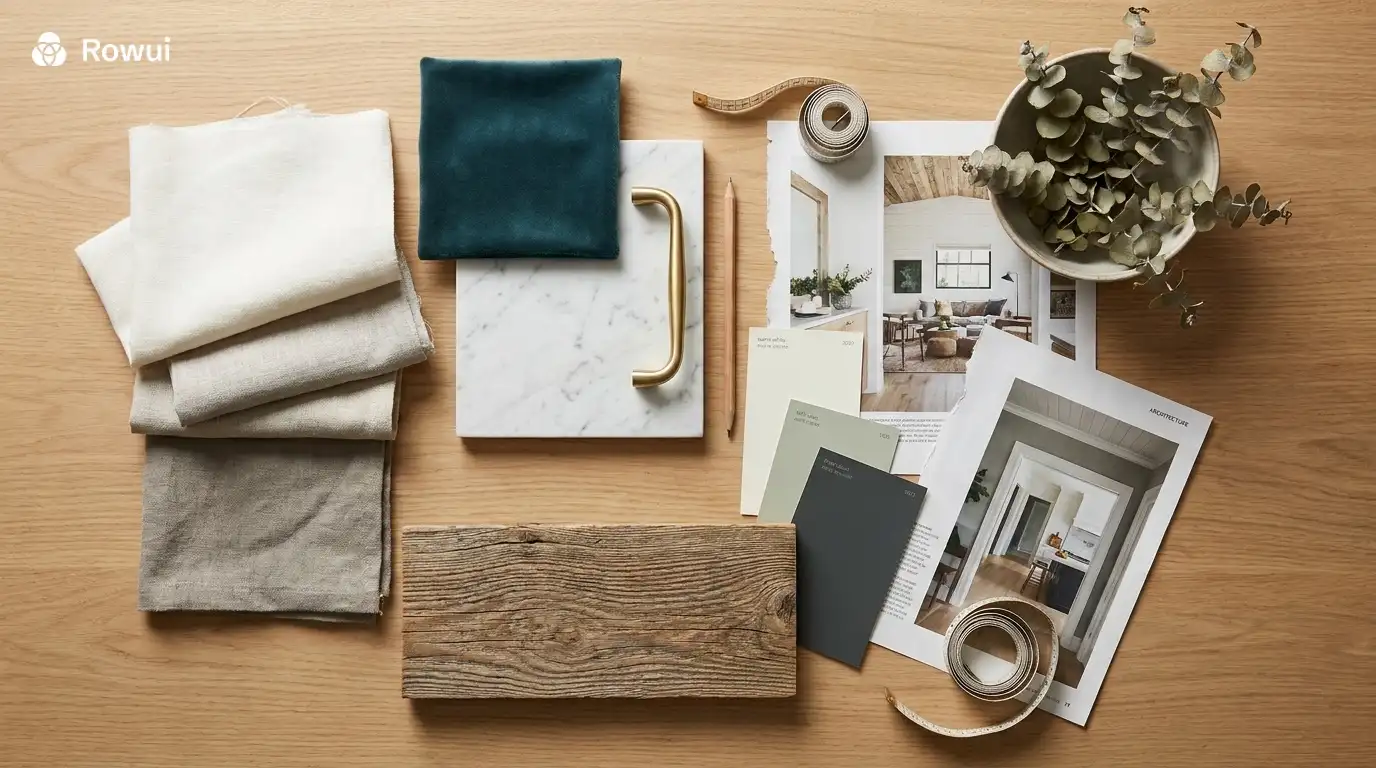
One of the most useful exercises you can do before making any significant design decision is to build a mood board. Collect images of interiors that appeal to you without worrying about why they appeal or whether they seem consistent. After gathering forty or fifty images that genuinely resonate, study them as a group and look for patterns. You will almost always find that your instinctive selections share a palette, a material character, a level of formality or a quality of light that points clearly toward one or two of the styles described in this article.
Once you have identified your style direction, audit your existing home against it. Walk through each room and ask which pieces belong to your chosen style, which pieces could be adapted (through reupholstery, repainting or restyling), and which pieces are simply incompatible and should be retired, sold or moved to a less visible location. This edit is often the most valuable step you can take, and it frequently costs nothing at all.
Invest where it matters most. Every interior design style has its high-priority elements, the pieces or finishes that most clearly signal the style and carry the most visual weight. In a contemporary interior, it is the sofa and the flooring. In a traditional interior, it is the architectural detail and the statement lighting. In an industrial interior, it is the material treatment of the floors and walls. Identify the three or four elements that matter most in your chosen style and allocate your budget toward those rather than distributing it evenly across many lower-priority decisions.
The Role of Lighting in Every Interior Design Style
Lighting is the single most transformative element in any interior, regardless of style. It defines the mood of a space, changes the apparent colour of every surface, creates or destroys a sense of warmth, and either supports or undermines the style you are trying to create. Yet lighting is consistently underbudgeted and underconsidered in residential design, with many homeowners relying on a single overhead fitting that produces a flat, shadowless quality of light that drains character from even beautifully designed spaces.
Every style in this article has its own lighting vocabulary. Contemporary and minimalist interiors use recessed downlights for ambient illumination and sculptural pendants as design statements. Traditional interiors layer chandeliers, wall sconces and table lamps in warm incandescent tones. Industrial interiors use exposed bulb pendants, track lighting and articulated wall-mounted task lights. Coastal interiors favour woven rattan pendants, driftwood table lamps and simple ceramic bases with natural linen shades. Scandinavian interiors use simple graphic pendants and an extraordinary quantity of candles.
The principle that transcends all styles is layering. No interior should rely on a single light source. Ambient light (general illumination of the room), task light (directed at work surfaces, reading areas and cooking zones) and accent light (directed at art, architectural features or objects) should all be present and independently switchable. When you can control each layer separately, you can shift your interior from bright and functional during the day to warm, intimate and atmospheric in the evening with the turn of a single dimmer switch.
Conclusion: Your Home, Your Style, Your Story
Interior design styles are not constraints. They are languages. And like any language, knowing them well gives you the freedom to speak clearly, to say exactly what you mean, and to be understood. Whether you are drawn to the serene simplicity of contemporary design, the warm layering of traditional interiors, the rugged character of industrial spaces, the breezy ease of coastal living, or some inspired combination of all of the above, understanding what each style is made of gives you the tools to create a home that is genuinely and unmistakably yours.
The best interior design has always been personal. It reflects the tastes, the history, the daily life and the aspirations of the people who live in the space. No style guide, however detailed, can substitute for the knowledge of what makes you feel at home. Use the frameworks in this article as a foundation rather than a formula. Let them sharpen your instincts, expand your vocabulary and give you confidence in your choices. Then trust those choices, make them with intention, and build a home that tells your story beautifully.