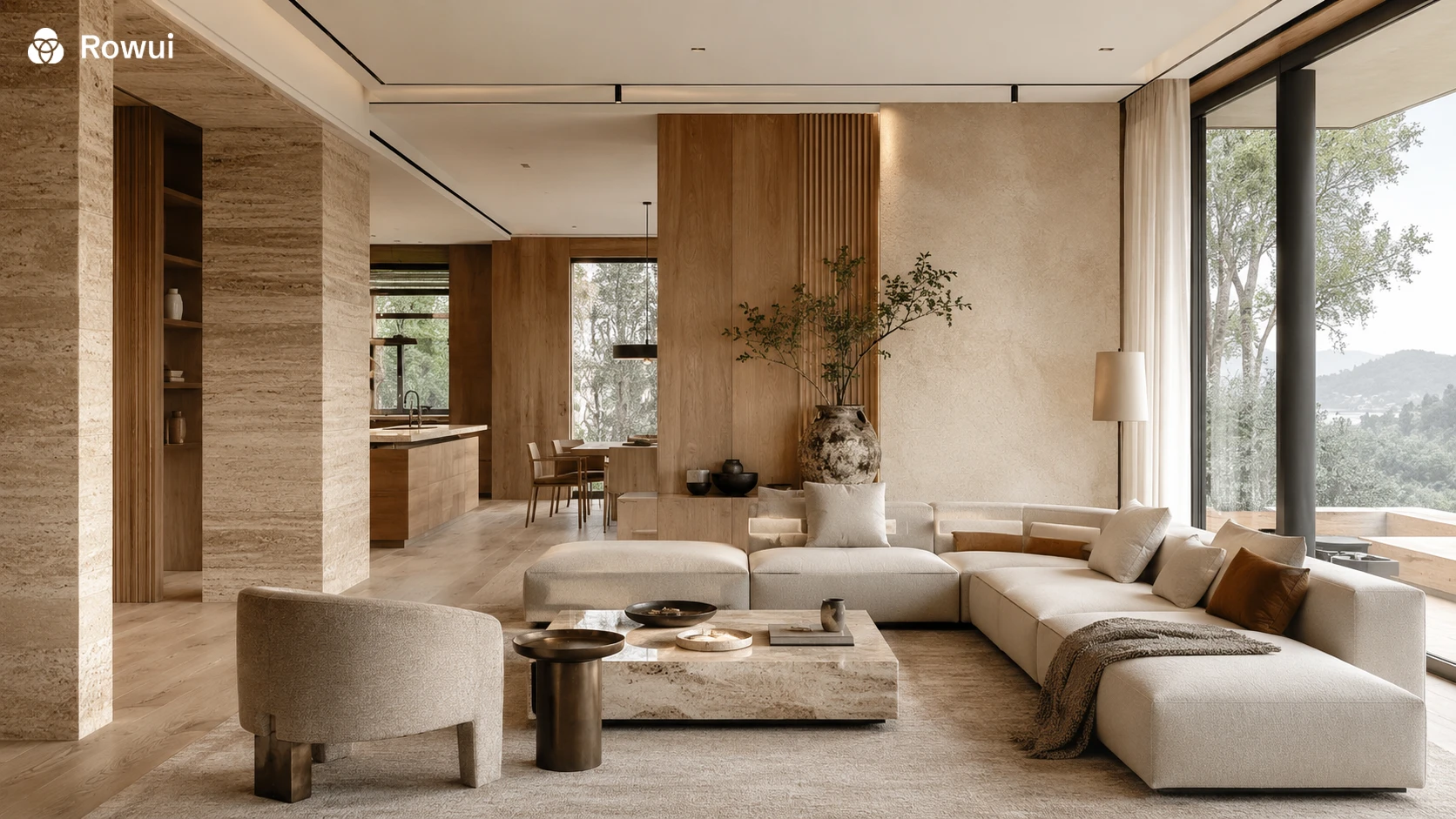
Walk into any home that feels calm, expensive and effortless, and you will notice something surprising. It is rarely the furniture doing the work. It is the materials underneath and around everything else, the floor you are standing on, the counter your hand rests on, the wall your eye lands on first. Choosing materials for a modern interior is one of the most consequential decisions a homeowner makes, yet it is often treated as an afterthought squeezed in after paint colours and furniture shopping. Get the materials right and a modest room can feel rich and considered. Get them wrong and even an expensive renovation can feel flat, cold or strangely unfinished. This guide walks through how to think about materials the way an architect does, so you can make choices that hold up visually, practically and financially for years.
Why Material Choice Matters More Than Most Homeowners Realise
Colour trends fade quickly. A feature wall painted in a fashionable green can look dated within a few years. Materials, on the other hand, carry weight and permanence. Stone, wood, metal and textiles interact with light, texture and touch in ways that flat colour cannot. This is why designers often say that a good material palette is the backbone of a modern interior, while colour and decor are simply the accessories layered on top.
Materials also communicate quality instantly, sometimes before a visitor consciously registers why. A slab of honed marble, a wide plank oak floor, or a brushed brass tap all signal intention and care. Cheap or mismatched materials do the opposite, even in a beautifully laid out room. Understanding this early saves homeowners from spending their entire budget on furniture while neglecting the surfaces that actually shape how a space feels.
The Difference Between Modern and Contemporary Material Language
These two words are often used interchangeably, but they mean different things architecturally. Modern interiors, in the true design sense, favour honest materials used simply, think exposed wood grain, matte stone, unlacquered metal, and a restrained palette of no more than three or four core materials per room. Contemporary interiors are more fluid and trend responsive, borrowing whatever is current, whether that is fluted glass, curved plaster or textured tile. Knowing which direction you are leaning helps narrow choices instead of getting overwhelmed by every material on the market.
Start With a Material Palette, Not a Shopping List
Before choosing anything for a specific room, decide on a whole home material palette. This is standard architectural practice and it prevents the disjointed feeling that comes from every room being decorated in isolation. A typical modern material palette includes one dominant surface material such as a wood tone or stone type, one secondary material for contrast such as a matte black metal or a warm plaster, and one accent material used sparingly, perhaps a textured fabric or a specific tile.
Limiting yourself to a defined palette early does not mean every room looks identical. It means every room speaks the same visual language, so moving from the kitchen to the living room to the bedroom feels like one continuous story rather than a series of disconnected decisions.
How Many Materials Is Too Many
A common mistake is introducing a new material for every surface, one type of tile in the bathroom, a different stone for the kitchen counter, another wood tone for the floor, and yet another for the furniture. The result is visual noise. As a general rule, most well designed modern rooms use no more than four to five distinct materials, counting flooring, walls, cabinetry, hardware and major furniture finishes together. If you find yourself introducing a sixth or seventh material, ask whether it can be replaced with something already in your palette instead.
Flooring: The Foundation of Every Room
Flooring covers more surface area than almost anything else in a home, so it deserves the most careful consideration. In modern interiors, wide plank engineered wood in a natural or lightly smoked tone remains the most reliable choice because it warms up spaces that might otherwise feel sterile from clean lines and minimal decor. Large format porcelain tile, especially in concrete look or honed stone look finishes, is another strong modern option, particularly in kitchens, bathrooms and homes in warmer climates.
Polished concrete has become popular in loft style renovations, but homeowners should know it is unforgiving underfoot and acoustically hard, meaning sound bounces rather than absorbs. If you love the look, consider it only in living areas with rugs and soft furnishings to balance the hardness, rather than throughout the entire home.
Matching Flooring Tone to Ceiling Height and Light
Darker floors ground a room and make high ceilings feel more intimate, which works well in double height living rooms or loft conversions. Lighter floors bounce natural light and make compact rooms feel more open, a useful trick for smaller apartments or north facing rooms that receive limited direct sun. As a practical guide, if a room has a ceiling height under 2.6 metres, lean lighter. If it is above 3 metres, a mid to dark tone will feel more proportionate and less like an empty box.
Walls and Wall Treatments Beyond Paint
Modern interiors increasingly move past flat painted drywall as the only wall treatment. Microcement, limewash and Venetian plaster have become popular because they introduce subtle texture and depth without competing with furniture or art. Limewash in particular gives a soft, cloud like variation that flat paint cannot replicate, and it works beautifully in bedrooms and hallways where you want warmth without pattern.
Fluted or reeded wood panelling is another material seeing wide use, especially on feature walls behind beds, television units or as a divider between open plan zones. The vertical lines add architectural rhythm to a room and catch light in a way that flat panelling does not, creating subtle shadow lines that shift throughout the day.
Choosing Between Warm and Cool Wall Materials
Every material carries an underlying temperature. Limewash, plaster and most timbers read warm. Polished concrete, glass block and certain stones like grey marble read cool. A common design error is mixing warm flooring with cool walls and cool metal fixtures without any warm accents to balance it, which leaves a room feeling clinical. The fix is simple, ensure at least one warm material touches every major surface plane, floor, wall and ceiling, even if it is only through a single piece of furniture or a light fixture.
Kitchens and Bathrooms: Where Material Choice Gets Technical
These rooms combine high moisture, heat and daily wear, so material choice here is as much about performance as appearance. Quartz composite countertops remain a dependable modern choice because they resist staining and scratching while mimicking the look of natural stone. Genuine stone, particularly honed granite or soapstone, offers more character and a slightly softer, matte look that many homeowners now prefer over the high shine finishes popular a decade ago.
For cabinetry, matte lacquer and natural wood veneer dominate current modern kitchens, replacing the glossy high shine cabinets that once defined the style. Matte finishes hide fingerprints and daily smudges far better, which matters enormously in a family kitchen used every day.
Tile Selection for Bathrooms That Will Not Date Quickly
Large format tile with minimal grout lines gives bathrooms a cleaner, more expansive feel, especially in smaller spaces where too much grout visually breaks up the room. Zellige and handmade look tiles have become popular for their slight imperfections and light reflecting texture, but they work best as an accent, around a mirror or on a shower niche, rather than covering an entire bathroom, where the irregularity can start to feel busy.
Metal Finishes and Hardware
Hardware is small in scale but enormous in impact because it is touched daily and sits at eye level on cabinets, doors and taps. Brushed brass, matte black and brushed nickel are the three metal finishes carrying modern interiors right now. The key rule architects follow is consistency, choose one metal finish per space and repeat it across taps, cabinet handles, light fixtures and door hardware within that room. Mixing three different metals in one kitchen, for example, reads as indecisive rather than eclectic.
An exception worth knowing is intentional mixed metal design, where one dominant finish covers eighty percent of hardware and a second finish appears only on a single statement piece, such as a pendant light. This creates interest without confusion, but it requires discipline to avoid tipping into visual clutter.
Textiles and Soft Materials
Hard surfaces define the bones of a modern interior, but textiles are what make it livable rather than sterile. Boucle, linen and heavyweight cotton are the current favourites for upholstery because their texture reads as tactile and relaxed rather than formal. Linen curtains, left slightly loose rather than tightly pressed, soften window lines and diffuse incoming light in a way that adds gentleness to otherwise crisp architectural spaces.
Rugs deserve particular attention in modern interiors with hard flooring. A wool rug with a low, dense pile anchors a seating area and absorbs sound, correcting the acoustic harshness that comes with tile, concrete or engineered wood floors throughout an open plan home.
How Lighting Changes the Way Materials Read
No material choice can be judged fairly under a single lighting condition. Natural stone that looks warm and inviting in daylight can turn flat and grey under cool white bulbs at night. Before committing to major material purchases, always view large samples in the actual room, at different times of day and under your planned artificial lighting. Warm white bulbs around 2700 to 3000 kelvin generally favour timber, plaster and brass, while cooler bulbs above 4000 kelvin can wash out these same materials and make them look artificial.
Layered lighting, combining ambient ceiling light, task lighting and low level accent lighting, also brings out material texture far better than a single central fixture. A wall washed gently by a floor lamp will reveal the texture of limewash or fluted panelling in a way that flat overhead light simply cannot.
Bringing Materials Together Successfully
The most successful modern interiors are not the ones with the most expensive materials, they are the ones where every material choice supports the others. Before finalising any purchase, lay physical samples side by side, flooring, countertop, cabinet finish, wall paint or plaster sample, and hardware finish, and view them together in natural light. If any single sample fights for attention rather than sitting comfortably beside the others, it is worth reconsidering before installation, when changes become far more costly.
Conclusion
Choosing materials for a modern interior is less about following trends and more about understanding how surfaces, light and texture work together across an entire home. A considered palette of a few honest materials, repeated with discipline from room to room, will always outperform a scattered collection of trendy finishes chosen one at a time. Before your next renovation decision, resist the urge to pick materials room by room. Step back, define a simple palette for the whole home first, and let every individual choice serve that bigger picture. That single shift in approach is what separates a house full of nice things from a home that genuinely feels designed.