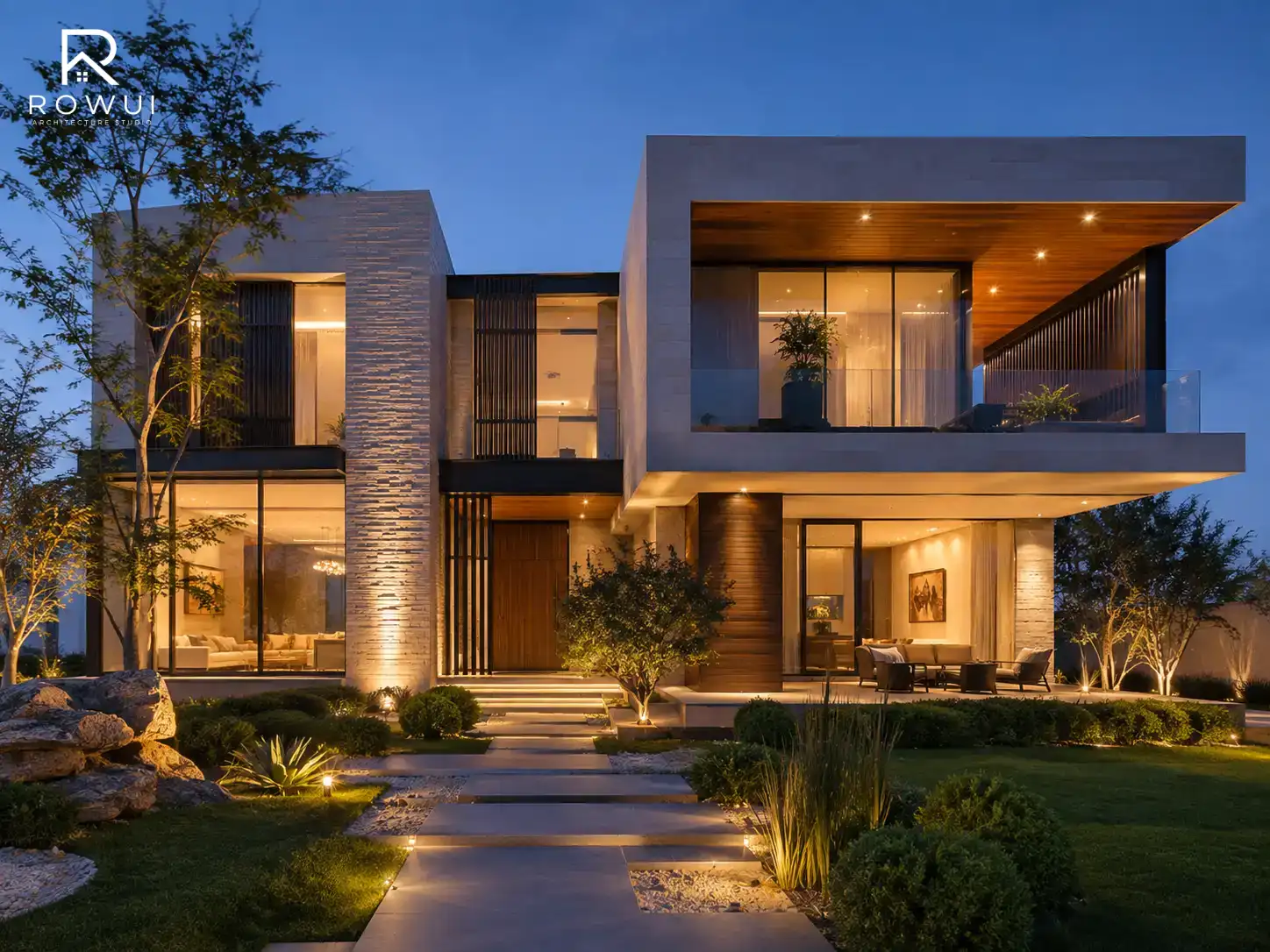
There is a particular moment that every homeowner who has invested in good exterior lighting remembers clearly. It is the first evening after the installation is complete, when you pull into your driveway or step back onto the footpath and see your home illuminated for the first time. The transformation is almost always startling. The same house that disappeared into a dark silhouette every night suddenly has presence, depth, warmth, and a kind of quiet confidence it never had before. Good exterior lighting does not simply make a home visible after dark. It reveals the home in an entirely new way, one that daylight, ironically, often cannot match.
Why Most Homes Look Worse at Night Than They Should
Walk down almost any residential street after dark and you will notice the same pattern repeating itself. Homes that looked attractive and well considered during the day have essentially disappeared. A porch light throws a flat yellow circle onto a front door. A garage floodlight blasts a harsh white wash across the driveway. Everything beyond the immediate cone of those two lights falls into complete darkness. The architecture vanishes. The garden vanishes. The carefully chosen front door colour, the textured render, the climbing plant framing the entrance, all of it gone.
This is not because those homes are poorly designed. It is because exterior lighting was treated as an afterthought rather than as an integral part of the design. A single bulkhead light beside the front door is the residential equivalent of lighting a theatre stage with one torch held at arm level. It creates flat, unflattering illumination and leaves everything around it in shadow.
The good news is that this is one of the most correctable issues in residential design, and the transformation it produces is among the most dramatic of any home improvement project at a comparable cost.
What Happens When Exterior Lighting Is Done Well
Good exterior lighting works by doing several things simultaneously that poor lighting never attempts. It creates layers of light at different heights and intensities. It uses the architecture itself as a canvas, using light to trace the lines, textures, and forms that give the home its character. It guides people safely along paths and through entries without making those functional elements feel clinical or industrial. And it creates a sense of welcome and warmth that is felt before you even reach the front door.
The Before: A Flat, Forgotten Facade
Picture a double storey home with face brick on the lower level, rendered upper walls painted a warm grey, a recessed timber entry porch, and a garden bed running along the front boundary. During the day this house reads as considered and attractive. After dark, with only a single coach light beside the front door switched on, what you actually see is a weak pool of warm light that catches the edge of the door, casts the porch into shadow because the light source is beside rather than above or within it, and leaves the brick, the render, the garden, and the roofline entirely invisible. The house does not look dark in a moody or dramatic way. It simply looks absent.
The After: Architecture Revealed
Now add a thoughtfully designed lighting scheme to that same house. A pair of recessed downlights installed in the ceiling of the entry porch now illuminate the timber lining boards above and cast a warm light down onto the front door and entry path. Two ground mounted uplights positioned at the base of the face brick lower level wash light upward across the texture of the brickwork, creating the kind of shadow and depth that make textured materials look extraordinary after dark. A low voltage path light at each garden bed stake guides the entry sequence without drawing the eye away from the architecture. And a carefully aimed spike spotlight at the base of the feature tree in the front garden sends light up through the canopy, creating that beautiful, layered branching silhouette above. The house now has three distinct layers of light working together. The result is a facade that feels considered, composed, and genuinely beautiful.
The Core Principles of Exterior Lighting Design
Understanding a few fundamental principles will help you make better decisions whether you are working with a lighting designer, an electrician, or planning improvements yourself.
Layering: The Single Most Important Concept
Interior designers talk about layering light as the foundation of good interior lighting, and exactly the same principle applies outside. A well lit exterior has at least three layers working together. The first is ambient light, which provides a general level of illumination across the facade and grounds. The second is accent light, which is directed specifically at architectural features, garden elements, or textural surfaces to create depth and visual interest. The third is task light, which serves functional purposes such as illuminating paths, steps, driveways, and entry points for safety and navigation.
Most homes have only the third layer, and even that is often done poorly. Adding the first and second layers is what creates the transformation that makes people stop and look.
Colour Temperature and Its Effect on the Facade
The colour temperature of a light source is measured in Kelvin and has an enormous effect on how your home looks after dark. Warm white light, in the range of 2700K to 3000K, produces a soft golden tone that is flattering to almost all building materials and creates an inviting, residential atmosphere. Cool white light, from 4000K upward, produces a crisper, bluer tone that reads as harder and more commercial. It can suit certain very contemporary architectural styles, but it drains warmth from face brick, timber, sandstone, and rendered surfaces in a way that rarely looks good in a residential context.
The single most common exterior lighting mistake after insufficient layering is using cool white globes in a residential setting. Swapping them out for warm white equivalents at 2700K or 3000K costs almost nothing and can completely change the atmosphere a home projects at night.
Light Direction and the Drama of Shadow
Light that comes from above tends to produce flat, predictable results on vertical surfaces. Light that comes from below, directed upward across a textured surface, does something entirely different. It catches the edges and recesses of the material and creates a pattern of light and shadow that reveals texture in a way that is visually rich and genuinely beautiful. This is why uplighting is so commonly used by professional lighting designers on exterior facades, garden walls, and trees.
The same principle applies to garden features and planting. A standard overhead floodlight pointed at a hedge looks clinical. A ground mounted uplight tucked at the base of the same hedge creates a glowing, layered effect that reads as considered and atmospheric. The light source itself almost disappears, which is exactly the intention. You see the effect, not the fitting.
Illuminating Specific Architectural Features
Different elements of a home's exterior call for different lighting approaches, and understanding how to treat each one separately is what allows the overall scheme to come together as a coherent composition.
The Front Entry
The front entry is the focal point of any residential facade and deserves the most attention in the lighting scheme. A recessed porch with ceiling mounted downlights creates a warm pool of light at the threshold that frames the front door beautifully and makes arrivals feel genuinely welcoming. The downlights should be positioned to light the door itself rather than just the floor, and a dimmer switch that allows you to reduce their intensity in the evening creates a warm, candlelit quality that a fixed output fitting can never achieve.
Wall mounted lanterns or linear wall lights beside the entry add an additional layer and help to frame the door horizontally. The choice between a traditional lantern form and a contemporary linear fitting should follow the architectural character of the home. A federation or craftsman style home looks right with a period influenced lantern. A flat roofed contemporary home looks right with a slim, rectangular wall light in a dark metallic finish. Mismatching the fitting style with the architectural character is one of the most common and most visible errors in residential exterior lighting.
Facades and Textured Surfaces
Any exterior surface with texture, whether it is face brick, dry stacked stone, board and batten timber, corrugated metal, or raked render, will be dramatically enhanced by lighting that rakes across it at an angle. The technical term for this is grazing light, and it works by directing a narrow beam across the surface at a very shallow angle so that every raised element casts a tiny shadow and the overall texture of the material appears to come alive.
For a single storey home with a rendered facade, a linear LED strip or a row of ground mounted spike lights positioned close to the wall and directed upward at a shallow angle will graze the render surface and reveal any texture in it. Even a smooth render finish has enough surface variation to respond beautifully to this treatment. The wall literally glows, and the effect from the street is of a house that has real presence and depth.
Rooflines, Eaves, and Overhangs
The roofline and eaves of a home are often its most defining architectural features, yet they are almost never deliberately lit. A deep eave overhang is a beautiful element in daylight, but at night it simply creates a band of shadow across the upper facade. Installing recessed downlights within the eave soffit, directed downward at the facade below, both illuminates the eave itself and washes light across the upper wall in a way that visually extends the apparent height of the home and reads as sophisticated and intentional.
Alternatively, a continuous LED strip concealed within an eave channel or behind a fascia creates a soft wash of light that is not visible in its source but produces a beautiful ambient glow along the entire roofline. This approach suits contemporary homes particularly well and gives the facade a composed, architectural quality after dark that daylight alone cannot replicate.
Windows and Glazing
Windows that glow warmly from within are among the most appealing elements of any home at night. The light spilling out through a large window or a pair of glazed doors is itself a form of exterior lighting, one that communicates that the home is alive, comfortable, and welcoming. This is worth thinking about when you consider window size and placement. A home with generous glazing to the main living areas will always look more inviting from the street at night than one with small, mean windows.
From an exterior lighting perspective, the frames of windows and glazed doors can also be accented with small recessed lights or carefully aimed spotlights that highlight the frame and reveal its relationship to the wall around it. This is particularly effective on homes with strong, architecturally distinctive window forms.
Garden and Landscape Lighting
A front garden that disappears into darkness after sunset is a lost opportunity. The planting, paving, and landscape features that contribute so much to a home's daytime street appeal can be brought forward just as effectively at night with the right lighting approach.
Feature Trees and Planting
A mature feature tree in a front garden is one of the most valuable assets a residential property can have, and it can be transformed into something genuinely spectacular at night with a single well aimed uplight. Position a spike mounted spotlight at the base of the trunk, aimed upward into the canopy, and what you get is a three dimensional composition of glowing leaves and branching shadows that changes with the seasons and with every breeze. The light source should be concealed as much as possible, tucked in among the ground cover or mulch so that the effect reads as coming from the tree itself.
Hedges, garden walls, and planting beds can all be lit in similar ways, with ground level fixtures directing light upward and across the planting. The contrast between a lit garden bed and the darker lawn or paving around it creates the kind of depth and layering that makes a modest front garden look like something from an architectural magazine.
Paths, Steps, and Driveways
Path and step lighting serves a clear functional purpose, but it can also be part of the overall aesthetic composition if the fittings are chosen carefully. Low bollard lights positioned at intervals along a path provide guidance without creating bright spots that distract from the overall scheme. Recessed ground lights set into the path surface itself create a beautiful flush effect that is particularly suited to contemporary or minimalist garden designs. Step lights recessed into the riser of each step provide both safety and a clean, considered visual line when viewed from the driveway or the street.
Driveway lighting is worth approaching carefully because it is very easy to over illuminate a driveway in a way that makes the rest of the facade look darker by comparison. Low level bollard or recessed lights at the driveway edges, providing just enough light to navigate safely, will serve the purpose without flooding the space with a brightness that competes with the house itself.
Practical Considerations: Fittings, Controls, and Energy Use
The best designed lighting scheme will underperform if the fittings are poorly specified or the controls are inconvenient to use. A few practical points are worth understanding before you commit to any installation.
Choosing the Right Fittings for Exterior Use
Exterior light fittings must be rated for outdoor use, and the IP rating printed on the fitting tells you how well it is protected against moisture and solid particles. A fitting rated IP44 is protected against water splashing from any direction and is suitable for covered exterior locations such as a protected porch. A fitting rated IP65 or higher is fully dust tight and protected against directed water jets, making it suitable for exposed locations that receive direct rainfall. Using an indoor rated fitting in an outdoor position is not only a safety risk but will also result in premature failure and regular replacement costs.
LED Versus Older Technologies
LED technology has transformed exterior lighting in the past decade and there is now very little reason to specify any other light source for a residential exterior scheme. LED fittings last vastly longer than halogen or incandescent alternatives, they draw a fraction of the power for the same light output, they are available in a wide range of colour temperatures, and they perform reliably in temperature extremes that would cause other technologies to fail. The higher upfront cost compared to a traditional globe fitting is recovered very quickly in energy savings and replacement costs.
Smart Controls and Automation
One of the most practical advances in residential exterior lighting is the availability of affordable smart controls that allow you to program, schedule, and adjust your lighting scheme from a phone app. Being able to set your path lights to come on at dusk and turn off at a set time, while having your feature uplights available on a separate circuit that you can dim or switch off independently, means that the scheme can serve different purposes at different times of the evening without requiring any manual switching. Motion sensors on security or safety lights prevent them from being on continuously while still providing full illumination when needed.
Common Mistakes and How to Avoid Them
Even well intentioned exterior lighting projects go wrong when certain principles are overlooked. The most common mistake is simply using too few circuits. When all exterior lights are on the same switch, you lose the ability to create different moods and layers. A welcoming evening scene requires different lighting from a security mode at 2am, and a scheme that does both with one switch will inevitably do neither particularly well.
Over illumination is also a frequent problem, particularly with security lighting. A floodlight bright enough to illuminate a football pitch mounted on a residential garage does not improve security meaningfully and creates glare that makes the surrounding areas harder to see, not easier. Lower intensity, better distributed lighting creates a more uniformly visible environment with far less glare and significantly less light pollution into neighbouring properties.
Finally, mismatched fittings across a facade create visual noise that undermines an otherwise good scheme. Choosing fittings from a consistent family or at least consistent design language, whether that is traditional, transitional, or contemporary, ensures that the lighting scheme reads as coherent and intentional rather than assembled from whatever was available at the time.
Conclusion
The difference between a home that disappears into the dark every evening and one that glows with warmth, presence, and architectural character is almost entirely a matter of how its exterior lighting has been designed. This is not a luxury reserved for high end custom homes. It is an approach that is available at almost any budget, scalable to any style of home, and capable of producing results that far exceed what most homeowners expect when they begin the process.
Start by looking at your home from the street on a dark evening with only your existing lights on. Notice what disappears, what remains visible, and what shadows are working against you. Then think in layers: ambient light across the facade, accent light on the features and planting that deserve attention, and task light precisely where it is needed for safety and navigation. Get the colour temperature right, conceal the light sources as much as possible, and let the architecture and garden do the talking. The results will change the way you see your home every single evening, and they will change the way every visitor experiences it long before they reach your front door.