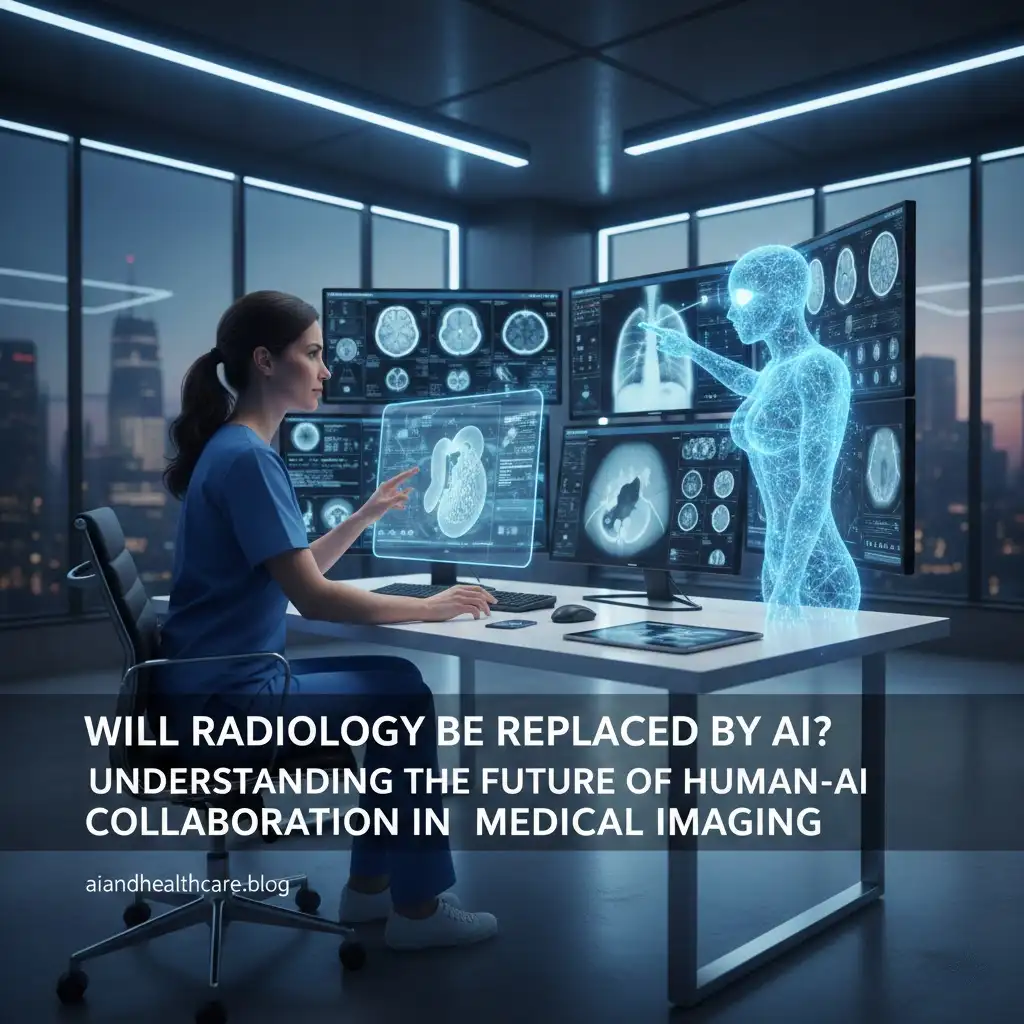
Artificial intelligence is transforming nearly every industry, and healthcare is no exception. Among the fields feeling the impact of AI, radiology stands out. With rapid advancements in machine learning, deep learning, and computer vision, AI can now analyze medical images faster and, in some cases, more accurately than human radiologists. This raises a pressing question: will AI replace radiologists?
The short answer is no. While AI is revolutionizing radiology, it is unlikely to replace radiologists entirely. Instead, AI is set to augment their skills, handling repetitive tasks, flagging critical findings, and improving workflow efficiency. This allows radiologists to focus on complex interpretations, patient interaction, and clinical consultation. The future of radiology is a human-AI collaboration that improves patient care and enhances professional roles rather than eliminating them.
In this blog, we will explore why radiologists will remain indispensable, how AI is transforming the profession, the skills needed for the future, and what career opportunities exist in this evolving landscape.
Why AI Won’t Fully Replace Radiologists
Radiology is Multifaceted
Radiology is not simply reading images. It involves interpreting scans within a broad clinical context, integrating patient history, lab results, and other diagnostic data. Radiologists often work as part of multidisciplinary teams, communicating complex findings to clinicians, surgeons, and patients.
Current AI systems excel at narrow tasks, such as identifying lung nodules or detecting fractures, but they cannot process the full spectrum of clinical information. AI lacks the ability to synthesize diverse data sources or understand nuances in patient care that radiologists routinely handle. The ability to contextualize findings is critical, and this remains a uniquely human skill.
The Human Element
AI is powerful, but it cannot replace empathy, ethical judgment, and patient communication. Radiologists guide patients through difficult diagnoses, explain complex results, and provide reassurance. These human interactions are central to patient care and cannot be replicated by machines. Trust, empathy, and the ability to make ethical decisions are essential elements of healthcare that require a human touch.
Complex Decision-Making
Radiologists do more than identify abnormalities. They make real-time decisions under uncertainty, adjusting imaging techniques during scans, deciding on follow-up tests, or recommending treatments. These decisions require experience, intuition, and professional judgment that AI cannot replicate. In ambiguous or high-stakes situations, the radiologist’s role remains indispensable.
Legal and Ethical Responsibility
Even as AI becomes more capable, humans remain legally and ethically responsible for diagnoses. Radiologists must verify AI findings, ensure accuracy, and take accountability for errors. AI cannot assume legal responsibility, meaning humans will always play a central role in patient care. Regulatory frameworks and professional standards reinforce this requirement, making radiologists integral to the healthcare system.
Task-Specific Limitations of AI
Current AI models are highly specialized. One AI system may be excellent at detecting breast cancer on mammograms, while another focuses on identifying brain hemorrhages on CT scans. To replace a radiologist entirely, AI would need to master hundreds of specialized tasks, a level of versatility that does not yet exist. AI works best as a supplement, not a substitute.
How AI is Changing Radiology
While AI will not replace radiologists, it is reshaping the profession. Here are the key ways AI is transforming radiology:
Automation of Routine Tasks
AI excels at repetitive, time-consuming tasks. This includes improving image quality, sorting and categorizing thousands of images efficiently, and flagging urgent cases for immediate attention. By automating these tasks, AI frees radiologists to focus on interpretive work, patient consultation, and higher-level decision-making.
For example, AI can pre-process MRI or CT scans, enhancing resolution and highlighting areas of interest. It can identify clear abnormalities such as fractures or tumors and alert radiologists, saving hours of manual review.
Enhanced Efficiency
AI can pre-analyze scans, highlighting potential abnormalities for radiologists to review. Studies suggest AI-assisted radiologists read images faster and with greater accuracy. This allows hospitals and clinics to handle higher patient volumes without compromising quality. Efficiency gains can also reduce burnout among radiologists, allowing them to spend more time on complex cases and patient interaction.
Focus Shift to Human Expertise
As AI handles routine analysis, radiologists’ roles shift from basic image interpretation to reviewing AI outputs, confirming diagnoses, and addressing complex cases. Radiologists need to evaluate AI performance, integrate AI findings with clinical context, and advise clinicians on nuanced decisions. This shift emphasizes expertise, critical thinking, and judgment rather than repetitive labor.
Creation of New Roles
The rise of AI is creating opportunities for radiologists to become innovators, researchers, and information specialists. Radiologists who understand AI can design better algorithms, validate models, and ensure ethical AI use in clinical practice. In essence, AI is expanding the radiologist’s role rather than reducing it, opening doors to research positions, AI oversight roles, and hybrid careers in clinical informatics.
Addressing Common Questions About AI and Radiology
Will AI Replace Radiology Technicians?
Radiology technicians perform essential tasks such as positioning patients, operating imaging equipment, and maintaining safety standards. AI may assist with imaging processes or quality control, but technicians’ expertise, patient interaction, and hands-on skills cannot be fully replaced. AI is more likely to enhance technician workflows than replace them.
Will AI Reduce Demand for Radiologists?
Contrary to fears of job loss, AI may increase demand for radiologists who can work alongside AI. Hospitals need professionals to oversee AI outputs, integrate results into clinical workflows, and manage patient care. Radiologists with AI expertise are likely to become even more valuable in healthcare systems.
Is Radiology Threatened by AI?
Radiology is not threatened by AI but is undergoing transformation. The role of a radiologist is evolving from purely diagnostic work to a hybrid role combining image interpretation with AI oversight, clinical consultation, and multidisciplinary collaboration. AI complements radiologists, allowing them to focus on complex tasks and patient-centered care.
AI vs Radiologist Studies
Multiple studies have compared AI performance to human radiologists:
AI can match or exceed human accuracy in specific tasks, such as detecting pneumonia, fractures, or breast cancer on imaging. However, AI underperforms in complex, real-world scenarios where multiple conditions, patient history, or ambiguous findings are involved. AI works best as a support tool, improving radiologist performance rather than replacing it.
Reddit Discussions on AI and Radiology
Online forums reflect curiosity and concern among professionals:
Radiologists acknowledge AI’s potential to enhance efficiency and reduce repetitive work. There is a consensus that AI will not make radiologists obsolete, but radiologists must adapt and upskill. Younger radiologists view AI as a tool for career growth rather than a threat, recognizing its potential to expand their capabilities and professional influence.
The Future of Radiology: Human-AI Collaboration
The future of radiology is symbiotic. Radiologists will work alongside AI to deliver more accurate diagnoses, faster turnaround times, and improved patient care. Key trends shaping this future include:
Radiologists as Highly Skilled Information Specialists
Radiologists will oversee complex AI systems and interpret their outputs. They will validate AI findings, integrate results with patient history and lab data, recommend treatment plans, and communicate results to patients and clinical teams. In this role, radiologists act as the ultimate decision-makers and patient advocates, leveraging AI as a powerful assistant.
Enhanced Accuracy and Workflow
AI reduces human errors, improves detection rates, and streamlines image analysis. Radiologists will focus on complex cases, interdisciplinary collaboration, and patient-centered care. Hospitals and clinics can deliver faster, more accurate, and more efficient services, ultimately improving patient outcomes.
Ethical and Safe AI Use
Radiologists will ensure AI deployment is ethical, safe, and accountable. They will evaluate AI models for bias, validate outputs, and maintain oversight. Ethical guidance, patient privacy, and safety remain the responsibility of human professionals, reinforcing the importance of the radiologist’s role.
Lifelong Learning and Upskilling
AI will drive a continuous learning curve for radiologists. Familiarity with AI algorithms, data science principles, and clinical informatics will become essential. Radiologists who embrace these changes will remain at the forefront of medical innovation and secure their professional relevance.
Preparing for an AI-Enhanced Radiology Career
Radiologists can thrive in an AI-augmented future by focusing on key strategies:
Develop AI Skills: Learn to use AI tools for imaging analysis, quality control, and workflow enhancement.
Strengthen Clinical Expertise: Maintain strong medical knowledge to guide AI interpretation and make nuanced decisions.
Enhance Communication Skills: Patient interaction, multidisciplinary collaboration, and clear reporting remain central to radiology.
Focus on Ethical Practice: Understand AI bias, privacy concerns, and ethical deployment in clinical environments.
Embrace Lifelong Learning: Stay updated on AI advances, medical imaging innovations, and emerging healthcare trends.
Case Studies: AI in Action
Radiology in Oncology
AI assists radiologists in detecting tumors early and monitoring treatment responses. Algorithms can highlight suspicious lesions, quantify tumor growth, and track changes over time. Radiologists use these insights to make informed decisions on treatment planning, chemotherapy adjustments, and surgical interventions.
Emergency Radiology
In emergency care, AI can flag urgent cases such as strokes, pneumothorax, or internal bleeding. This accelerates triage, allowing radiologists to prioritize critical patients. Human oversight ensures accurate diagnosis, while AI reduces delays in emergency response.
Multi-Modality Imaging
AI can integrate data from multiple imaging modalities, such as CT, MRI, and PET scans. Radiologists interpret combined results to provide comprehensive diagnoses. AI enhances consistency and reduces repetitive analysis, freeing radiologists to focus on complex case interpretation.
Conclusion: AI Will Not Replace Radiologists—It Will Empower Them
AI is a transformative force in radiology, but it is not a replacement for human professionals. Radiologists’ broad clinical knowledge, decision-making ability, empathy, and ethical responsibility cannot be replicated by machines.
The future of radiology is collaborative. Radiologists will leverage AI to automate routine tasks, highlight critical findings, and enhance workflow efficiency. Human oversight ensures AI outputs are accurate, ethical, and clinically meaningful.
Radiologists who embrace AI will see their roles evolve into super-specialists, innovators, and patient advocates, capable of delivering faster, more accurate, and compassionate care. The demand for adaptable, AI-savvy radiologists is likely to grow, making this an exciting era for professionals in medical imaging.
AI in radiology is not about replacement. It is about augmentation, collaboration, and transformation. The future is human plus machine, working together for better patient outcomes.