
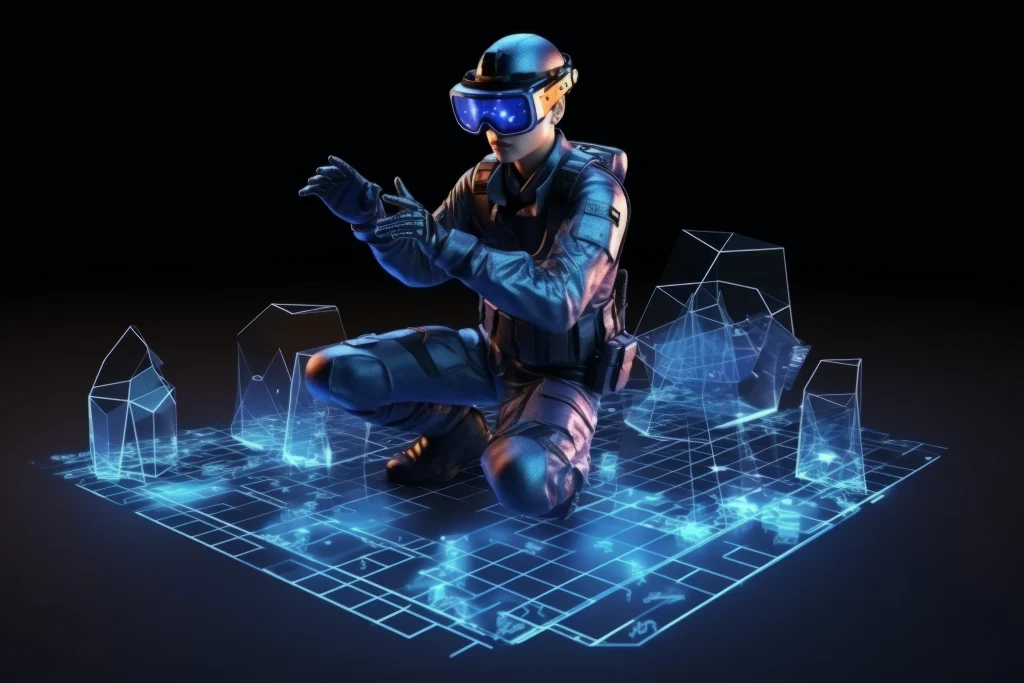
We’re living through one of the most exciting technological transformations in human history. As we navigate through 2025, the pace of innovation isn’t just accelerating—it’s fundamentally changing how we work, live, and interact with the world around us. From AI that can think and act independently to quantum breakthroughs that seemed impossible just years ago, this year is proving to be a turning point.
I’ve been tracking these developments closely, and what strikes me most isn’t just the technology itself—it’s how quickly it’s moving from labs to our daily lives. Let me walk you through the trends that are actually making waves right now.
The Rise of Agentic AI: Beyond Chatbots
Remember when we were all amazed by ChatGPT’s ability to write essays and answer questions? That already feels like ancient history. The real game-changer in 2025 is agentic AI—artificial intelligence that doesn’t just respond to prompts but actually takes action on its own.
These autonomous systems can complete tasks independently rather than just generating content, and the numbers tell a compelling story. By 2029, these systems are expected to handle 80% of routine customer service issues without any human help, potentially cutting operational costs by 30%.
But here’s what’s really interesting: 88% of organizations are now regularly using AI, yet most are still figuring out how to scale it effectively. It’s like having a Ferrari but only driving it around the parking lot. The companies that are winning aren’t just using AI—they’re redesigning their entire workflows around it.
I spoke with a friend who works at a major retailer, and she told me their AI agents now handle everything from inventory management to customer complaints, all without constant human oversight. It’s not replacing her job; it’s freeing her up to focus on strategy instead of putting out fires all day.
Multiagent Systems: When AI Starts Collaborating
One of the most fascinating developments I’ve seen this year is AI systems that work together. Instead of having one massive AI trying to do everything, companies are deploying teams of specialized AI agents that collaborate on complex tasks.
These modular systems allow different AI agents to work together on complicated problems, improving both automation and how well they scale. Think of it like having a team of specialists rather than one generalist trying to be an expert at everything.
The practical applications are already impressive. In healthcare, systems are being tested that analyze patient symptoms and provide preliminary diagnoses, cutting down wait times and optimizing how doctors spend their time. It’s not about replacing doctors—it’s about giving them better tools so they can focus on what humans do best: the nuanced, complex cases that require judgment and empathy.
IoT and Edge Computing: The Smart Everything Revolution
The Internet of Things isn’t new, but what’s different in 2025 is the scale and intelligence of these connected devices. The IoT market is projected to explode from $662 billion in 2023 to over $3.3 trillion by the end of this decade.
What makes this more than just hype is edge computing—processing data right where it’s collected instead of sending everything to the cloud. I recently visited a smart factory where sensors detect equipment issues before they cause breakdowns. The system doesn’t wait for data to travel to some distant server; it makes decisions in milliseconds right on the factory floor.
This combination of IoT devices and edge computing is transforming industries that most people never think about. Manufacturing plants that used to rely on scheduled maintenance now predict failures before they happen. Retailers optimize their inventory in real-time based on foot traffic and buying patterns. Even agriculture is getting smarter, with farms using sensors to deliver water and nutrients precisely where and when plants need them.
5G: Finally Living Up to the Hype
We’ve been hearing about 5G for years, and honestly, it felt overhyped for a while. But in 2025, it’s finally making a real difference. Private 5G networks are improving connectivity across critical applications in businesses, healthcare, and manufacturing.
The difference between good 4G and 5G might not matter much when you’re scrolling social media. But for a surgeon performing a remote operation using robotic arms, or a factory floor coordinating hundreds of automated systems, that low latency and high speed is the difference between what’s possible and what’s not.
I was recently at a hospital that’s piloting remote surgery using 5G. The surgeon can be in one city while the patient is in another, with no perceptible lag. It sounds like science fiction, but it’s happening now.
Extended Reality: Beyond Gaming
Virtual reality, augmented reality, and mixed reality—collectively called extended reality or XR—are breaking out of the gaming niche. The applications are getting seriously practical.
Retailers are letting customers virtually try on clothes or see how furniture looks in their homes before buying. Training programs are using VR to put employees in realistic scenarios without any real-world risk. The gaming industry alone is expected to grow from about $273 billion this year to over $426 billion by 2029, but it’s the non-gaming applications that might end up being more transformative.
I tried out an AR system at an industrial site where maintenance workers wear smart glasses that overlay repair instructions directly onto the equipment they’re fixing. No more flipping through manuals or calling an expert—the information is right there in their field of vision.
The creative applications are equally impressive. Designers and content creators are leveraging AI-powered tools to streamline their workflows. For instance, background removal tools have evolved dramatically with AI integration, making previously tedious tasks instant. If you’re curious about how AI is transforming creative work, check out Row UI’s guide to the top free background removal tools that are powered by these same AI technologies.
Cybersecurity: The Never-Ending Arms Race
With all this digital transformation, the attack surface for cybercriminals has exploded. Cybersecurity in 2025 isn’t about building better walls—it’s about predicting attacks before they happen.
The shift is toward preemptive cybersecurity, using AI to identify and block threats before they can strike. It’s a cat-and-mouse game, and thankfully, the good guys are finally getting better tools.
Companies are also focusing on digital provenance—verifying where data, software, and AI-generated content actually comes from. In a world where deepfakes and AI-generated misinformation are getting scarily good, being able to prove authenticity is becoming critical.
Quantum Computing: No Longer Just Theory
Quantum computing has been “just around the corner” for years, but 2025 is different. We’re starting to see real applications, particularly in areas like drug discovery and cryptography.
The computers we use today process information as ones and zeros. Quantum computers use quantum bits, or qubits, which can be both at the same time. It’s hard to wrap your head around, but the practical result is that they can solve certain types of problems millions of times faster than traditional computers.
We’re not at the point where everyone has a quantum laptop, but major pharmaceutical companies are using quantum computers to simulate molecular interactions, potentially cutting years off drug development timelines.
Sustainability Tech: Green Innovation
Climate technology is finally getting the investment and attention it deserves. From better batteries to new materials that make solar panels more efficient, the clean energy transition is accelerating.
There’s a growing trend of combining different technologies—like AI with biological systems or new materials advancing clean energy. This convergence is creating solutions we couldn’t have imagined a few years ago.
One particularly cool development is structural battery composites—materials that can both bear weight and store energy. Imagine an electric car where the body itself is part of the battery, or an airplane wing that stores the energy it needs to fly. It sounds like magic, but these materials are already being developed and could make vehicles lighter and more efficient.
The Human Element: What This All Means
Here’s the thing that gets lost in all the tech hype: these aren’t just tools—they’re reshaping entire industries and creating new ones. 82% of executives plan to increase AI investments in 2025, but the ones succeeding aren’t just throwing money at the latest shiny object.
The real winners are the organizations that are thinking holistically about how technology fits into their broader strategy. They’re investing in training their people, redesigning workflows, and being honest about what’s working and what isn’t.
I’ve talked to plenty of executives who are feeling the pressure to adopt AI or get left behind. But the companies seeing real results are the ones being thoughtful about it. They’re running pilots, measuring outcomes, and scaling what works rather than trying to transform everything overnight.
Looking Ahead: What’s Next?
If 2025 has taught us anything, it’s that technology moves faster than most of us expect. The AI agents we’re experimenting with now will likely be mainstream by this time next year. The quantum computers that seem exotic today might be solving everyday business problems within a few years.
But technology isn’t destiny. The companies, governments, and individuals who thrive won’t be the ones with the newest gadgets—they’ll be the ones who thoughtfully integrate these tools to solve real problems and create genuine value.
The most exciting part? We’re still in the early stages of this transformation. The technologies reshaping 2025 are laying the groundwork for innovations we can’t even imagine yet. And unlike past tech waves that felt like they were happening to us, this time we have the opportunity to actively shape how these tools are developed and deployed.
The future isn’t something that just happens—it’s something we build together, one thoughtful decision at a time. And based on what I’m seeing in 2025, we’re building something pretty remarkable.
What tech trends are you most excited or concerned about? The conversation around these technologies is just as important as the technologies themselves. Whether you’re a business leader trying to stay competitive, a professional adapting to new tools, or simply someone curious about where we’re headed, understanding these trends isn’t optional anymore—it’s essential.
For more insights on design, technology, and digital innovation, visit Row UI where we explore the intersection of creativity and technology.