
Artificial Intelligence is reshaping industries faster than ever. From healthcare to finance, from software development to education, AI is automating tasks, analyzing data, and changing how work gets done.
This rapid transformation has led many legal professionals, students, and enthusiasts to ask the same pressing question: Will lawyers be replaced by AI?
The answer is both simple and complex. AI will not replace lawyers entirely. Instead, it is transforming the profession, automating routine work and allowing lawyers to focus on areas that require human judgment, strategy, ethics, advocacy, and relationship-building.
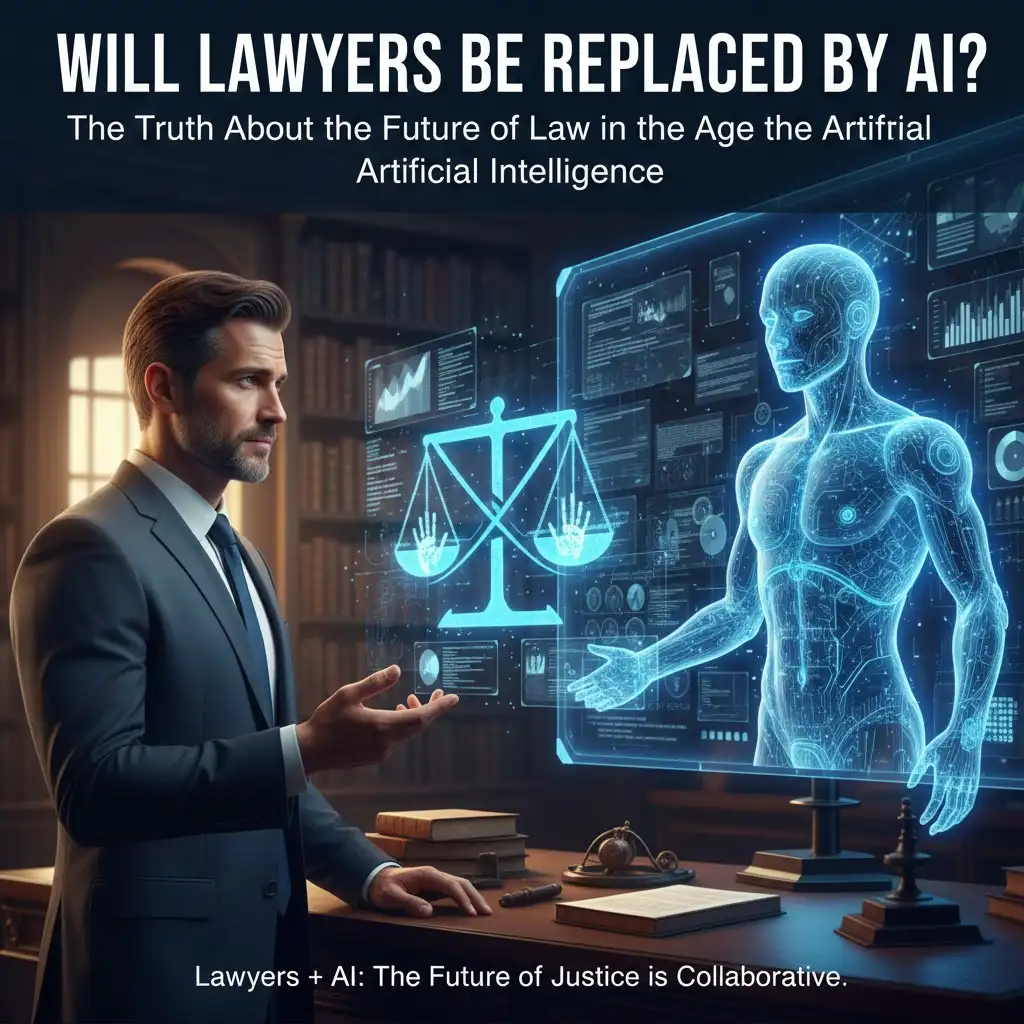
The future of law is not lawyers versus AI. It is lawyers working with AI.
This article explores what AI can and cannot do in legal work, how it is changing the profession, and why law remains a human-centered field for decades to come.
Why the Question About AI and Lawyers Keeps Coming Up
Concerns about AI replacing lawyers are part of a broader discussion about automation and employment. People are also asking whether AI will replace doctors, teachers, judges, corporate lawyers, or transactional lawyers. These fears come from the fact that AI is extremely good at handling large amounts of data, finding patterns, and performing repetitive, rule-based tasks.
Law seems like a natural candidate for automation because it involves contracts, case law, documents, and rules. At first glance, AI could theoretically handle research, draft documents, or identify precedents. However, law is far more than rules. It is about context, ethics, fairness, and human judgment. AI can assist with certain tasks, but it cannot replace the intuition, reasoning, and ethical decision-making that lawyers provide.
How AI Is Transforming Legal Work
AI is already changing the way lawyers work, but not in the way most people fear. Rather than eliminating lawyers, it enhances their efficiency and accuracy while freeing them to focus on higher-value work.
Automating Routine Legal Tasks
One of AI’s most visible impacts in law is automating repetitive, time-consuming tasks. Legal research that once required hours or days can now be completed in minutes. Document review, contract analysis, due diligence, and even drafting initial versions of agreements can be assisted by AI tools.
This does not replace lawyers. Instead, it allows them to spend more time on strategic tasks, client communication, negotiation, and other areas where human judgment is essential. Lawyers no longer have to spend countless hours sifting through case law or reviewing standard forms. AI handles the groundwork, lawyers handle the strategy.
Increasing Efficiency and Accuracy
AI tools excel at scanning vast databases, analyzing contracts, and identifying relevant precedents. This brings several benefits:
- Faster research completion
- Reduced human error
- More comprehensive case analysis
- Improved ability to spot potential risks or missing details
Lawyers using AI are able to deliver more accurate advice to clients and ensure they are fully informed. This level of efficiency enhances the legal process but cannot replace the decision-making that follows the research.
Shifting the Role of Lawyers
As AI takes over routine work, lawyers are increasingly able to focus on areas that machines cannot replicate. These include:
- Strategic legal planning and guidance
- Client counseling
- Risk assessment and compliance
- Negotiation and advocacy
- Complex problem-solving
This evolution mirrors other professions. Doctors may use AI for diagnostics, but they still make the final call. Teachers can use AI to personalize lessons, but mentorship and guidance remain human tasks. Lawyers follow the same pattern: AI supports the work, but humans remain central.
Why AI Cannot Replace Lawyers
There are several fundamental reasons why AI cannot fully replace lawyers.
AI Lacks Human Judgment
Legal work is not simply about following rules. Decisions often involve ambiguity, conflicting interests, and ethical dilemmas. AI can analyze precedent and detect patterns, but it cannot determine what is fair, just, or appropriate in a unique situation. Human discretion is essential in ensuring justice and balancing competing interests.
AI Cannot Understand Context
Legal outcomes depend heavily on context, including cultural norms, emotional dynamics, political environments, and societal consequences. AI can process data and recognize patterns, but it cannot comprehend the human factors that shape legal decisions. A nuanced understanding of context is essential for effective legal practice.
AI Cannot Empathize or Build Trust
Clients seek more than legal advice. They need reassurance, confidence, and advocacy. Emotional intelligence and trust are critical in areas like divorce, criminal defense, or immigration law, where clients are vulnerable and stressed. AI cannot empathize, comfort, or build meaningful relationships.
AI Cannot Advocate in Court
Courtrooms are dynamic human environments. Advocacy requires reading judges, juries, and opposing counsel, adapting arguments on the fly, and using persuasion and storytelling. AI cannot respond to unexpected developments, gauge reactions, or negotiate effectively in real-time. Human lawyers remain essential in representing clients.
Ethical Responsibility Requires Humans
Lawyers are bound by professional ethics, confidentiality, and accountability. Mistakes in legal practice carry moral, professional, and sometimes criminal responsibility. AI cannot be held accountable, and ethical discretion cannot be delegated to machines. Human oversight is essential to maintain trust and uphold the integrity of the legal system.
AI in Corporate Law
Corporate law is an area where AI has a significant impact, but not in replacing lawyers. AI can help with:
- Reviewing contracts and flagging risky clauses
- Automating compliance checks
- Streamlining mergers and acquisitions due diligence
Corporate lawyers still handle deal negotiation, strategy, risk assessment, and regulatory interpretation. AI is a tool that speeds up processes and reduces manual workload, but human expertise is still essential for decision-making in complex corporate matters.
AI in Transactional Law
Transactional lawyers focus on contracts, business agreements, and deals. AI can draft documents, review clauses, and suggest changes. However, transactions are rarely standard. They involve negotiation, strategy, risk tolerance, and complex business judgment. Human lawyers remain central in shaping outcomes and ensuring clients’ objectives are met.
AI and Judges
AI can support judges by performing research, suggesting sentencing guidelines, or managing case information. However, judges make final decisions that require:
- Moral reasoning
- Interpretation of law
- Accountability to the public and legal system
Judges cannot be replaced by machines because legal interpretation and judgment are fundamentally human tasks.
Comparing Law to Other Professions
The pattern seen in law is similar to other fields:
- Doctors use AI for diagnostics, but human judgment and care remain central
- Teachers use AI for personalized learning, but mentorship and guidance remain human
- Lawyers use AI for research and document drafting, but strategy, advocacy, and ethical judgment remain human
AI enhances work but does not replace professionals.
Roles AI is Likely to Replace or Reduce in Legal Work
AI is most likely to affect tasks that are:
- Highly repetitive
- Rule-based
- Low on human interaction
Examples include:
- Basic data entry
- Document formatting
- Routine administrative work
- Drafting standard contracts
Legal professionals who focus solely on repetitive work may see reduced demand, while adaptable lawyers who focus on strategy and client interaction will thrive.
The Future Lawyer: Augmentation, Not Replacement
Lawyers who embrace AI will benefit greatly. The future legal professional will be:
- Tech-savvy
- Strategically focused
- AI-assisted
These lawyers will guide AI outputs, verify results, and apply human judgment. AI becomes a legal assistant, helping lawyers work faster, smarter, and more efficiently.
Making Legal Services More Accessible
AI also has the potential to make legal services more affordable and accessible. By reducing costs and increasing efficiency:
- Small businesses and individuals can access legal support more easily
- Lawyers can serve more clients without compromising quality
- Justice gaps may be reduced through faster and more cost-effective service
Lawyers empowered by AI can focus on delivering advice, strategy, and advocacy while letting AI handle repetitive research and drafting tasks.
Skills Lawyers Need in the AI Era
The lawyers who will succeed in an AI-driven legal world are those who focus on human-centered skills:
- Judgment and ethical reasoning
- Strategic thinking and problem-solving
- Negotiation and advocacy
- Communication and client relationship management
- Understanding and using AI tools effectively
AI does not replace these skills; it enhances them. Lawyers who combine technology with human expertise will be the most valuable.
Long-Term Outlook for the Legal Profession
AI will continue to advance, but it will not make lawyers obsolete. The profession is evolving rather than disappearing. AI handles data, research, and routine tasks, while lawyers focus on:
- Strategy
- Advocacy
- Trust
- Ethics
This partnership between humans and AI ensures that the legal profession remains vital, impactful, and future-proof.
Final Verdict
AI will not replace lawyers. It will change how legal work is done, making it more efficient and accessible. Lawyers who refuse to adapt may fall behind, but those who embrace AI will thrive.
AI will automate repetitive tasks, increase speed and accuracy, and transform workflows. Human lawyers will continue to provide judgment, ethics, advocacy, and trust. The future of law is collaboration between humans and AI, not replacement.
Key Takeaway: AI handles data. Lawyers handle people, judgment, and justice. That is why AI cannot replace lawyers. It can only make them better, more efficient, and more capable of delivering justice in an increasingly complex world.